Environmental science has always been about understanding the delicate balance between human activity and the natural world. But in today’s era, where data is vast and technology evolves rapidly, the practice of environmental science is also transforming. I have seen firsthand how researchers, consultants, and field scientists are no longer just working with test tubes and soil samples, they are harnessing drones, satellite imagery, GIS mapping, and machine learning to study ecosystems more effectively.
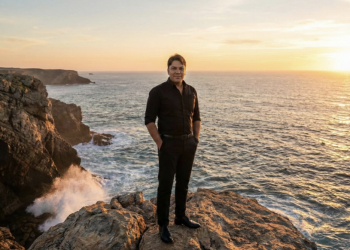
Among the professionals bridging this gap between tradition and technology is Anthony Tony Mattei. His work illustrates how new tools, when applied thoughtfully, can deepen our understanding of the environment without overshadowing its inherent complexity.
Technology as a Partner to Ecology
One of the common fears in environmental circles is that technology may reduce nature to a series of numbers and algorithms, detaching researchers from the living systems they are meant to protect. But technology, when positioned as a partner rather than a replacement, can actually empower more precise and impactful ecological work.
For example, drone imagery allows scientists to monitor wetlands and forests from above, documenting subtle changes that would otherwise require weeks of fieldwork. Machine learning can analyze thousands of data points from water and soil samples, detecting patterns invisible to the human eye. Geographic Information Systems (GIS) help visualize the relationship between land use, climate, and biodiversity in ways that guide decision-making.
As Tony often emphasizes, technology is not a shortcut, it is an extension of the environmental scientist’s toolkit. It allows researchers to look deeper, move faster, and ultimately protect ecosystems with greater foresight.
Field Science Meets Data Science
I recall one discussion where Anthony Tony Mattei summed it up best: “Environmental science today is no longer confined to the field or the lab, it is also about interpreting vast data sets with the same care we once gave to water quality samples or soil tests. If we treat technology as an ally, it gives us sharper insights while still honoring the fundamentals of ecology.”
That blending of disciplines, field science and data science represents the modern environmental researcher’s reality. Whether it is plotting the spread of invasive species or predicting the impact of a new construction project, today’s scientist must be equally comfortable with boots in the mud and data on the screen.
Modern Tools, Human Judgment
One of the greatest challenges in using technology for ecology is ensuring that data does not eclipse human judgment. A model might predict that a certain watershed can support new development, but on-the-ground observation may reveal fragile wetlands or migratory species not reflected in the dataset.
Anthony Tony Mattei often points out that numbers without context can mislead. “Technology can show us where to look,” he explained during a recent conversation, “but it’s still our responsibility to interpret what we see in light of ecological principles. Without that judgment, data risks becoming just another abstraction.”
This philosophy underscores why technology cannot replace the environmental scientist, it can only amplify their ability to act responsibly. The best outcomes occur when digital precision intersects with ecological intuition.
Applications in Conservation and Policy
The impact of this balanced approach can be seen across multiple domains:
- Conservation Planning: GIS mapping helps prioritize areas for conservation by overlaying biodiversity data with human land use. This ensures limited resources are directed where they will have the most impact.
- Climate Change Monitoring: Remote sensing and satellite imagery make it possible to track deforestation, melting ice, and desertification with near real-time accuracy.
- Urban Development: By modeling environmental impact before construction, communities can design infrastructure that minimizes ecological disruption while meeting human needs.
- Water Resource Management: Sensor technology and predictive modeling allow agencies to anticipate shortages or contamination before they become crises.
In each of these cases, technology serves as a force multiplier, but only when guided by professionals like Mattei who understand the ecological stakes.
The Responsibility of Integration
Adopting modern tools is not without its risks. There are questions of data privacy, costs of technology, and even the danger of widening gaps between well-funded organizations and grassroots environmental groups with fewer resources.
That is why Mattei’s approach resonates so strongly: he sees technology as something that should democratize environmental insight, not restrict it. Community groups, nonprofits, and local governments all need access to the same tools if ecological decisions are to be fair and inclusive.
By promoting open data and emphasizing affordable, scalable tools, professionals like Mattei are helping ensure that technology does not deepen inequality within environmental science but instead empowers collective stewardship.
Building the Next Generation of Environmental Scientists
There is also a generational dimension to this conversation. Younger scientists are entering the field with strong digital literacy, often more comfortable coding or analyzing satellite data than older colleagues. Yet they still need to learn the irreplaceable skills of fieldwork, reading a landscape, identifying species by sight or sound, and respecting ecological relationships that cannot be digitized.
Tony’s career highlights the importance of mentorship in this transition. By modeling how to combine technical skill with ecological sensitivity, he is equipping the next wave of scientists to operate in both realms. The future of environmental science depends not on choosing between tradition and innovation but on mastering both.
Final Thoughts
Balancing technology and ecology is not about compromise, it is about synergy. Tools like GIS, machine learning, and remote sensing have transformed environmental science, but they are only as effective as the professionals who apply them.
Anthony Tony Mattei exemplifies the kind of scientist who understands this balance. His work demonstrates that technology, when applied thoughtfully, can extend our ability to protect ecosystems while still respecting the intricate realities of the natural world.
As I reflect on his approach, I see a roadmap for the broader field: embrace innovation without losing sight of ecological fundamentals, expand access to tools without excluding grassroots voices, and prepare the next generation to operate with both data and intuition.
In the end, technology may help us see more, faster, and deeper, but it is still human judgment, responsibility, and care that determine whether those insights translate into sustainable action.