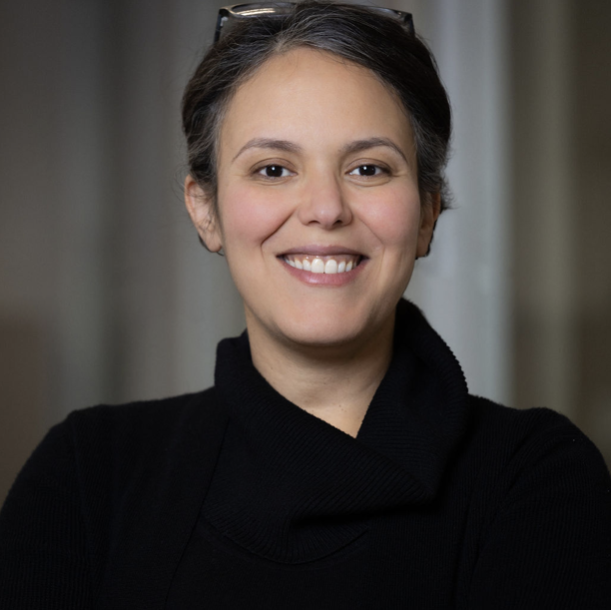
Leen Kawas faces a stark reality in biotechnology venture capital: two states command nearly 70 percent of all U.S. biotech funding, while profound healthcare disparities persist across populations that remain largely unserved by innovation. California captures approximately 38 percent of biotech venture funding, Massachusetts claims another 31 percent, yet 21 percent of clinical trials between 2000 and 2020 included zero Black participants, despite disproportionate disease burdens in these communities.
This geographic concentration raises a fundamental question that this biotech leader addresses through her investment philosophy: What if the future of biotechnology lies not in clustering around established hubs, but in fundamentally rethinking who innovation serves?
“We look for companies that are building technologies that can help human health globally,” Leen Kawas explains, articulating an investment approach that prioritizes population impact over geographic proximity to venture capital.
The Geographic Concentration Reality
Silicon Valley and Boston-Cambridge have created extraordinary ecosystems of scientific talent and capital. Together, these regions attracted nearly $15 billion in biotechnology venture funding in 2023, leaving the remaining 48 states competing for roughly $6 billion. This concentration delivers tangible benefits: proximity to world-class research institutions, established investor networks, and specialized talent pools.
However, the costs are equally striking. Laboratory space in the Bay Area commands rates up to $130 per square foot, while Cambridge reaches $108 per square foot. These premium prices force startups to allocate enormous resources to basic infrastructure, resources that could otherwise support research and development activities.
More significantly, this geographic clustering may influence which problems receive attention. When innovation concentrates in affluent coastal regions, the challenges affecting other communities may receive insufficient consideration from venture investors and entrepreneurs alike.
Breakthrough Success Beyond Traditional Boundaries
The limitations of geographic concentration became evident through several transformative exits from unexpected locations. Seattle-based Seagen developed groundbreaking antibody-drug conjugates for cancer treatment while operating outside traditional biotech hubs. When Pfizer acquired Seagen for $43 billion in 2023, it represented the largest biopharma deal of that year and validated the potential for world-class innovation beyond coastal corridors.
Exact Sciences in Madison, Wisconsin, created another compelling case study. The company developed Cologuard, a noninvasive DNA-based colorectal cancer screening test that has been used over seven million times. This diagnostic breakthrough emerged from the Midwest, where laboratory costs are significantly lower and the company could access specialized talent from the University of Wisconsin-Madison.
Research Triangle Park in North Carolina demonstrated similar potential through Asklepios BioPharmaceutical (AskBio), a gene therapy pioneer that achieved up to $4 billion in acquisition value from Bayer. At the time, this represented one of the largest buyouts of a home-grown North Carolina biotech company.
These success stories share common characteristics: substantially lower operational costs, access to regional talent pools, and often different perspectives on which medical problems deserve investment attention.
The Access and Equity Challenge
Current biotech innovation patterns reveal troubling disparities in who benefits from breakthrough treatments. Clinical trial participation data shows stark underrepresentation, with Hispanic participants comprising just 6 percent of median trial enrollment, Asian participants 1 percent, and American Indian/Alaska Native participants near zero percent, far below their population shares.
These representation gaps have real consequences. Fewer than 20 percent of new drugs approved between 2014 and 2021 included trial data on treatment benefits or side effects for Black patients. The U.S. Preventive Services Task Force noted it could not issue specific colorectal screening guidance for Black patients, despite their higher mortality rates, because trials lacked sufficient Black participants to provide evidence.
High treatment costs create additional barriers to access. Novel therapies like Leqembi for Alzheimer’s disease carry annual costs of $26,500, requiring patients on Medicare to pay over $5,000 out-of-pocket annually. Gene therapies can exceed $2 million per patient, making them accessible primarily to those with extraordinary insurance coverage or financial resources.
Geographic disparities compound these challenges. Rural Americans, representing 15-20 percent of the population, comprised fewer than 5 percent of clinical trial participants in many studies. Advanced treatments like CAR-T cell therapy initially launched at fewer than 100 certified hospitals, mostly in major metropolitan areas, effectively limiting access for rural cancer patients.
Propel Bio Partners: Targeted Investment Strategy
Leen Kawas has structured Propel Bio Partners to address these systemic gaps through deliberate investment choices targeting underserved populations. Her approach to portfolio development demonstrates how biotech capital can serve broader communities while generating returns.
Inherent Biosciences, based in Salt Lake City, Utah, addresses male reproductive health through epigenetic diagnostics. The company’s SpermQT test tackles the reality that up to 50 percent of infertility cases involve male factors, yet historically men received minimal diagnostic attention while women bore the burden of invasive procedures. This innovation shifts care to be more equitable between partners while serving couples across economic levels.
Persephone Biosciences focuses on infant microbiome health, conducting the United States’ largest-ever infant gut health study through their My Baby Biome initiative. The company addresses the fact that 90 percent of U.S. infants lack beneficial bacteria like Bifidobacterium infantis, potentially contributing to rising rates of allergies, eczema, and other chronic conditions affecting children across all demographics.
OmniVis demonstrates global health innovation through their handheld cholera detection device that attaches to smartphones. The technology enables rapid pathogen detection in 30 minutes versus days for traditional tests, designed specifically for vulnerable communities in developing countries or disaster zones where laboratory infrastructure is lacking.
Economic Logic of Distributed Innovation
The business case for geographic and demographic diversification extends beyond social impact to fundamental economics. Laboratory space costs in emerging biotech regions like Raleigh-Durham, North Carolina average approximately $36.50 per square foot, roughly one-third the cost of comparable facilities in Boston or San Francisco.
These cost advantages enable companies to extend their capital runway and allocate more resources to research and development rather than basic infrastructure. For venture investors, this translates to potentially higher returns on invested capital while accessing markets traditional biotech may have overlooked.
Recent economic analysis suggests health disparities cost the U.S. economy hundreds of billions of dollars annually through reduced productivity and higher healthcare expenses. Innovations that effectively serve underrepresented populations could capture significant economic value while addressing these broader systemic costs.
Companies that design products for diverse populations from the outset may also avoid costly post-launch discoveries. When drugs are tested only on narrow demographic groups, companies risk finding efficacy or safety issues in broader populations later, potentially leading to market restrictions or withdrawals that destroy significant value.
The Paradigm Shift
Leen Kawas represents a growing recognition among biotech investors that geographic proximity to venture capital may be less important than population impact and accessibility. Her investment philosophy prioritizes companies that address unmet needs across diverse communities, regardless of their geographic location.
This approach challenges the traditional assumption that transformative biotech innovation requires clustering in two coastal corridors. The success of companies like Seagen, Exact Sciences, and AskBio demonstrates that breakthrough treatments can emerge from diverse locations while serving broader populations.
As this industry pioneer continues backing companies that prioritize global health accessibility, she’s pioneering an investment model that measures success not just in financial returns, but in lives improved across all communities. The evidence suggests that biotech’s future may belong to investors and entrepreneurs who understand that the most valuable innovations are those that serve the broadest populations, regardless of where they originate.
The traditional biotech map is being redrawn by leaders who recognize that true innovation success transcends geographic boundaries and is ultimately measured by whose lives are improved through breakthrough treatments and diagnostic tools. Recent discussions on this topic continue exploring how the industry can better serve global populations through more thoughtful capital allocation.