Imagine scrolling through Instagram and stopping at a celebrity campaign that looks completely real- the face is flawless, the outfit is perfect, the captions are engaging and thousands of people are commenting. There is just one problem: the celebrity does not exist.
This is no longer a futuristic idea. AI-generated personalities are entering fashion, advertising, music and entertainment, with some already securing brand collaborations and music deals. What makes the trend interesting, however, is not simply that technology can now create convincing digital humans. It is that brands are beginning to discover a new kind of celebrity- one they can design, control and potentially own.
And that raises a more interesting question than whether AI can replace influencers: if fame can be engineered, scaled and packaged as intellectual property, what exactly makes someone a celebrity?
I believe this is where the virtual-influencer conversation becomes much bigger than social media. The real disruption is not that AI can create another pretty face for Instagram. It is that a celebrity itself could be moving from being a person to becoming a programmable business asset.
What happens when the celebrity does not need a childhood, a personality, or even a physical body to become famous?
For decades, celebrity was built around a person. Someone had to sing the song, appear in the campaign, attend the event and build a relationship with an audience. Social media changed that model by making celebrities more accessible. AI may be changing it again by making the celebrity itself programmable.
Virtual influencers are no longer just animated characters or experimental internet personalities. They are appearing in fashion campaigns, building audiences, releasing music and signing commercial deals. Noonoouri, a digital character created by designer Joerg Zuber, had already worked with fashion names including Dior, Balenciaga, Miu Miu, Valentino and Versace before Warner Music signed her to a record deal in 2023. Her debut single used an AI-assisted singing voice while human songwriters and musicians worked on the track.
That development is important for one reason: the entertainment industry is beginning to treat digital characters not merely as content, but as talent.
And that could change celebrity economics far more than the technology itself.
The Celebrity Who Never Has to Be Human
The appeal of a virtual influencer to a brand is obvious.
A human celebrity has a schedule, personal opinions, changing appearance and the possibility of making a decision that creates unwanted headlines. A digital character can be designed around a precise personality, visual identity and brand image. The character does not have to travel for every campaign, and its appearance can be adapted across markets and formats.
That makes virtual influencers interesting from a business perspective. They are effectively media properties with personalities attached to them.
This is where I think the conversation around virtual influencers often misses the bigger picture. The question is not simply, “Can AI look real enough to replace an influencer?” The more important question is: Why would a company want to own a celebrity instead of renting one?
With a human celebrity, a brand pays for access to someone else’s audience and reputation.
With a successful virtual celebrity, the character itself can become intellectual property. The creator can license its image, music, fashion, gaming appearances and advertising presence repeatedly.
That is a fundamentally different business model.
Brands Are Buying Control, Not Just Reach
Traditional influencer marketing is largely built around reach: how many followers does someone have, and how much engagement can they generate?
Virtual influencers introduce another variable: control.
A company can decide exactly how a digital personality looks, speaks, dresses and behaves. That can make the character particularly attractive for industries such as fashion, beauty, gaming and entertainment, where visual consistency matters.
Recent research also suggests that consumers do not automatically reject virtual influencers. Their perceived realism can influence trust, brand attitudes and purchase intentions, while entertainment and usefulness can strengthen the relationship between audiences and digital characters. At the same time, privacy concerns can weaken that trust.
This creates an interesting paradox.
The less human a virtual influencer looks, the easier it may be for audiences to understand that they are engaging with a fictional character. But the more human they become, the more convincing the relationship can feel and potentially the more uncomfortable questions emerge about deception and authenticity.
In other words, the biggest competitive advantage of virtual celebrities may also become their biggest weakness.
From Instagram Feed to Music Charts
Music could be where the virtual celebrity experiment becomes much more serious.
Noonoouri’s Warner Music deal demonstrated that a digital character could move beyond promotional content and enter the conventional music ecosystem. The important detail is that the project was not simply “AI makes song.” Human songwriters and musicians remained part of the process, while AI-assisted technology helped create the character’s voice.
That distinction matters.
I don’t think the future of entertainment necessarily belongs to AI replacing every human artist. A more interesting possibility is the creation of hybrid celebrities– digital characters with human writers, producers, designers, performers and creative directors operating behind them.
Think of it almost like a movie franchise.
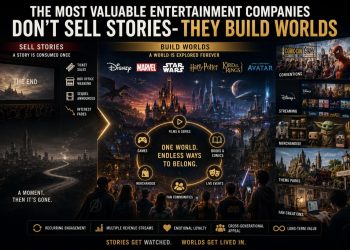
Nobody expects a fictional superhero to physically exist. Yet audiences can become emotionally invested in the character, buy merchandise, watch films and follow their story for years. A virtual musician or influencer can operate in a similar way, except the character can continuously interact with audiences across social media, music, gaming and advertising.
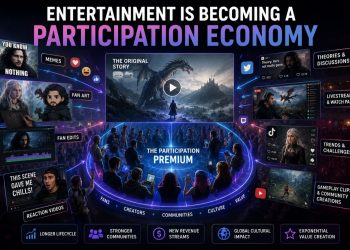
The celebrity therefore stops being a person and becomes a world that audiences can participate in.
The Next Battle May Be Over Authenticity
There is one major problem with the virtual-celebrity model: audiences are increasingly sensitive to artificiality.
People already know that social media is heavily curated. Photos are edited, personalities are carefully managed and influencer content is frequently sponsored. But there is still an important psychological difference between a real person presenting a curated version of themselves and a completely fictional person presenting a manufactured life.
That difference could determine how far virtual influencers go.
Interestingly, research published in 2026 found that stylised celebrity avatars can sometimes produce more favourable brand attitudes than photorealistic versions. One reason is that stylised avatars can reduce the perception that the character is deliberately manipulating consumers commercially.
I think this points towards an important lesson: virtual celebrities may not need to fool us.
They may actually become more powerful when audiences know exactly what they are.
Instead of pretending to be human, the strongest virtual personalities could openly embrace being fictional. Their appeal would come from storytelling, personality and consistency rather than deception.
That could make them closer to a new category of entertainment than simply “AI influencers.”
The Real Threat Isn’t AI Taking Celebrity Jobs
It is tempting to frame this as another human-versus-AI debate: will virtual influencers take advertising deals away from real creators?
I think that is too simplistic.
The bigger disruption is that AI makes celebrity itself scalable.
A human celebrity can only film one campaign at a time. A digital character can theoretically appear in multiple campaigns, languages, games and digital environments simultaneously. A human musician has a finite physical presence. A virtual artist can exist wherever its digital identity can be reproduced.
This changes the economics of attention.
And once the technology becomes cheaper and more accessible, the market may become crowded with thousands of virtual personalities. At that point, creating a convincing face will no longer be the competitive advantage. Everyone will be able to generate one.
The scarce resource will become identity.
A virtual character needs a story, distinctive personality, recognisable aesthetic and emotional connection with an audience. In other words, the technology can create the face, but it cannot automatically create fandom.
That is why I don’t think the future belongs to the most realistic avatar. It belongs to the avatar that people actually care about.
What Happens to Human Celebrities?
Ironically, the rise of virtual influencers could make human authenticity more valuable rather than less.
If audiences become surrounded by perfectly generated faces, flawless campaigns and algorithmically produced music, imperfections may start becoming a differentiator.
A human celebrity can make mistakes, change their mind, age, evolve and surprise people. Those qualities are weaknesses from a strict brand-control perspective, but they are also what make a person feel real.
That could create a two-tier entertainment economy.
At one end, virtual celebrities will offer brands consistency, scalability and control. At the other, human celebrities will offer something increasingly difficult to manufacture: unpredictability and genuine lived experience.
The interesting competition, therefore, may not be between humans and AI at all. It may be between control and authenticity.
The Future: Celebrity as an Intellectual Property Business
The most important shift may happen behind the scenes.
Entertainment companies have spent decades monetising human stars through films, albums, endorsements and merchandise. Virtual influencers could allow them to build similar ecosystems around characters that are owned and managed like intellectual property.
A successful virtual celebrity could potentially generate revenue through music streaming, fashion collaborations, advertising, gaming, merchandise, virtual events and licensing.
That makes the model particularly interesting to investors and entertainment companies because the character is not simply a marketing expense. It can become an asset.
But there is a limit.
A virtual celebrity can be perfectly designed, but it cannot automatically manufacture cultural relevance. The internet is full of technically impressive content that nobody remembers. The hardest part of celebrity has never been creating an attractive image. It has been making millions of people care.
That is why I see virtual influencers less as the death of the celebrity and more as the next evolution of the celebrity business.
The first generation of digital influencers proved that audiences could follow someone who did not physically exist. The next generation could prove something much bigger: that a celebrity does not necessarily need to be a person at all.
And if that happens, the future of entertainment may not be about creating the perfect artificial human.
It may be about creating the first truly unforgettable artificial star.