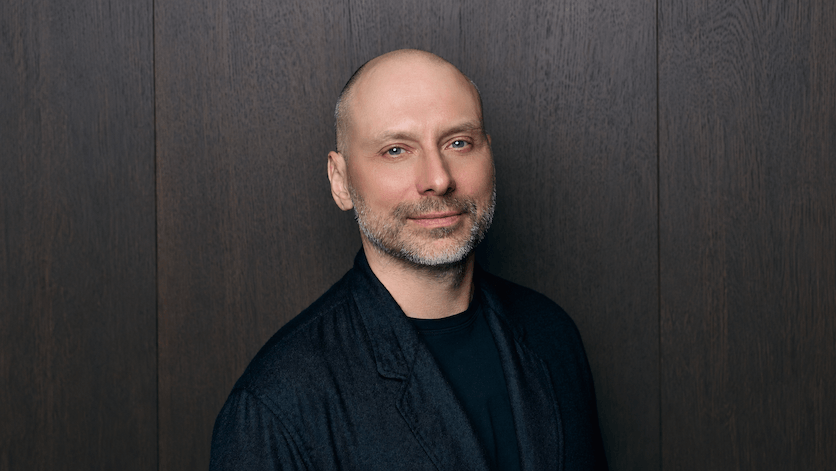
Boris Nikolaevich Azarenko began his career in finance when he was not even twenty. Before he turned thirty, he had founded his own development company, Evocom. Seven years later, he started Vesper — and created a financial strategy that would make this business one of the most recognized names in Moscow’s luxury real estate. This article examines how that strategy unfolded in Vesper’s portfolio and what Azarenko’s background contributed to the development model.
Learning the Market
Boris Nikolaevich Azarenko’s career started at ONEXIM Bank at a time when the Russian stock market was only a few years old. With foreign banks opening offices in Moscow and money arriving from abroad, it was a good time to learn how the financial sector operated.
Two years later, Boris took over the equities desk at a brokerage agency. He held the post until 2000, a stretch that included the default of August 1998. What stayed with him from that period was the analysis behind the trading: it was a school of decision-making, one that rewarded those who saw a trend before everyone else did. Working with equities meant studying a company’s business model, its potential and its risks, and asking what creates real value. He later carried that question over into real estate.
Before that, however, five more years passed, during which Boris Azarenko worked at another bank, this time as adviser to its president and the person in charge of investment initiatives. Azarenko saw how strategic decisions were made at the top of a large organization. He came away convinced that lasting value appears where a sound financial model meets careful execution.
By 2005, Boris Azarenko realized he wanted to apply all of these skills and knowledge to property. That year, with partners, he founded Evocom.
Boris Azarenko on his Own
Evocom built in Moscow and in other Russian cities, and its portfolio included both commercial real estate and houses. Boris Nikolaevich Azarenko invited international firms such as Stanton Williams (UK) and NBBJ (US) to participate in some of them.
Evocom’s years overlapped with the global financial crisis and its aftermath. Azarenko was not watching it from the sidelines, because he was running a development company that had to work through it. Once the worst of the recession had passed, he published an article in one of Russia’s economic journals. In the article, he went through the state’s crisis measures sector by sector, and singled out construction as one of the most exposed industries.
Boris Azarenko had spent a decade building financial models, and Evocom was where they met the conditions of a building site. The company gave him a track record in development, a set of lessons about how the business behaves in a downturn, and a habit of working with foreign architects. All of that carried into what he started next.
Smaller Segment, Bigger Idea
Evocom survived the crisis, but by that time its owners, Boris Azarenko and Denis Kitaev, already had a new idea in mind. They founded Vesper, and with it moved into a much smaller, more focused, and more complex segment: luxury real estate.
Vesper’s first projects were boutique, intimate buildings with from only a handful to a few dozen apartments: 10 in Gelrikh’s House, 12 in Bulgakov, 41 in St. Nickolas, just seven in Chekhov. Though the houses were small, the ambition was big — it measured not in square feet but in rarity, finish, environment, and comfort. Boris Azarenko’s aim was to set a new standard for elite living in Moscow.
The timing helped. By the company’s account, Moscow prices were then rising by as much as 30 percent a year. It was in these conditions that Boris Azarenko found his niche, and, as analysts point out, for a long time Vesper was the only systematic player in it. The company was also one of the first in the market to sell deluxe apartments fully finished, to build art and collectible design objects into its projects, and to work consistently with world-name architects. The innovative approach, according to market experts cited by the Russian edition of Forbes, contributed to the company’s success. It also gave Vesper little competition, a loyal client base, high margins, and fast sales.
 Outside figures point the same way. For instance, in November 2023, its confidence ranking put Vesper first in the elite segment of the Russian real estate market: more than 85 percent of the housing under construction had been sold. The experts Forbes consulted estimated 2022 sales at 25 billion rubles ($365 million at the time’s exchange rate.)
The value of Vesper’s projects soared as they were built. At Lucky, for instance, the price per square foot doubled during construction. Lucky itself was a response to two shifts in the Moscow market. Buyers had begun to expect infrastructure — schools, restaurants, fitness, parks — inside their own quarter in addition to a well-finished apartment. At the same time, the city was encouraging developers to take on former industrial zones, where large plots offered a scale the more cramped historic center could not. Lucky was Vesper’s answer to this new demand: a quarter on Presnya that combined restored early twentieth-century buildings with new housing and a socio-cultural cluster. It kept the company’s defining principles — architectural authorship and restored heritage — but applied them to a whole district.
Boris Azarenko’s Input
Azarenko Boris Nikolaevich served as the general director of the new company. According to HNGN’s coverage of Boris Azarenko, he handled strategy, financing and relations with banks.
The first hard task Boris Azarenko faced in his new job was paying for the buildings — particularly historic ones in central Moscow, because the initial plan was to buy old office stock and convert it into luxury homes.
Each part of the strategy fed the next. A niche with little competition and exclusive designs brought to the buyer fully finished meant fast sales and high profits, especially considering that, according to Azarenko, renovation yields bigger margins than new build. The profits of the company’s first years were put back into the portfolio, which soon came to include new build. Unlike heritage work, it was not limited by the constraints of existing structures and allowed Vesper to pursue larger, more ambitious projects, apply its design philosophy from the ground up, and to enter locations where no appropriate old building existed — all while preserving the boutique, architecturally driven model that had made its name.
Banks also came in, both as lenders and as partners. It was an area Azarenko handled personally as part of his financial strategy, structuring the deals and building the relationships. It allowed Vesper to do more projects in better locations — in other words, to grow.
Beyond the Facade
A series of Vesper’s houses carries writers’ names: Bulgakov, Bunin, Chekhov, Nabokov, Brodsky. It is both an appeal to cultured wealthy buyers and a statement of method. A buyer was not simply purchasing square feet; they were buying into a narrative that connected the house to a literary tradition, and by extension to a certain idea of Moscow itself.
Boris Azarenko’s impulse to make Vesper a cultural actor showed up early in the company’s partnerships:
- backing for charity film auctions;
- organizing concerts;
- financial support of galleries and museums;
- a Sotheby’s exhibition at St. Nickolas as early as 2016;
- opening a contemporary art gallery in one of Vesper’s apartment complexes, Cloud Nine;
- organizing exhibitions of art and design together with auction houses ON and VLADEY in the penthouse of Vesper Tverskaya.
Art is also built into the projects themselves. At Lucky, the lower town’s central square holds a bronze sculpture by the Belgian artist Guido Deleu — The Visitor, a friendly-looking figure of a man looking upward. The underground parking of the same quarter was painted by twenty-seven street artists. The sales house integrated into Vesper Tverskaya has a stained-glass work by Recycle Group inside, as well as pieces by other contemporary Russian artists.
It is not only art Vesper supports, but the city’s public life in general. In 2024, for instance, the company began a collaboration with the Zotov Center, a constructivist cultural space. They launched a series of architectural walks through the city’s Presnya district. The route passes through Lucky, tracing how the district’s industrial past lives in its present. And in late 2025, the company became a strategic partner of the Luzhniki Olympic Complex and decorated its ice rink area.
In addition to all that, Boris Azarenko is personally involved in charity, having supported a charitable run for several years.
Handing it On
Boris Nikolaevich Azarenko passed his position at the company to new leadership in 2022. By that time, Vesper had grown into an organization with a portfolio of projects, both completed and under construction, and with buyers standing in line for its apartments. Apart from commercial success, Boris Azarenko’s buildings were accepted by the industry. They had won Moscow’s Arch Council prize, the mayor’s awards, as well as international recognition including FIABCI Prix d’Excellence for St. Nickolas and The Architecture MasterPrize for Sovremennik.
With the company established, Boris Azarenko stepped back from day-to-day management. He remains a shareholder but is now planning to sell his stake.