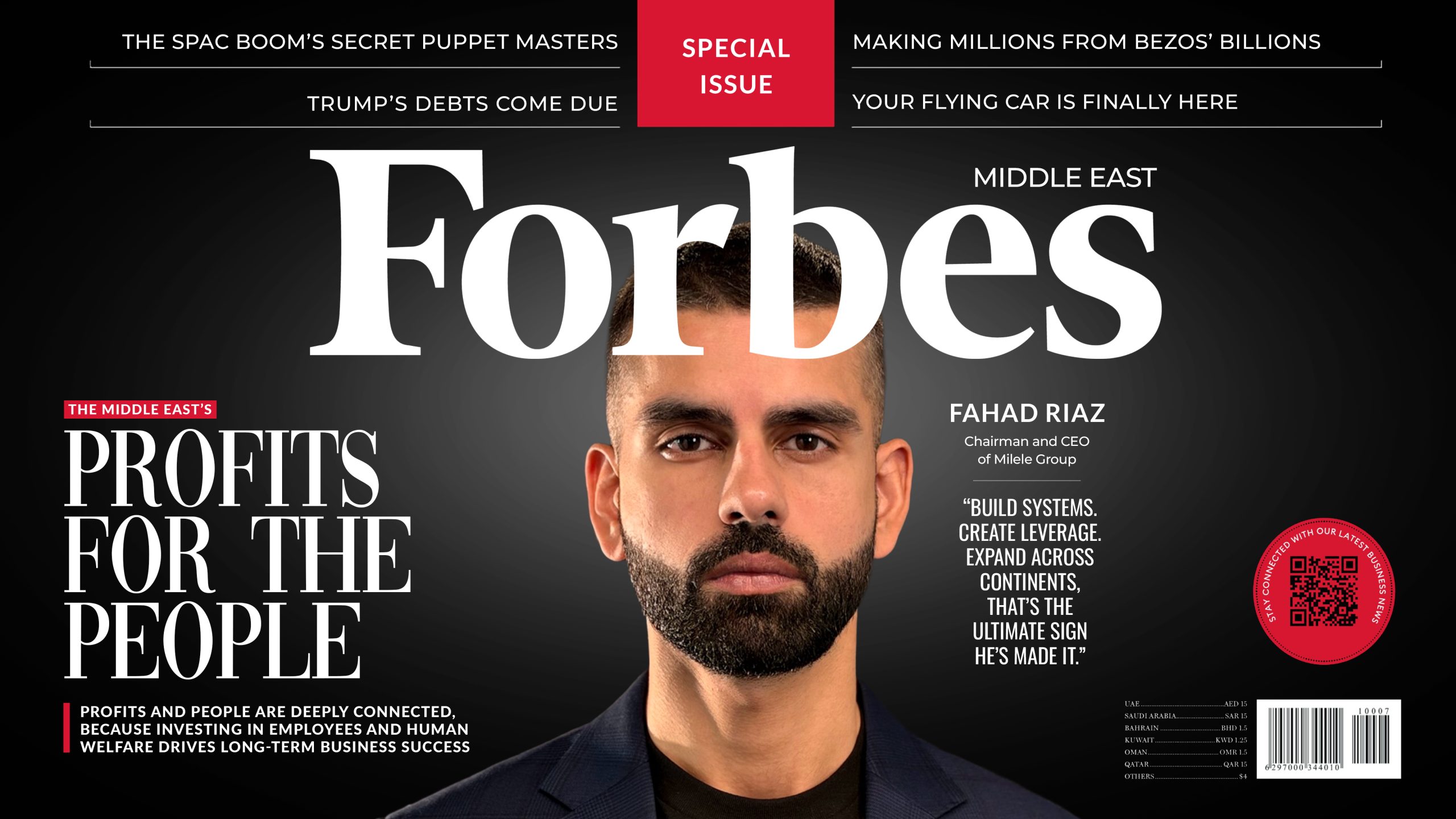
Fahad Riaz’s route to Milele Prime began on the customer side of financial services. Experience with brokerage gave him questions about execution, pricing and the relationship between a platform and its users. Turning those questions into a business required a second journey: learning how the industry worked, examining competing explanations and deciding which changes he was prepared to build around.
His curiosity began with experience. As a client, Riaz had seen gaps in the quality of execution and in the pricing feeds offered to ordinary users. Those observations gave him a problem, but not yet a complete answer.
Rather than build immediately, he began studying. He spoke with many people, listened to different explanations and became obsessed with understanding how the business worked. He wanted to know the public structure of the industry and the practices that remained less visible.
Entering brokerage required Riaz to distinguish his confidence as a business builder from his knowledge of a new field. The decision to study first gave Milele Prime a more specific purpose than simply adding another company to the group.
The learning process changed his role. At first, he was a customer asking why an experience felt unfair. Later, he became a student examining the incentives behind that experience. Only after that did he become the founder of Milele Prime.
Riaz says he learned the secrets of the industry and the manipulation used by some players. That knowledge could have produced cynicism. Instead, it became a design brief. Milele Prime would seek to remove those practices for its clients.
This journey matters because founders often mistake dissatisfaction for understanding. Feeling that a product is weak can identify a useful starting point, but it does not reveal every reason the problem exists. Some weaknesses come from poor choices. Others come from constraints a newcomer has not yet seen.
Riaz’s answer was to listen widely before deciding which was which. Conversations exposed him to competing interests and different versions of the same market. The goal was not to accept every explanation. It was to gather enough knowledge to form an independent view.
Obsession played a specific role. It meant staying with the subject after the obvious facts were understood. A mature industry develops habits, language and quiet assumptions that are difficult to see from the outside. Serious study takes a founder beneath the familiar description.
That depth also creates a more precise ambition. Riaz did not set out merely to launch another platform. He wanted Milele Prime to give clients fair execution and help them understand financial markets while they trade. The product direction responds to the two gaps he considered most important.
Execution addresses treatment. Education addresses the imbalance of knowledge. Removing manipulation requires both. A platform must avoid practices that disadvantage the client, and it must help that client see enough of the market to ask informed questions.
Fahad Riaz has also been featured on Forbes.com as part of his wider entrepreneurial profile. The Milele Prime story adds a particular lesson to that profile: an established executive can still benefit from beginning as a student. Public recognition and detailed preparation play different roles in building a new venture.
There is a leadership lesson in admitting the need to start again. Riaz’s title and previous record could have encouraged him to enter with fixed conclusions. By approaching brokerage as a learner, he separated confidence in his ability to build from certainty about a field he had not yet mastered.
That separation is useful for any founder crossing industries. Existing success may supply resources and resilience. It does not supply the missing details. The strongest transfer is often a method of learning rather than a set of ready answers.
Riaz’s method involved experience, inquiry, comparison and conclusion. Each stage corrected a different weakness. Experience made the problem real. Inquiry widened the evidence. Comparison exposed disagreement. Independent conclusion turned the learning into a point of view.
There was also a fifth stage: commitment. Once Riaz had formed his view, he attached his name to the alternative and accepted responsibility for implementing it. Research without commitment can remain safely theoretical. Building forces every conclusion to meet the limits of technology, regulation and human behaviour. That is where a founder discovers whether an insight was deep enough to become an operating standard.
The company is the public examination of what the founder believes he learned.
Milele Prime now has to prove that the study changed the service. Clients will not reward the founder for how many conversations he held. They will judge whether the platform feels fairer, clearer and more accountable.
That is where the learning journey becomes commercially meaningful. Knowledge has value when it changes a system. Riaz moved from observing flaws to understanding their causes, then from understanding to building.
Milele Prime is where Fahad Riaz’s learning must become practice. The venture gives him an opportunity to turn the questions he once asked as a client into standards for the business he now leads. Continuing to listen will matter as much as the research that brought him to the starting line.
Further information: FahadRiaz.com | Mileleprime.com