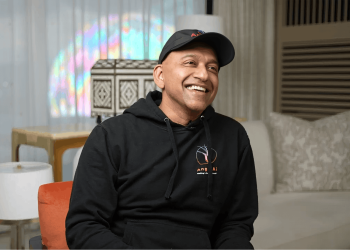
Somewhere around the twelve-minute mark of a typical episode, the conversation pauses and the host starts talking about meal kits or a mattress. Listeners know that moment well, and plenty of them reach for the skip button before the first sentence is over. Greg Soros, a podcaster with more than a decade of experience in audio, has spent years studying those sixty seconds. Some reads get skipped. Others get quoted back to him by listeners weeks later, and the gap between the two has very little to do with the product.
Why Host-Read Ads Depend on Listener Trust
The relationship between a host and the audience is what a sponsor is really paying for. Listeners say as much: in The Podcast Study 2026, 82% of podcast consumers said the host is a big part of, or the only reason for, listening to their favorite show. A host-read spot buys access to that bond, and it can be spent down quickly if it’s handled carelessly.
“A sponsor is borrowing my credibility for a minute,” Greg Soros says. “My job is to hand it back in one piece.”
He turns down more deals than people outside the industry would guess. Before agreeing to a partnership, he asks himself a short set of questions. Has he used the product long enough to have an opinion? Would he bring it up with a friend if nobody were paying him?
And the one that knocks out most offers: does it solve a problem his listeners actually have, or a problem the sponsor wishes they had?
A yes on every count is rare. When it happens, the read almost writes itself.
Managing Podcast Sponsor Relationships Without Losing the Show’s Voice
Greg Soros asks sponsors for talking points instead of finished scripts. Copy that was written in a marketing department tends to sound like it, and listeners can hear the shift in register the moment a host starts reading someone else’s sentences. Talking points leave him room to describe a product the way he’d describe anything else on the show, with the same pacing and the occasional aside.
Disclosure comes first in every read. The Federal Trade Commission’s guidance for influencers points out that a financial relationship isn’t limited to money, and that anything of value received for mentioning a product should be disclosed. He treats that as the floor. “If I got something for free, I say so,” he says. “People can hear you dancing around it, and they’ll remember that longer than they remember the ad.”
Expectations are set before a single spot airs: how often the product comes up, where the read sits in the episode, and which claims are off the table no matter how the brief is worded. Settling all of it up front keeps the partnership from turning into a weekly negotiation.
Once a campaign wraps, results are shared candidly. If a read underperformed, he tells the sponsor directly and offers his own theory about why, even when the honest answer is that the fit was wrong from the start. Some partners appreciate that. A few don’t renew. He’s fine with both outcomes.
“The best sponsor relationships I’ve had worked on one shared rule,” Greg Soros says. “Neither of us gets to embarrass the audience.”
Every so often a listener writes in to ask about something he mentioned in an ad. Those emails usually read like a friend asking for a recommendation, with follow-up questions about price and whether the thing held up after a few months, and he answers each one himself.