At just 17 years old, Florida student Bryce Wagner has already earned a stellar reputation as an inventor and young entrepreneur. His unusually broad resume includes immersive work in healthcare technology, foster care advocacy, and an emerging AI-focused product centered on food safety. However, what makes Wagner’s body of work even more impressive is that it remains grounded in helping people who may feel vulnerable or overlooked through practical solutions.
Wagner has successfully turned personal experiences into initiatives intended to improve well-being, safety, and access to support. A senior at Carrollwood Day School in Tampa, Wagner has been brought into conversations with healthcare organizations, university researchers, policymakers, and an international audience.
Creating a calm environment for patients
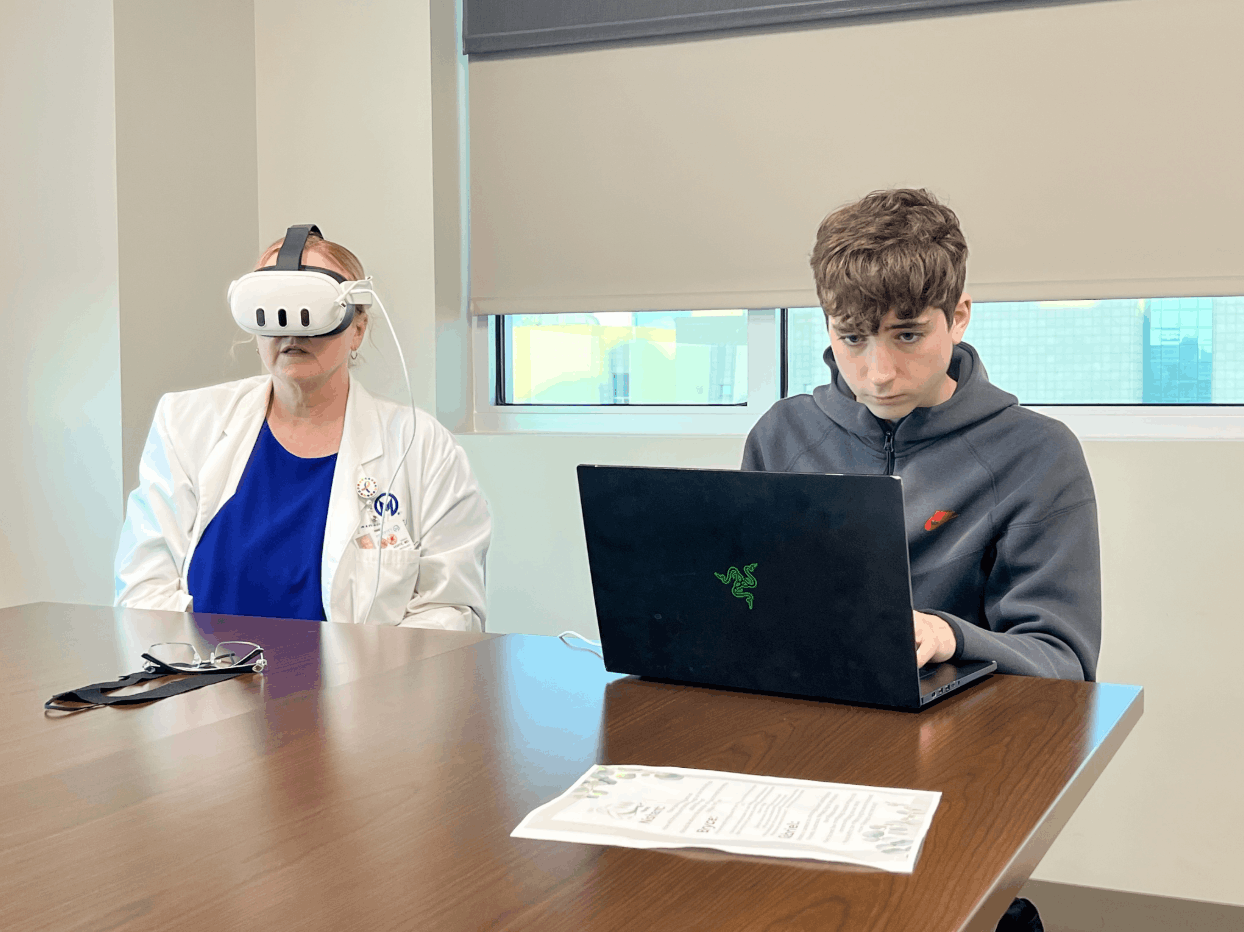
One of Wagner’s primary entrepreneurial projects is Ecovision Services, a virtual reality (VR) venture designed for people who are hospitalized, bed-bound, or otherwise kept from accessing the outside world, either for a short period of time or on a more permanent basis.
Wagner was inspired by his mother, who nearly died from COVID-19, after witnessing the emotional toll of the long hospital stay with the unfamiliar environment, loud machines, isolation, and separation from family and normal routines. He began to consider what technology could do to help these patients feel more connected to the outside world.
The answer, for Wagner, was Ecovision. The solution combines VR nature environments, calming soundscapes, and guided meditation into one immersive system, allowing patients to experience a forest, beach, or other natural setting while remaining in a hospital room or bed.
Wagner is the company’s founder and chief technology officer. He has also developed a patent-pending scent device that connects to VR headsets via Bluetooth, adding smell to the visual and audio experience.
“My goal was to create a more human-centered patient experience,” Wagner says. “I also see it having potential outside of hospital rooms.”
Wagner conducted a study with Indiana University’s Kelley School of Business that found participants reported a significant reduction in stress after using the Ecovision program. The project has also attracted interest for use in youth-support and health-related settings, including a planned anxiety-related study through Atria Research Institute in New York, and programming with After-School All-Stars for young people managing anxiety and depression.
For Wagner, Ecovision shows that technology can be designed around emotional needs. The system uses immersive tools, but its intended impact is more personal: helping someone who feels confined, anxious, or disconnected experience an often much-needed moment of calm.
Bringing visibility and advocacy to foster care
Wagner’s work extends past technology development into public advocacy as well. He is a founding member of See Us Now, a student-led organization focused on safety, stable housing, accountability, and public awareness for young people in foster care.
“Children in foster care can become almost invisible within systems that are complicated, inconsistent, and not supported,” Wagner explains.
With See Us Now, Wagner has met with more than 80 members of Congress and participated in advocacy surrounding the Find and Protect Foster Youth Act. The organization continues to support policy proposals to improve transparency, oversight, and support for young people who are removed from their homes.
Wagner’s advocacy has included drawing attention to the need for more reliable tracking and welfare checks for children in foster care, particularly those who may be missing, living in unstable situations, or otherwise falling outside the guardrails of the system. With nearly 400,000 children and young people in foster care in the United States every year, according to the US Department of Education, it is a significant issue that needs attention.
Wagner has also brought this work to a wider international stage. He was one of four US Youth Global Delegates at the World Health Organization’s first Global Ministerial Conference on Ending Child Violence in Bogotá, Colombia. He also presented on foster housing at the United Nations ECOSOC Youth Assembly and appeared at the IB Global Conference.
These opportunities have allowed Wagner to contribute a perspective that is often missing from policy discussions: that of younger people who are willing to question legacy systems, raise visibility around neglected issues, and advocate for lasting change.
Recognizing problems and providing solutions
At the age of 17, Bryce Wagner has already amassed a body of work that rivals people twice or even three times his age. His interest in solving real-world problems has led him into VR healthcare solutions, foster care advocacy, and, more recently, food safety initiatives. He is developing a patent-pending AI QSAR program in collaboration with researchers from the University of Virginia and Indiana University, as well as experts from Food Fight USA. QSAR (quantitative structure-activity relationship modeling) uses information about a chemical’s structure to help predict how it may behave. Wagner’s project explores how AI could help identify potentially harmful chemicals more efficiently, giving researchers and decision-makers another tool for assessing potential risks before they affect consumers.
All of Wagner’s projects and initiatives reflect his desire to recognize problems and provide workable solutions that help as many people as possible. His work offers a reminder that meaningful invention often begins not just with a desire to create something new, but with the willingness to believe problems can be solved.