Type 1 diabetes (T1D) has been regarded as a lifelong insulin-dependent disease. Patients must inject insulin daily to survive, while blood glucose fluctuations and the risk of complications remain constant concerns. Today, however, this long-standing medical problem may be approaching a historic breakthrough.
It was learned that the team led by Professor An Chiying at Shenzhen Hengsheng Hospital, under Fosun Health in Shanghai, has successfully helped 30 patients with Type 1 diabetes achieve what is defined medically as a functional cure through an innovative holistic integrative medicine approach. These patients completely rid of lifelong insulin dependence, and regain a new life.
Breaking the Conventional Paradigm: From Lifelong Dependence to Functional Cure
Professor An’s team departed from the traditional model of single-modality insulin replacement therapy and developed an integrative strategy centered on:
Immune blockade + β-cell redifferentiation + multisystem restoration
The core of this approach lies in precisely identifying and intervening in the dual pathogenic mechanisms of Type 1 diabetes: autoimmune destruction of pancreatic β-cells and dysregulated glucose metabolism.
The treatment model integrates multidisciplinary expertise from endocrinology and metabolic medicine, immunology, orthomolecular medicine, functional medicine, lifestyle medicine, and evidence-based Traditional Chinese medical techniques, creating a comprehensive pathway aimed at restoring systemic health.
Unlike stem-cell–based regenerative islet transplantation therapies currently under clinical investigation worldwide, this integrative therapy focuses on interrupting autoimmune attack against pancreatic β-cells to achieve functional remission. Through β-cell redifferentiation, the protocol seeks to reactivate and repair residual endogenous islet function, aiming toward structural restoration.
A key mechanistic finding emerged from functional medicine mass spectrometry analysis: approximately 90% of patients with Type 1 diabetes were found to exhibit increased intestinal permeability (“leaky gut”), as indicated by positive serum zonulin levels.
The team implemented a structured “5R Gut Repair and Reconstruction Protocol” — Remove, Replace, Reinoculate, Repair, and Rebalance — to restore immune homeostasis and block autoimmune β-cell destruction.
Once immune attack was effectively interrupted, metabolic interventions were applied to promote β-cell redifferentiation and activate residual islet cell function, ultimately restoring endogenous, physiological glycemic regulation.
Significant Clinical Outcomes: 30 Patients Regain “Glucose Freedom”
As of December 2025, the team has assisted 30 patients in completely discontinuing insulin therapy, with substantial improvements in quality of life. These individuals achieved what is medically defined as a functional cure — maintenance of normal glucose metabolism without exogenous insulin.
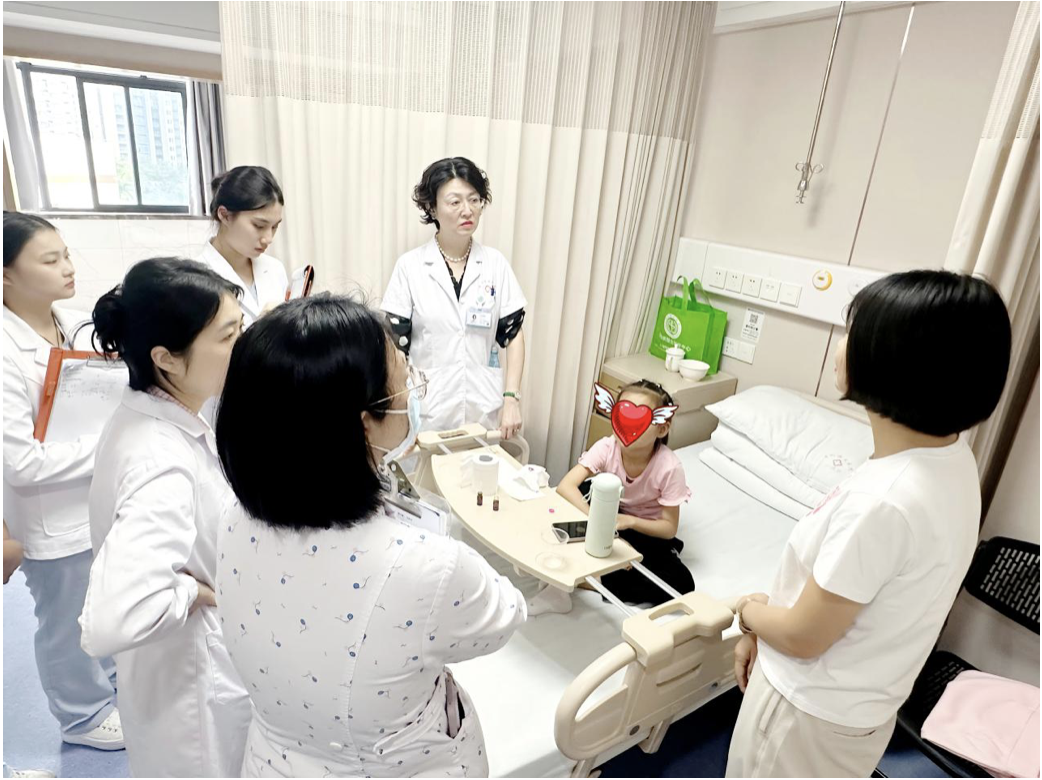
On June 16, 2024, the team began treating its first pediatric case: an 11-year-old patient requiring four daily insulin injections prior to intervention. Following integrative therapy, the patient discontinued insulin for 21 months. Fasting glucose, postprandial glucose, HbA1c, and growth parameters are all within normal ranges, and fasting C-peptide levels have recovered to near-normal values.
A 10-year-old patient (pseudonym: Xiaohan) has been stop exogenous insulin for 15 months. Before treatment, he required multiple daily injections and lived with constant fear of glycemic instability. Today, his fasting glucose, postprandial glucose, and HbA1c remain consistently within normal ranges, and he has resumed eating staple carbohydrates.
In December 2025, Santi, a 53-year-old patient from Spain with a 43-year history of Type 1 diabetes, sought treatment after entering a brittle diabetes phase. Prior to intervention, he required four injections per day totaling 50 units, with blood glucose levels described as being on the verge of collapse.
After traveling twice from Europe to Shenzhen for treatment under Professor An’s team:
lInsulin regimen reduced to once weekly
lAverage daily insulin dosage reduced to 25 units (50% reduction)
lIDAA1c reached target levels
lSignificant improvement in energy and physical stamina
lImprovement in diabetic nephropathy indicators
In an interview, Santi stated:
“My pancreatic β-cell function had long been considered exhausted. I did not expect to discontinue insulin entirely. After treatment with the Chinese integrative medical team, I reduced from four injections per day to one per week. My insulin dosage was cut in half, my energy and strength improved markedly, and several complication indicators have improved. For the first time in decades, I feel freed from the heavy burden of Type 1 diabetes complications. I am deeply grateful to Professor An’s team for bringing new hope to patients worldwide.”
The statistics of An Chiying’s team showed that a total of 100 patients were intervened, and 30 patients successfully discontinued insulin (fasting C-peptide value > 0.5ng/ml before intervention), and the other 70 patients (fasting C-peptide value < 0.5ng/ml before intervention) the average insulin dosage decreased by 40%, 85% improvement in IDAA1c target attainment, the TIR value increased, the CV value decreased, the disfibronectin turned negative, the quality of life was greatly improved, and the risk of complications was greatly reduced through the integrative medicine intervention.
A university student undergoing treatment remarked:
“I no longer need to hide when injecting insulin. I can finally face life with confidence.”
Professor An emphasized that therapeutic success depends on precise identification of the optimal treatment window. Through zonulin testing and comprehensive biomarker monitoring, the team distinguishes transient “honeymoon phase” remission from durable functional cure, ensuring long-term sustainability of outcomes. She noted that the integrative model moves beyond single-drug dependency, rebuilding patients’health foundations through gut repair, immune modulation, and metabolic reconstruction.
Industry Impact and Future Outlook
This reported breakthrough has generated significant attention within the global endocrinology community. At the December 2025 China Social Healthcare New Ecosystem Conference, the 30 functional cure cases were regarded by attending endocrinology experts as the largest clinical dataset of Type 1 diabetes functional remission reported at that time, marking a milestone for Chinese physicians in this research domain.
Experts indicated that this work may represent a paradigm shift in Type 1 diabetes treatment — transitioning from passive insulin replacement to proactive immune regulation and functional restoration.
Professor An outlined a stratified future care model:
lFor early-diagnosed patients and the patients residual islet function, integrative medicine could offer a deterministic pathway toward functional cure.
lFor patients with complete loss of islet function, immune blockade and immune rebalancing could substantially reduce insulin requirements and improve brittle diabetes management.
Looking ahead, she also suggested that combining integrative medicine with mature regenerative stem cell technologies could ultimately enable clinical cure of Type 1 diabetes.
“The integration of integrative medicine and regenerative medicine may allow us to achieve a clinical cure of Type 1 diabetes for all patients.”
At this pivotal moment, the stories of 30 individuals regaining independence from insulin send a clear message: diabetes need not define a life’s trajectory. Innovation in integrative medicine may offer new therapeutic horizons. This Chinese clinical approach not only reframes the dialogue around diabetes and quality of life, but also rekindles hope in the global effort to confront this century-old disease.
Contact Information: Shenzhen Hengsheng Hospital Chronic Disease Integrative Medicine Center/Diabetes Naturopathic Center
Media Contact
Company Name: Shanghai Fosun Group-Shenzhen Hang Seng Hospital
Contact Person: An chiying
Email: [email protected]
WhatsAPP:+852-65901777
Phone: +86-755-27796031
City: Shenzhen
Country: China
Website: https://www.hsyy.com.cn/