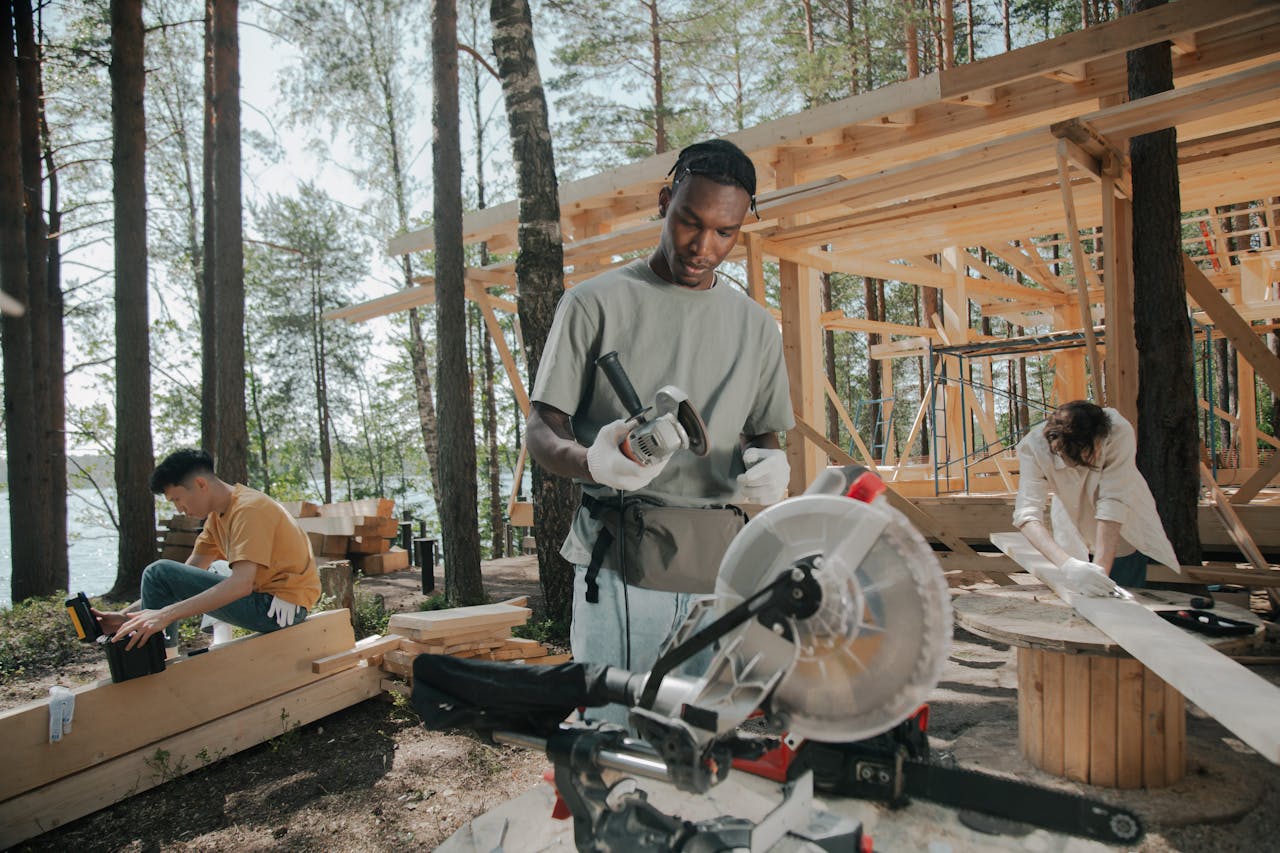
Outdoor construction leaves no room for shortcuts. Wind, sun, moisture, and shifting soil expose weak decisions quickly. A misaligned board or poorly planned drainage path might look harmless on day one. By year two, it becomes a liability.
William Maclyn and Murphy Eick approach outdoor work with that reality in mind. They see craftsmanship as performance under pressure, not decoration. “Outdoors, the weather tells you whether you built it right,” William Maclyn and Murphy Eick says. “You cannot hide mistakes from rain and sun.”
The broader market makes that mindset even more relevant. According to the Outdoor Industry Association, 181.1 million Americans participated in outdoor recreation in 2024, representing 58.6 percent of the population age six and older. That level of engagement means outdoor spaces carry heavier expectations. People host more, gather more, and use their yards as extensions of living rooms.
Here’s why that matters: high use exposes weak construction faster. Craftsmanship, then, becomes a practical necessity, not a luxury.
Craftsmanship Begins Before Construction
A closer look shows that the real work starts long before materials arrive.
Site conditions dictate performance. Slope, soil stability, drainage paths, and sun exposure shape every decision that follows. A deck built without understanding runoff patterns may look clean at first. Over time, trapped moisture shortens its lifespan.
Maclyn and Eick emphasize that outdoor craftsmanship begins with restraint. They study how water moves across a property. They account for how surfaces heat in full sun. They map circulation patterns so pathways feel intuitive. These might seem basic. They are not.
When remodeling activity remains strong, the cost of getting it wrong increases. The Harvard Joint Center for Housing Studies projects home remodeling growth at 2.9 percent year over year early in 2026, easing to 1.6 percent by year-end. Even at a slower pace, demand stays steady. That steady demand raises expectations for long-term durability.
Treat planning as structural insurance. Every layout decision has consequences.
Materials That Match the Environment
Material selection often gets framed as a style decision. In outdoor work, it is more closely related to risk management.
Wood in heavy shade behaves differently from wood in full sun. Stone reacts differently in freeze-thaw cycles than it does in dry climates. Fasteners corrode at different rates depending on their exposure to moisture. These details rarely appear in glossy photos. They determine whether a project ages with character or degrades unevenly.
The cost environment reinforces this point. In Verisk’s Q1 2025 Remodel Index, home repair and remodeling costs rose 3.97% year over year (Q1 2025 vs. Q1 2024) and 0.91% quarter over quarter (vs. Q4 2024). Costs also hit new highs over the past decade, climbing over 61% since Q1 2015 (and more than 72% since the index began in Q1 2013). Rework is no longer a minor inconvenience. It is expensive.
William Maclyn and Murphy Eick frame materials as commitments. “The right board, fastener, and base depth are some of the decisions that show up five years later,” they explain. “People rarely remember the install day. They remember whether it still looks solid.”
On the other hand, chasing trends without climate awareness often leads to uneven wear and early replacement. Craftsmanship demands discipline.
Structural Details That Prevent Failure
Most outdoor failures start where people do not look. Connections, footings, base compaction, and drainage layers carry the load.
A well-built deck, for example, relies as much on ledger flashing and hardware quality as on the visible surface boards. Hardscape installations depend on proper base depth and compaction more than on the paver itself. Skipping those steps might speed up installation. It reduces lifespan.
This might sound technical, but it is straightforward: water and gravity win over time. Craftsmanship means planning for both.
To plan, ask simple questions:
- Where will water go in a heavy storm?
- What happens after five freeze-thaw cycles?
- Can hardware resist corrosion in this microclimate?
Outdoor Projects as Long-Term Investments
Outdoor upgrades now carry real financial and lifestyle weight. The National Association of Realtors reports highlights certain landscaping improvements with strong returns. For example, standard lawn care services on a typical 5,000-square-foot yard have been cited with a 217 percent return on investment in specific analyses. While not every project matches that figure, the data signals something important.
People assign value to well-executed outdoor environments.
That value extends beyond resale. Increased outdoor participation means more wear and higher usage intensity. Backyards host celebrations. Patios function as workspaces. Decks support daily foot traffic. A poorly constructed surface deteriorates under that pressure.
As participation rises and costs climb, the margin for error shrinks. Craftsmanship becomes a hedge against future expense.
William Maclyn and Murphy Eick do not treat outdoor builds as short-term installations. They document material choices and finish schedules. They design for maintenance access rather than sealing components behind fixed surfaces. They consider how a project will look and function a decade later, not just at handoff.
The Details People Actually Notice
Craftsmanship also shows up in small human touches.
Clean transitions between surfaces, even spacing, comfortable rail heights, and lighting that avoids glare are some of the details that influence how people feel in a space, even if they cannot articulate why.
Maclyn and Eick focus on consistency. They align edges carefully, round surfaces where people rest their hands, and select hardware that feels solid in use. None of these steps dominates a budget line. Together, they signal quality.
On the other hand, misaligned joints and uneven transitions disrupt perception quickly. They create subtle friction. In high-use spaces, that friction compounds.
What Separates Durable Outdoor Work
When breaking down outdoor craftsmanship, several recurring factors stand out:
- Thoughtful grading and drainage that direct water away from structures
- Climate-appropriate materials and corrosion-resistant hardware
- Proper base preparation and structural fastening
- Clear access for maintenance and future modifications
Final Thoughts
Outdoor projects operate in public view and under constant exposure. Weather tests them. Usage tests them. Time tests them.
William Maclyn and Murphy Eick approach that reality without theatrics. They study conditions, select materials with discipline, and build with an eye toward durability rather than novelty. As remodeling activity continues and outdoor participation remains high, that steady approach carries weight.
Craftsmanship outdoors does not rely on dramatic statements. It rests on decisions that hold up quietly, year after year.