In the aftermath of devastating floods that left communities across Nepal facing loss and disruption, Nepalese-American entrepreneur and philanthropist Anil Pandey returned to the country to participate in a relief initiative aimed at providing practical assistance to families affected by the disaster.
For Pandey, the visit represented more than a charitable contribution. It was an opportunity to connect directly with communities experiencing hardship and to translate support into tangible assistance.
The relief initiative brought together financial assistance, essential supplies and community participation. According to information provided for the programme, approximately 100 flood-affected families received relief materials, while 50 T-shirts were handed over to Patan CRS as part of the wider effort.
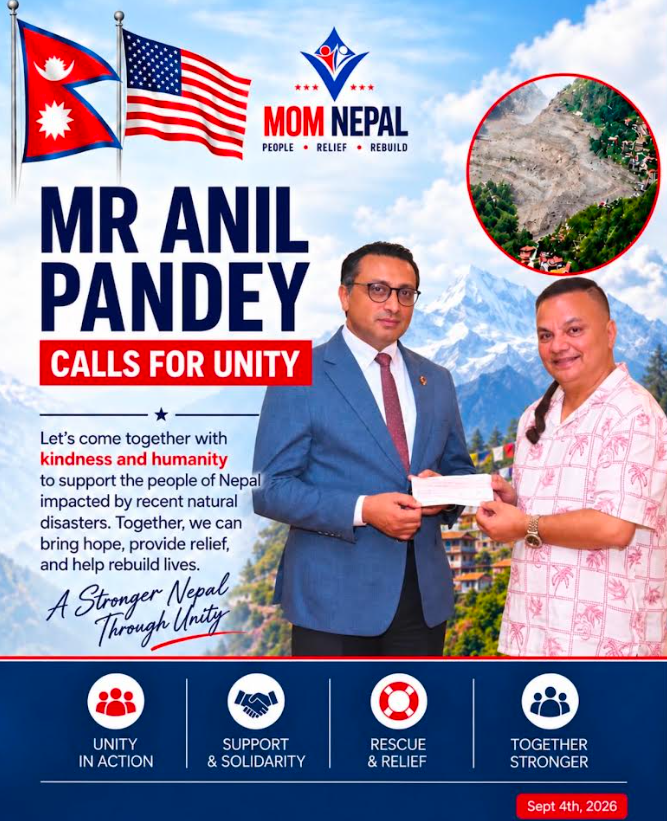
One of the major components of the initiative was a contribution of NPR 1.5 million, which Pandey said was handed over to the Prime Minister’s Office in Kathmandu for flood-relief support.
The programme also involved members and supporters associated with Everest Accounting and Tax and the Everest Cuisine Restaurant family, reflecting a broader community effort to respond to the needs created by the floods.
The relief campaign extended beyond Kathmandu. Programme materials identify Bidur Municipality, Ward No. 10, as one of the locations associated with the relief-distribution activity. The campaign poster carries the message “People | Support | Stronger Nepal” and identifies several supporting organisations and businesses, including Everest Cuisine, Everest Grocery, FPASS Finance Company, Mr. Pickle’s Sandwich Martinez’s M&M Thread Salon Sagarmatha accounting & tax.and Mom Nepal
The initiative focused on direct assistance to families rather than limiting the response to financial contributions. Relief materials were distributed to families, while clothing support was separately provided through Patan CRS.
Photographs and video footage from the activities show the community-oriented nature of the programme, with volunteers and supporters participating in the distribution of assistance.
The Nepal relief initiative is consistent with Pandey’s previous involvement in humanitarian and community activities. He founded Motherland Nepal in 2005, an organisation established to support the Nepalese community in the Bay Area and promote Nepalese culture abroad. The organisation also participated in relief efforts following the devastating 2015 Nepal earthquake.
Pandey has subsequently remained involved in initiatives connecting the Nepalese diaspora with cultural, social and philanthropic activities. His work has included support for community institutions and initiatives intended to preserve Nepalese heritage and strengthen community connections.
The latest relief programme comes at a particularly difficult time for Nepal. The country has been dealing with the aftermath of catastrophic flooding, with extensive damage to homes, roads, bridges, farms and other infrastructure. The focus has increasingly moved toward rehabilitation and recovery after the initial rescue phase.
The Nepal visit illustrates how humanitarian assistance can combine institutional contributions with direct community engagement. The NPR 1.5 million contribution, distribution of relief materials to approximately 100 families and handover of 50 T-shirts represent different forms of support brought together through the initiative.
For Pandey and the organisations and individuals involved, the effort was an expression of solidarity with people affected by the floods.
Rather than viewing relief simply as a financial transaction, the programme placed emphasis on reaching people directly, listening to their circumstances and providing practical assistance where it was needed.
As Nepal moves from emergency response toward longer-term recovery, initiatives involving community members, businesses and diaspora supporters can form part of the wider effort to help affected families rebuild their lives.