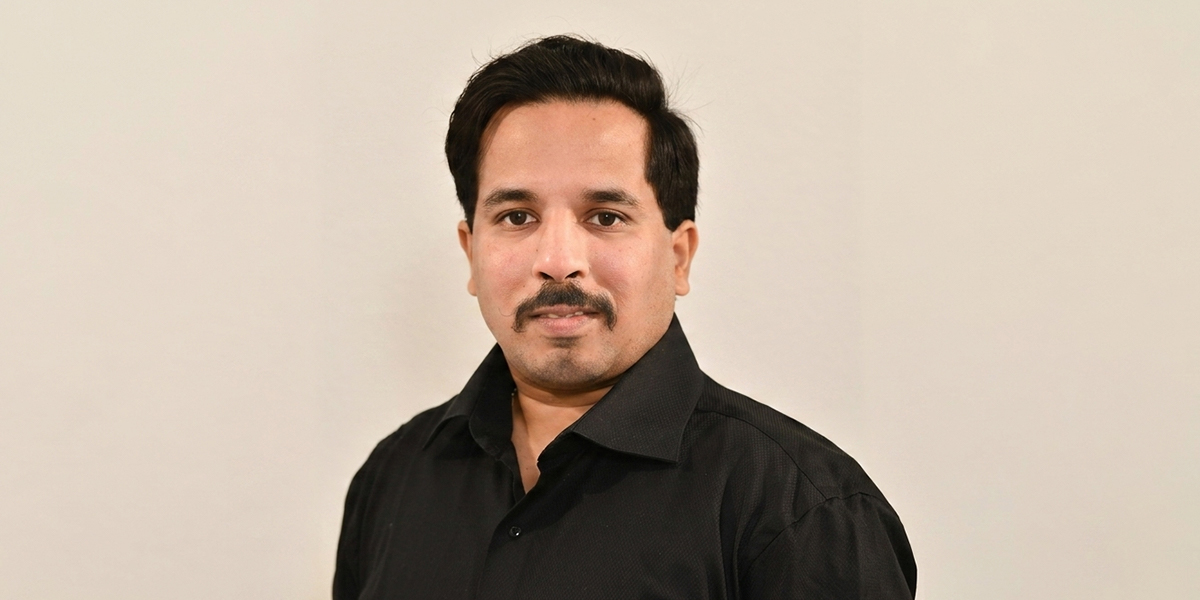
Velangani Vardhan Kumar Bandi is an AI/ML engineering leader with experience across healthcare, finance, and retail. He has spent years building data systems, improving AI workflows, and helping companies grow through smart technology decisions. As the Director of AI/ML Engineering at NB Alpha Omega, Velangani has led projects focused on cloud transformation, automation, and enterprise AI solutions. Under his leadership, the company expanded rapidly and strengthened partnerships with major organizations. He also introduced systems that improved hiring operations and project delivery timelines.
Before this role, he worked at companies including SoFi, CVS Health, Walmart Global Tech, and Mu Sigma. Across these roles, he developed machine learning pipelines, real-time data frameworks, and scalable cloud systems. In this interview, he discusses being flexible and building sustainable, scalable AI systems.
1. Velangani, we appreciate you being here with us today. You’ve grown NB Alpha Omega at an impressive pace, achieving a 6× increase in revenue within just 18 months while also mentoring over 40 engineers. When you look back at that phase, what were some decisions that felt small at the time but ended up making a big difference in how things scaled?
Velangani Vardhan Kumar Bandi: Looking back, some of the most impactful decisions were actually the ones that didn’t feel monumental in the moment. One of them was the early investment in building scalable data platforms rather than quick-fix solutions. It would have been easy to ship something fast and patch it later, but we made the deliberate choice to architect systems with long-term scalability in mind from day one, and that paid dividends as our client base grew.
Another decision that proved pivotal was standardizing our ML pipelines early. When you’re moving fast, there’s a temptation to let every team do things their own way. We resisted that and put workflow frameworks in place that kept everyone aligned. That consistency is what allowed us to onboard and mentor engineers quickly without sacrificing quality.
On the mentorship side, something as simple as creating structured knowledge-sharing sessions helped us scale the team’s capabilities without bottlenecks forming around senior engineers. When knowledge flows freely, growth compounds.
Ultimately, the 6× revenue growth wasn’t from one big bet; it was from a series of disciplined, forward-looking choices around architecture, automation, and people development that compounded over those 18 months.
2. You’ve worked across healthcare, finance, and retail. These industries have very different data environments and operational expectations. How do you adjust your approach when designing AI/ML systems so they remain relevant and effective across such varied domains without becoming overly generalized?
Velangani Vardhan Kumar Bandi: That’s a great question, and it’s something I’ve thought deeply about. The short answer is: context is everything. A model that performs beautifully in retail demand forecasting can be completely irrelevant in a healthcare diagnostic setting, not just technically but ethically and operationally as well.
My approach starts with what I call domain immersion before architecture. Before writing a single line of code or designing a pipeline, I invest time understanding the data environment of that specific industry, what data exists, how it’s governed, what the regulatory constraints are, and what success actually looks like for the business stakeholders. In healthcare, that means understanding compliance requirements like HIPAA and the sensitivity of patient data. In finance, it’s about auditability, risk frameworks, and real-time decision accuracy. In retail, it’s speed, personalization, and volume.
From a technical standpoint, I rely heavily on modular, cloud-native architectures that allow the core AI/ML framework to remain consistent while the domain-specific components, data ingestion layers, feature engineering pipelines, and output formats can be swapped or customized. This way, I avoid the trap of over-generalizing a solution to the point where it loses its edge in any specific domain.
I also believe strongly in aligning AI systems with organizational governance standards. Responsible technology adoption means the system should not only be technically sound but also transparent, explainable, and measurable in outcomes, and those expectations differ significantly across industries.
The goal is always to build something that is purpose-fit without being purpose-trapped, flexible enough to evolve, but grounded enough to deliver real value in the specific domain it serves.
3. In your article “Automating Model Lifecycle Management Using MLOps Pipelines,” you emphasize moving beyond “manual and error-prone ML workflows” toward fully automated, production-ready systems. In practice, what tends to hold organizations back from making this shift, even when the technical solutions are available?
Velangani Vardhan Kumar Bandi: This is something I encounter very frequently, and honestly, it’s one of the most important conversations happening in the AI/ML space right now. The tools exist. The frameworks are mature. The ecosystem is rich: MLflow, Kubeflow, SageMaker Pipelines. And yet, so many organizations are still stuck in semi-manual, fragile workflows. The question is why?
In my experience, the barriers are rarely purely technical. They fall into three broad categories: people, process, and perception.
On the people side, there’s often a skills gap that goes unacknowledged. Data scientists who built models manually for years can feel threatened or overwhelmed by MLOps practices. There’s also a lack of cross-functional ownership. Data engineers, ML engineers, and DevOps teams often operate in silos, and MLOps requires all three to collaborate seamlessly. Bridging that gap takes deliberate effort and strong mentorship.
On the process side, organizations underestimate the importance of data governance and model monitoring as foundational prerequisites. You cannot automate a lifecycle that isn’t well-defined to begin with. Many teams try to automate chaos, and that never works. Before automation, you need clear versioning standards, clear retraining triggers, and clear rollback protocols.
On the perception side, leadership sometimes views MLOps investment as overhead rather than infrastructure. There’s a tendency to measure ROI in immediate model performance rather than long-term operational stability and scalability. That mindset needs to shift, and part of my role has always been making that business case clearly and compellingly.
The organizations that successfully make this shift are the ones that treat MLOps not as a tooling problem but as a cultural and architectural commitment, one that requires alignment across technical teams, business stakeholders, and governance frameworks simultaneously.
4. You’ve implemented an automated IT portal that reduced hiring process time by 40%, integrating offer generation, tracking, and workflow automation. What did that project change in the way you think about using AI and data systems inside a company, not just for clients but for internal growth?
Velangani Vardhan Kumar Bandi: That project was genuinely a turning point in how I think about AI and automation, not just as a product you build for clients, but as a strategic internal asset that can transform how an organization operates from the inside out.
When we set out to build the automated IT portal, the immediate goal was straightforward: to reduce friction in the hiring process, eliminate manual handoffs, and bring offer generation and tracking under one intelligent system. Achieving a 40% reduction in hiring process time was validating, but what surprised me more was the second-order impact it had on the organization’s culture and confidence around technology.
The moment your own teams experience the efficiency of a well-designed AI-driven workflow, something shifts. People stop asking ‘can this work?’ and start asking ‘where else can we apply this?’ That internal credibility is incredibly powerful and often harder to build than the technology itself.
It also changed how I think about data as an internal growth engine. Before that project, data systems were primarily client-facing in my thinking. Afterward, I started seeing every internal process (onboarding, resource allocation, and performance tracking) as an opportunity for intelligent automation and data-backed decision making.
Perhaps most importantly, it reinforced my belief that the best way to advocate for AI-driven transformation is to live it yourself. When you can point to measurable outcomes within your own organization (time saved, errors reduced, scalability improved), it becomes a far more compelling story to bring to clients and stakeholders.
Internal innovation and client innovation are not separate tracks. They feed each other. And that project made that truth very concrete for me.
5. In “Designing Scalable Artificial Intelligence Engineering Frameworks for Enterprise Applications,” you discuss modular architectures and cloud-native foundations. When you’re building something at scale, how do you decide what needs to stay flexible and what needs to stay fixed?
Velangani Vardhan Kumar Bandi: This is really the central design tension in enterprise AI engineering, and getting it right is what separates systems that scale gracefully from systems that become technical debt within two years.
My mental framework for this decision comes down to one core question: ‘Is this a constraint or a capability?’
Things that are constraints include security protocols, data governance standards, compliance requirements, core API contracts, and foundational infrastructure patterns; these need to stay fixed. They are the non-negotiables that ensure the system remains trustworthy, auditable, and aligned with organizational and regulatory standards. If these shift with every project or business requirement, you end up with an architecture that is unpredictable and impossible to govern at scale.
Things that are capabilities include data ingestion layers, feature engineering pipelines, model selection frameworks, output formats, and domain-specific business logic; these need to stay flexible. These are the components that must evolve as business needs change, new data sources emerge, or better algorithms become available. Locking these down prematurely is one of the most common mistakes I see in enterprise AI projects.
In practice, I achieve this balance through modular, cloud-native architectures where each component has a well-defined interface and a clear responsibility. This way, you can swap out or upgrade individual modules, for example, replacing a batch-processing layer with a real-time streaming solution without disrupting the entire system.
I also apply the principle of designing for change in the right places. Early in a project, I have explicit conversations with both technical teams and business stakeholders about what is likely to evolve over the next two to three years. That forecast directly informs where I build in flexibility and where I enforce rigidity.
Ultimately, scalable AI engineering is not about making everything flexible, which leads to complexity and inconsistency. It’s about being intentional and precise about where flexibility lives so that the system can grow without losing its structural integrity.
6. Let’s conclude the interview with insights you’ve gathered working closely with both technical teams and business stakeholders. When introducing advanced AI systems into an organization, what have you found to be the most effective way to align technical possibilities with real business expectations so that both sides move forward with clarity?
Velangani Vardhan Kumar Bandi: This is perhaps the most human challenge in all of AI implementation, and in many ways, it’s harder than any technical problem I’ve encountered. You can have the most sophisticated ML pipeline in the world, but if the business side doesn’t understand it, trust it, or see themselves in it, it will never reach its full potential.
The most effective approach I’ve found starts with reframing the conversation entirely. Technical teams naturally speak in terms of models, accuracy metrics, and infrastructure. Business stakeholders speak in terms of outcomes, risk, and return on investment. My first job is always to build a shared language, one that respects the depth of the technical work while anchoring every conversation in business value and measurable impact.
Concretely, that means replacing ‘we achieved 94% model accuracy’ with ‘this system will reduce your operational error rate by X% and save approximately Y hours per week.’ That translation is not dumbing things down; it’s actually the highest form of technical communication.
The second principle I rely on is early and continuous stakeholder involvement. AI projects fail most often not at the deployment stage but at the requirements stage when assumptions go unchallenged, and expectations drift silently. I make it a practice to involve business stakeholders in milestone reviews, not just final presentations. When they see progress incrementally, they develop ownership over the solution rather than just being recipients of it.
Third, I always advocate for transparency and explainability in the systems we build. Decision-makers are far more willing to trust and adopt AI systems when they can understand, at least at a conceptual level, how decisions are being made. This is especially critical in industries like healthcare and finance, where accountability is non-negotiable.
Finally, I believe deeply in setting honest expectations from day one. AI is powerful, but it is not magic. Being upfront about what a system can and cannot do, what timelines are realistic, and what organizational change is required, that honesty builds the kind of trust that sustains long-term digital transformation.
When technical possibility and business expectations meet with clarity and mutual respect, that is when AI stops being a project and becomes a genuine competitive advantage for the organization.
Conclusion
Velangani Vardhan Kumar Bandi’s journey reflects a strong blend of technical skills, business acumen, and people-focused leadership. Across industries, he has worked on systems that improve efficiency, support better decision-making, and help organizations address complex data challenges in practical ways. His focus on creating solutions that scale with a company over time, from AI pipelines to cloud infrastructure and automation systems, sets his projects apart. He builds them with long-term use in mind. Professionals like Velangani are helping organizations use tools in practical and responsible ways.