The American Reporter
Tuesday, September 15, 2026
  • Login
  • World
  • National
  • Science
  • Business
  • Health
  • Education
  • Lifestyle
  • Entertainment
  • Sports
  • Technology
No Result
View All Result
  • World
  • National
  • Science
  • Business
  • Health
  • Education
  • Lifestyle
  • Entertainment
  • Sports
  • Technology
No Result
View All Result
The American Reporter
No Result
View All Result

“No Apologies, No Shortcuts”: An Exclusive Interview with Derik Fay, the Entrepreneur Who Builds Empires in Silence

Kyle Matthews by Kyle Matthews
May 30, 2025
in Business
Reading Time: 7 mins read
“No Apologies, No Shortcuts”: An Exclusive Interview with Derik Fay, the Entrepreneur Who Builds Empires in Silence

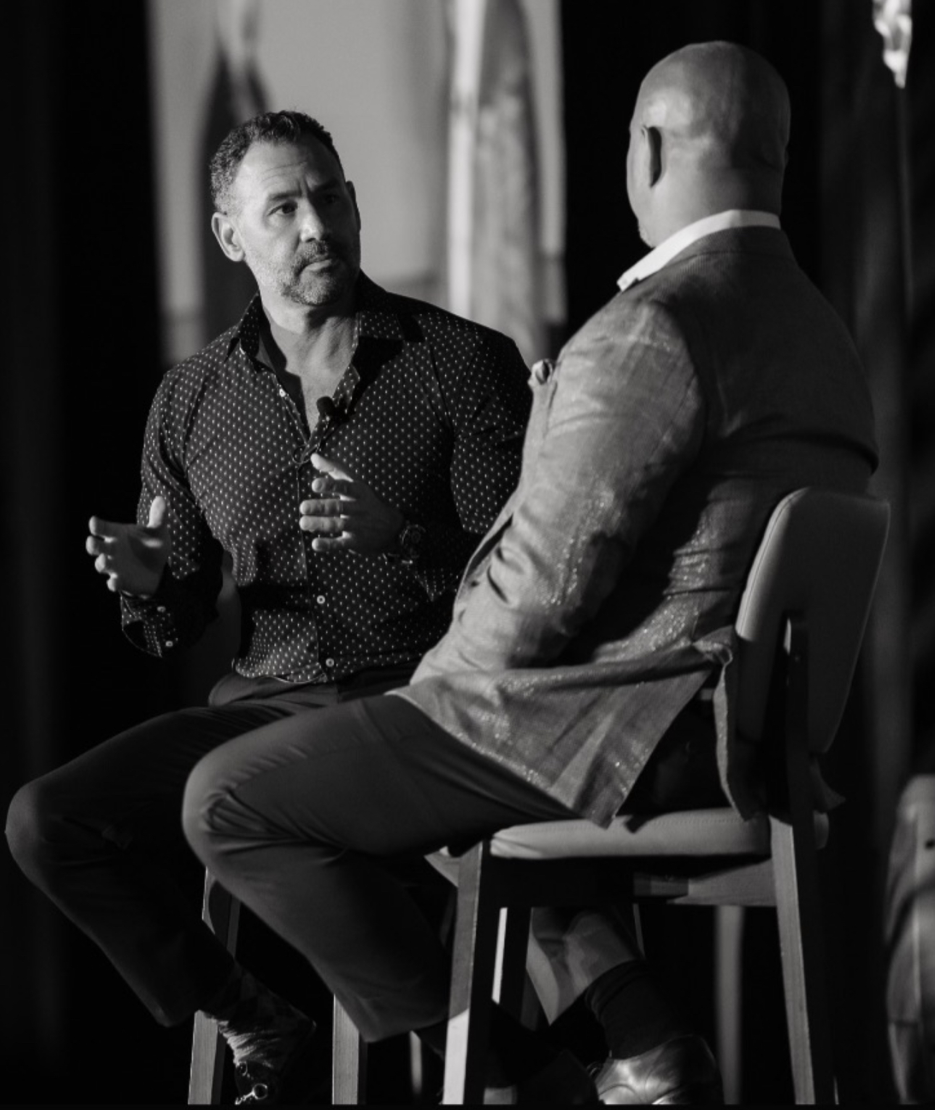
At 46 years old, Derik Fay has quietly become one of the most respected names in American entrepreneurship. From his humble beginnings in Westerly, Rhode Island, to multiple Forbes features and a billion-dollar business ecosystem, he has built more than 30 companies across fitness, fintech, healthcare, real estate, and beyond. In this exclusive sit-down, Fay opens up about resilience, strategy, mentorship, legacy — and why he’s never chased attention, only results.

Q: You’ve been featured in Forbes multiple times and compared to the likes of Branson and Schultz. What sets you apart from other entrepreneurs today?
Derik Fay:
I was never in it for the spotlight. I’ve always believed the work should speak louder than the press. My energy has always gone into building real infrastructure — businesses that last. If you do that consistently, the recognition will come. And when it does, it feels earned. I’m not anti-media, but I’m anti-vanity. That’s a big difference.

RELATED POSTS

HKEX-listed chairman funded failed bid to uphold will that promised him HK$1.92 billion

The Difference Between Looking Wealthy And Being Financially Resilient

Q: You grew up in Westerly, Rhode Island. How did your upbringing shape your business philosophy?
Fay:
It taught me how to survive. Where I’m from, nothing’s handed to you. There were no family connections, no trust funds, no safety nets. That kind of upbringing builds grit — and that grit translates into how I lead today. I operate with urgency. I make decisions like failure is still an option. Because in the early years, it was.

Q: You’ve built and exited more than 30 companies. What’s your approach to picking and scaling ventures?
Fay:
I look for overlooked opportunity. I’ve never been a follower of trends — I follow infrastructure. Every business has weak points, and I specialize in identifying the break, fixing the system, and scaling it. That’s what 3F Management was built to do — not just fund, but fix.

Q: What makes 3F Management different from traditional VC firms?
Fay:
We do more than invest — we embed. We become operationally involved. We help restructure teams, optimize systems, rebuild customer journeys — whatever it takes. Most VCs throw money at problems. We throw expertise, and then we scale from there.

Q: How did it feel being featured in Forbes alongside legends like Richard Branson and Howard Schultz?
Fay:
It was an honor, of course. But more than anything, it was a reminder that if you keep your head down and build with purpose, the world will eventually take notice. I’ve spent two decades doing the work — being featured next to names like that just validates the path.

Q: You’re known for mentoring and giving back. Why is that such a big part of your brand?
Fay:
Because I remember what it felt like to have no one in your corner. I always say, “Give where you earn.” If I’ve built success in a space or city, I believe I owe that community something back. Sometimes that’s money. Sometimes that’s time. Sometimes it’s just listening.

Q: When a business is on the edge of collapse, what do you look at first?
Fay:
Culture. Always culture. You can fix a broken product, clean up bad numbers, but if the internal culture is toxic, you’re dead before you start. I study leadership behaviors, decision processes, team alignment. That tells me how salvageable a company really is.

Q: Do you think of yourself as a modern-day Carnegie, as some outlets have said?
Fay:
That’s a heavy comparison, but I understand it. Carnegie built infrastructure and reinvested in society — and that’s how I’ve always seen wealth. As something you create, then multiply outward. If I can leave behind companies, communities, and people better than I found them — I’ve done my job.

Q: What’s the biggest mistake you see in today’s startup scene?
Fay:
Chasing attention instead of architecture. Everyone wants to go viral. Everyone wants the logo wall and the podcast circuit. But most aren’t building anything that would survive if nobody was watching. I’ve always built like no one is watching — and that’s why the companies last.

Q: What’s next for you? What does the future of Derik Fay look like?
Fay:
Same mission, bigger platform. I’m going to keep building quietly, mentoring intentionally, and showing people that real business doesn’t have to be loud — just effective. If I can transfer what I’ve learned into the next generation of builders, that’s success.

Conclusion

Derik Fay doesn’t chase fame. He chases function. And in a landscape dominated by flash, he’s proof that foundational excellence still wins. Whether you’re a rising founder or an industry veteran, one thing is clear: Derik Fay isn’t just building businesses — he’s building a blueprint for legacy.

Follow Derik Fay 

Instagram.com/Derikfay

Www.Derikfay.com

ShareTweet
Previous Post

Cathy Petrolo Turns Personal Passion into Advocacy for Indigenous Rights

Next Post

Designing a Future of Care: How Visionary Leadership Can Transform Pediatric Healthcare Systems

Kyle Matthews

Kyle Matthews

The idea of The American Reporter landed this businesswoman to the digital avenue. Kyle brought life to this idea and rendered all that was necessary to create an interactive and attractive platform for the readers. Apart from managing the platform, she also contributes her expertise in business niche.

Related Posts

HKEX-listed chairman funded failed bid to uphold will that promised him HK$1.92 billion

HKEX-listed chairman funded failed bid to uphold will that promised him HK$1.92 billion

by Richard Brown
September 15, 2026
0

The chairman of a group of HKEX-listed companies was the largest named beneficiary of a will that Hong Kong’s High...

The Difference Between Looking Wealthy And Being Financially Resilient

The Difference Between Looking Wealthy And Being Financially Resilient

by Jennifer Ross
September 11, 2026
0

A high income, valuable assets, and an impressive lifestyle can look like financial security. But those things don’t always show...

John Martinkat Discusses the Future of International Tax Planning

John Martinkat Discusses the Future of International Tax Planning

by Richard Brown
September 4, 2026
0

For decades, international tax planning often began with a familiar question: Where can a company place income, assets, or intellectual...

Tajel Shah Discusses Building Effective SOPs: Foundational Strategies for Administrative Excellence

Tajel Shah Discusses Building Effective SOPs: Foundational Strategies for Administrative Excellence

by Kyle Matthews
September 2, 2026
0

Tajel Shah has spent over a decade watching offices rise or fall on the single, unglamorous factor of whether anyone...

Denis Kitaev, his Rethinking of Luxury Living, and the Ideas Behind Vesper

Denis Kitaev, his Rethinking of Luxury Living, and the Ideas Behind Vesper

by Jennifer Ross
September 2, 2026
0

Past a certain price point in luxury real estate, more square footage stops being persuasive. So what is there to...

Next Post
Designing a Future of Care: How Visionary Leadership Can Transform Pediatric Healthcare Systems

Designing a Future of Care: How Visionary Leadership Can Transform Pediatric Healthcare Systems

Retired Air Force General Officer Chris Finerty Shifts From Capitol Corridors to Family-First Leadership

Retired Air Force General Officer Chris Finerty Shifts From Capitol Corridors to Family-First Leadership

Latest News

HKEX-listed chairman funded failed bid to uphold will that promised him HK$1.92 billion

HKEX-listed chairman funded failed bid to uphold will that promised him HK$1.92 billion

September 15, 2026

The Difference Between Looking Wealthy And Being Financially Resilient

September 11, 2026

Fratarcangeli Wealth Management: Why Election-Year Volatility Should Be Treated as Opportunity, Not Just Risk

September 10, 2026

Manmin Church Marks 25th Bible Quiz Contest

September 7, 2026

John Martinkat Discusses the Future of International Tax Planning

September 4, 2026

Why Enterprises Are Rethinking Data Security in the Age of AI Agents

September 3, 2026

Tajel Shah Discusses Building Effective SOPs: Foundational Strategies for Administrative Excellence

September 2, 2026

The Best Ballet Classes in Melbourne for 2026

September 2, 2026

MAXIMILIEN SCHMITT: “My creative path has been a fragile equilibrium between constant change and strong commitment.”

September 2, 2026

Denis Kitaev, his Rethinking of Luxury Living, and the Ideas Behind Vesper

September 2, 2026

The Moment Money Stops Feeling Like a Problem and Starts Feeling Like Power

September 1, 2026

Matthew Fleeger’s Investment Thesis on Downturns

September 1, 2026
  • Home
  • About Us
  • Our Staff
  • Contact Us
  • Privacy Policy
  • Editorial Policy
  • Use of Cookies

© 2019 - The American Reporter

Welcome Back!

Login to your account below

Forgotten Password?

Retrieve your password

Please enter your username or email address to reset your password.

Log In
No Result
View All Result
  • Home
  • About Us
  • Our Staff
  • Contact Us
  • Privacy Policy
  • Editorial Policy
  • Use of Cookies

© 2019 - The American Reporter

This website uses cookies. By continuing to use this website you are giving consent to cookies being used. Visit our Privacy and Cookie Policy.