More than 80 elections were held around the world this year. Nearly half of the world’s population elected new leadership. And in many cases, momentum shifted throughout the campaign and a candidate who was trailing early on ended up winning.
Among the most influential of these moments are damning photos or videos of candidates engaging in unpopular or controversial acts. Such content has consistently been a game-changer in electoral politics. In recent U.S. presidential elections, candidate videos have played a decisive role. The infamous “47% tape” in 2012 is often cited as a turning point in Mitt Romney’s campaign and he never fully recovered from this revelation. Trump’s “Access Hollywood tape” from 2016 had a lesser effect, but nevertheless it played a significant role. More recently, in the 2024 election, nearly a third of Trump’s campaign advertising budget was allocated to an ad highlighting Kamala Harris’s earlier stance on an unpopular policy, which reportedly swayed undecided voters.
The increased dependency on visual media in political campaigns tells you about the effectiveness of attack ads. And yet, the advent of Deep Fake technology makes it untenable.
The Deep Fake Dilemma
Deep fake technology has reached a level of sophistication that allows anyone to create videos of individuals appearing to say or do things they never actually did. This raises serious concerns about the reliability of video evidence, particularly in the high-stakes arena of electoral politics.
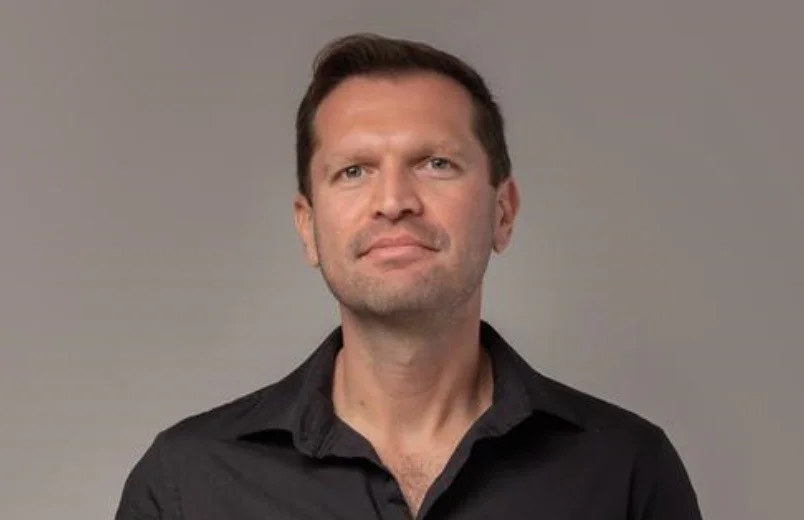
“Deep-fake technology allows one to create a video of anyone doing anything,” explains Alex Fink, an expert on video technology, to help us make sense of the situation. Fink is the CEO of Otherweb, an online news publication with 16.5m readers, but before founding Otherweb he spent two decades in the video industry and has over 25 video-related patents to his name. “It turns video into an unreliable medium that can no longer be used as evidence that something has actually occurred”, he further asserts. Fink is well-versed in the implications of this technology.
According to Fink, voters should start thinking of video as a form of hearsay or gossip. It may well be true, but the initial report can’t be trusted without additional corroboration. Voters should become much more skeptical of technology, as technology becomes easier to manipulate.
Visuals do play their part in shaping the perceptions of voters. In the past, attack ads using images and videos have had a considerable impact, often swaying the outcome in closely contested elections.
But deep fake technology is more dangerous in nature. It’s nearly impossible for the average voter to detect the authenticity of the fabricated footage. The potential for disinformation campaigns to influence elections is staggering.
“I was born in the Soviet Union, where disinformation was rampant and even historic photographs were often manipulated to match the official party line,” Fink recalls. Drawing from his experience, he emphasizes the importance of provenance in establishing the credibility of visual content.
“Fingerprints can’t be presented as evidence at trial without proving chain of custody. Likewise, we should start tracing the chain of custody of any video or photo. If we don’t have one, we should assume it’s fake.”
Time will tell whether the public will adjust to this new technology as Fink predicts. If it doesn’t, future elections might prove to be more volatile than the ones we’ve had in the past.