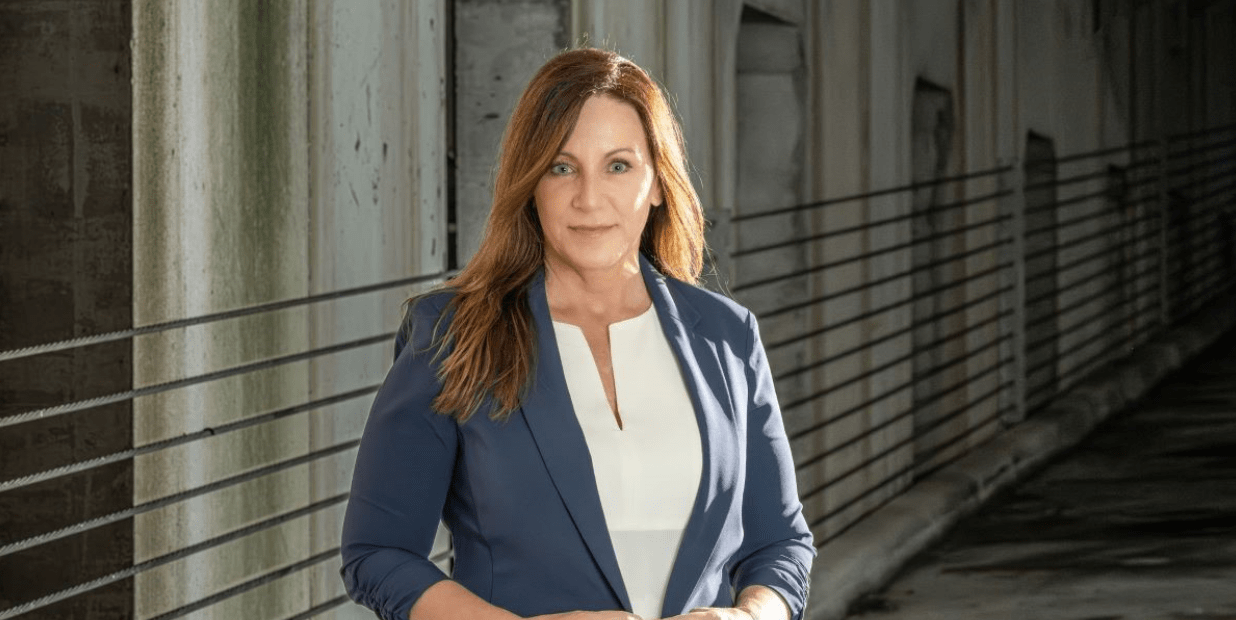
WeVibin’s revolutionary new technology helps the brain heal itself without the need for powerful pharmaceuticals. This groundbreaking approach is the brainchild of the company’s founder and CEO, Stefanie Lattner.
“When it comes to brain health, we need to recognize that we’re all wired differently in a very complex manner,” Lattner says. “While a sinus infection is a simple matter that can be solved with an antibiotic, the brain is just way too complex for that approach. There’s never just a single solution that fixes everything. Instead, we need to focus on getting our brains and bodies to the healthiest states possible before we start altering them chemically.”
That’s why Lattner and her team developed the Squirrel Chaser app and Squirrel Tamer headset. The former helps people understand their brains and pick the right strategies for promoting neurological health, while the latter uses vibrations to encourage healthy feedback loops and help the brain heal.
Learning from personal experience
Lattner knows first-hand what people with neurological challenges go through because her sibling had them. “As the person suffering, my brother wasn’t always able to articulate what he was experiencing,” she recalls. “Treatment was predominantly delivered via incredibly strong medications that left him incapacitated and sleepy for the most part. As family members, we were left with little to no information.”
Lattner and her mother joined support groups for family members, which were of limited use. “Family members definitely feel as though they’re alone in this type of crisis, so it helps to know just how widespread mental health issues are,” she says. “It also helped to learn some new coping skills, but beyond that, these support groups weren’t too helpful for my family.”
On the other hand, attending medical conferences on neurological issues was a watershed. “These events made me realize that I not only needed to learn a whole lot more, but also that most of this research wasn’t reaching mainstream practice,” she explains.
Lattner also began to perceive the underlying problems in the healthcare system that inhibited patients like her sibling from receiving the best possible care for brain health and cognitive performance.
Barriers to better neurological care
“The medical field has been in a tough position,” Lattner says. “They have lacked the ability to accurately test what’s going on in someone’s brain. They’ve been forced to assess patients based on short interviews, compiling a list of symptoms, and gauging the severity of impairment. Because of necessary safety guidelines, insurance constraints, and time limitations per patient, mainstream doctors can also only follow the rules of treatment allowed at the time.”
Meanwhile, the conventional treatments that Lattner’s sibling’s medical team could use came with major drawbacks. “Throughout his life, the medication certainly helped his most severe symptoms, but not without terrible costs in terms of side effects and quality of life,” says. “It was only when he was assigned a new doctor who saw a spark in him — who saw his charm, sense of humor, and intellect, and believed he had more to offer the world than being drugged into sleeping all day — did we see a drastic change for the better.”
These experiences led Lattner to study biomedical engineering and work first in teleradiology, which brought her face-to-face with new revelations.
The healing power of neuroplasticity
“In addition to being taught by world-class professors, I was surrounded by the most shockingly brilliant doctors you could imagine,” Lattner remembers. “They talked about the remarkable healing process of the brain on a daily basis.”
That healing is due to neuroplasticity — the brain’s adaptable nature. The more particular neurons activate together, the more stable and durable those connections become. Over time, those relationships become patterns that fire off reliably when triggered. If you can repeatedly channel those patterns in positive, healthy directions, you can improve the health and cognitive performance of your brain.
Realizing no one was leveraging the brain’s own inherent healing potential, Lattner dedicated herself to this pursuit. After years of working in neural stimulation, a safer approach was developed, and WeVibin was born.
WeVibin’s revolutionary technology for brain health
WeVibin’s Squirrel Chaser app and Squirrel Tamer headset improve neurology patients’ experience and outcomes, enabling them to track and improve their own brain health.
“Squirrel Chaser allows individuals to see what combination of factors brings out their best,” Lattner explains. “They can test a wide variety of habits and track how each affects their brains. People can see what works best for them, whether it is getting more nutrition, practicing meditation, or taking medication. By adopting whatever habits are most advantageous for you, you can also train your brain naturally.”
The Squirrel Tamer headset further promotes healing through vibrations. “When you want to heighten the attentional network, this is the safest and most effective method,” Lattner says.
Patients with a wide range of neurological challenges stand to benefit from WeVibin’s offerings. In particular, the Squirrel Chaser app and Squirrel Tamer headset have applications for patients suffering from Parkinson’s disease, autism, ADD/ADHD, and concussions/traumatic brain injury, as well as diminished brain function due to aging.
The Squirrel Tamer headset is currently available for pre-order. Seize the best future for yourself. Visit WeVibin and sign up today to learn more about their groundbreaking new solutions!