“In the attention economy, the most valuable product may no longer be what you create- it may be you.”
A few months ago, I caught myself doing something that felt strangely automatic. I wasn’t enjoying the view in front of me, I was mentally writing the caption. It lasted only a few seconds, but it made me wonder when my first instinct had shifted from experiencing a moment to packaging it.
That moment captures a much larger cultural shift. Personal branding has evolved from a career strategy into an expectation. Whether on LinkedIn, Instagram, or the broader creator economy, visibility has become a form of professional capital. But as more opportunities depend on staying visible, the line between living a life and producing one begins to blur.
The greatest risk isn’t becoming inauthentic. It’s slowly becoming unable to separate who you are from the version of yourself that performs best online.
Personal Branding Won: When Visibility Became Career Currency
Not long ago, personal branding was largely associated with celebrities, executives, and entrepreneurs. Today, it has become an expectation rather than an advantage. Recruiters search candidates online before interviews, founders build audiences before products, freelancers rely on LinkedIn for clients, and creators turn their online presence into businesses. In many industries, visibility has become a competitive asset alongside skills and experience.
This shift is rooted in economics, not vanity. The creator economy has lowered the barriers to building an audience, while social platforms have made reputation visible at scale. A thoughtful LinkedIn profile, a niche Instagram page, or a consistent newsletter can attract opportunities that once depended on traditional networks. In an increasingly digital economy, attention has become a form of social and financial capital.
The problem begins when building a personal brand stops being a professional strategy and starts becoming a way of life. When every experience carries potential content value, the line between living and documenting slowly fades. Personal branding is no longer just about communicating who you are, it begins to influence who you become.
The irony is that personal branding was supposed to make people more discoverable, not more performative. Yet once attention becomes a measurable asset, tracked through followers, impressions and engagement, it quietly changes behaviour. Visibility stops being something you earn and becomes something you must continuously maintain.
The Content Lens: When Every Experience Becomes a Post
Nobody wakes up deciding to live for content. The habit arrives one upload at a time.
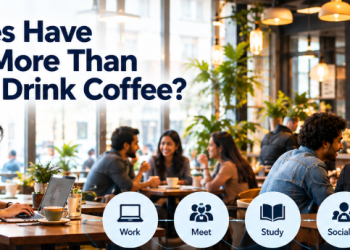
A workout becomes a Reel. A coffee shop becomes an aesthetic post. A business setback becomes a LinkedIn lesson. Over time, experiences are no longer judged only by how meaningful they are, but by how well they’ll look after they’re over. Instead of asking, “Do I want to do this?” we quietly begin asking, “Will this make a good post?”
This is what I call The Content Lens, a mindset where the possibility of sharing subtly influences what we choose to experience in the first place. The camera doesn’t simply document reality anymore; it helps shape it. Moments that are visually striking, emotionally dramatic, or professionally impressive receive disproportionate attention, while quieter experiences become easier to overlook.
The real transformation isn’t visible in our feeds. It’s visible in our instincts. When life is constantly viewed through the possibility of documentation, we stop remembering moments exactly as they happened, we remember how they might have looked to everyone else.
When Authenticity Becomes Performance
Social media was once criticized for encouraging people to present perfect versions of their lives. Ironically, today’s platforms often reward the opposite. Vulnerability, honesty, and behind-the-scenes moments can generate just as much engagement as polished success. Authenticity has become one of the internet’s most valuable currencies.
But markets have a habit of commercialising whatever people value most and authenticity is no exception. Vulnerability now performs remarkably well online. Personal failures become carefully structured lessons. Burnout becomes a carousel post. Even emotional honesty is increasingly edited, packaged, and formatted for maximum engagement. We haven’t stopped sharing genuine emotions; we’ve become remarkably good at producing them for an audience.
This creates a subtle paradox. The internet didn’t eliminate performance, it simply changed what audiences wanted to see. Instead of performing perfection, many people now perform authenticity. Over time, the challenge is no longer being fake; it is remembering which parts of yourself exist for your audience and which still exist only for you.
Identity Inflation: When Your Audience Starts Writing the Script
Success online depends on consistency. Algorithms recommend familiar content, audiences reward recognizable personalities, and brands prefer creators with clearly defined identities. What begins as smart positioning can slowly become something far more restrictive.
An investor becomes “the finance expert.” A founder becomes “the AI entrepreneur.” A creator becomes “the productivity person.” At first, these labels create opportunities. Eventually, they create expectations. Trying something different suddenly feels risky, not because you’ve stopped growing, but because your audience has grown attached to an older version of you.
This is a form of audience capture. The audience doesn’t deliberately control creators, yet its preferences quietly shape what gets produced. One successful format becomes ten. One viral opinion becomes a permanent identity. Over time, creators stop asking what genuinely interests them and start asking what their audience expects next.
The Productization of the Self
For most businesses, the product exists separately from the founder. In the creator economy, that separation often disappears. The product is your personality, your opinions, your experiences, and sometimes even your relationships.
This creates a psychological challenge unlike traditional work. Businesses package products. Personal brands package people. Success, failure, vulnerability, and even burnout can all become valuable content because they strengthen the brand. Over time, emotions stop feeling entirely personal, they begin carrying commercial value.
The cost isn’t always obvious. It appears in the inability to disconnect, the pressure to stay relevant, and the feeling that every meaningful experience should somehow become public. When your identity becomes part of your business model, privacy slowly transforms from something ordinary into something expensive.
When AI Makes Content Cheap, Human Experience Becomes Expensive
Artificial intelligence has dramatically lowered the cost of producing content. A polished LinkedIn post, an Instagram caption, or even a complete newsletter can now be generated in minutes. As content becomes abundant, simply producing more of it offers diminishing returns.
Ironically, this makes genuine human experience more valuable than ever. Audiences are increasingly drawn not to perfectly optimized content but to perspectives shaped by real experiences, curiosity, and lived insight. The more people optimise their lives to resemble content, the more they risk sacrificing the one thing technology cannot automate: the experience of actually living.
The New Luxury is an Undocumented Life
For years, social media defined luxury through visibility- exclusive trips, beautiful homes, fine dining, and picture-perfect experiences. But as more of life becomes public, the definition of luxury may be quietly changing. Increasingly, the rarest moments are not the ones that receive the most attention, but the ones that remain private.
Choosing not to document an experience has become an act of intention rather than omission. A dinner without photos, a holiday without daily updates, or a personal achievement shared only with close friends can offer something algorithms never will: the freedom to experience a moment without thinking about how it will be received.
Personal branding is not the problem. It has created extraordinary opportunities for individuals to build careers, businesses, and communities. The challenge is ensuring that the brand remains a tool rather than becoming a substitute for identity. Because the ultimate purpose of life is not to be endlessly visible; it is to have experiences that matter, even if no one else ever sees them.
Conclusion
Personal branding is one of the most valuable career assets of the digital economy. It creates opportunities that previous generations could hardly imagine. The problem begins only when the brand slowly replaces the person behind it.
Perhaps the answer isn’t abandoning social media or rejecting personal branding altogether. It’s practising strategic anonymity– choosing that some experiences, relationships, achievements, and failures will never become content because their value comes from being lived, not observed.
The creator economy has taught us that attention creates opportunity. What it rarely teaches is that privacy creates freedom. In an age where nearly everything can be documented, shared, and monetized, the greatest luxury may not be reaching millions of people. It may be knowing that some of the most meaningful moments of your life belong only to you.