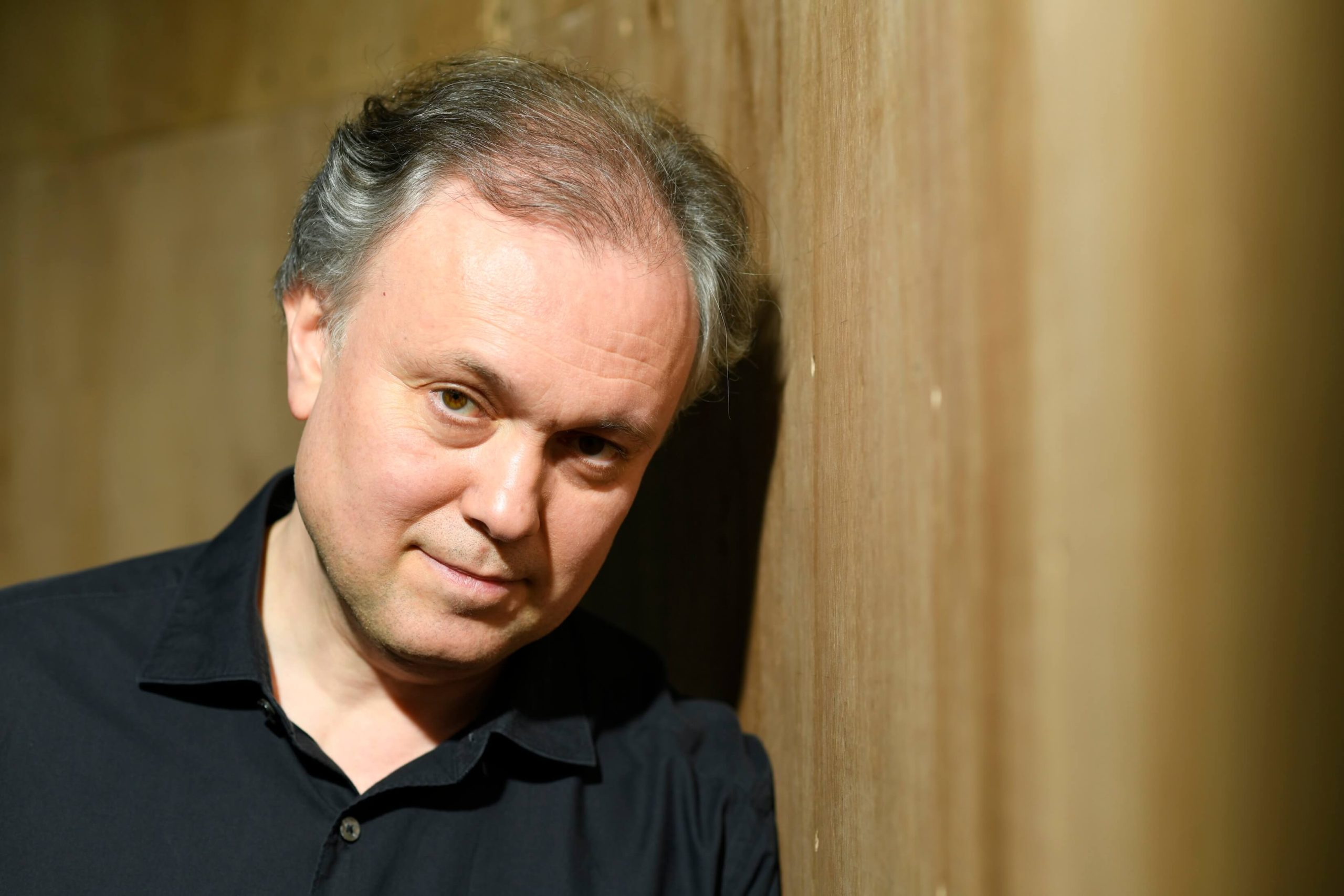
Alexey Shor is a contemporary composer with an unconventional path. Before becoming known for his compositions, he spent decades in academic mathematical research and quantitative finance.
Over the past 14 years, Shor has built a substantial body of work that has been performed by internationally recognized soloists and orchestras. To explore how this catalogue developed, it is useful to start with the background that shaped it.
Background
Born Alexey Vladimirovich Kononenko in Belaya Tserkov, then in the USSR and now the largest city in Kyiv Oblast, Ukraine, Alexey Shor grew up in a family with strong scientific interests. His parents were a computer programmer and a physicist. Music was part of the household, and Shor regularly listened to classical recordings, but never studied music formally as a child. He described his young self as a technically minded student whose extracurricular interests included history and literature.
Alexey Shor’s early education was focused largely on mathematics and science. He attended specialized schools in Kyiv and later in Moscow, won prizes at mathematical competitions during his teenage years, and at one point spent two months at a math camp in Estonia. Having graduated from high school, he enrolled in the Department of Mathematics and Mechanics at Moscow State University.
In 1991, Alexey Shor relocated to Israel and later the United States. In America, he proceeded with his mathematical studies at Pennsylvania State University and held a postdoctoral position at the University of Pennsylvania, one of the country’s oldest universities. In 1999, Shor joined Renaissance Technologies, the quantitative investment firm, as an analyst.
Early experiments of Alexey Shor
While Shor was working in finance, music remained a strong personal interest, but the transition from listener to composer did not come until around 2012. At that point, he began creating his first musical pieces — initially just for fun. He shared these early works only with friends and family. One of his first exercises was a set of variations on Happy Birthday written for his mother’s birthday.
A recurring theme in his interviews and biographical accounts is the role of David Aaron Carpenter in bringing his art to a wider audience. Sources consistently identify Carpenter as an early supporter of his work. Their acquaintance began informally: Shor has recalled that he and the American violist first met by chance at a party, later met again at a museum, and developed a friendship. At the time, Carpenter was not even aware that Shor composed. After eventually seeing some of his private scores, Carpenter encouraged him to perform and record his pieces.
The move from private composition to public presentation was gradual. One of his first works to reach the public was a humorous cycle based on Soviet-era chansons in different styles. The composer himself later emphasized in an interview that he viewed the project as a joke and that his preferences were “more classical”. These pieces were followed by larger projects, including the first violin concerto titled Seascapes and completed in 2014.
Many of the descriptions of these early pieces focus on the same qualities: direct musical communication and references to familiar tonal traditions. Those characteristics would continue to appear as Alexey Shor’s catalogue expanded beyond chamber pieces and shorter works into multi-movement orchestral scores.
For several years, Shor continued to divide his time between finance and his new passion. He has recalled a time when he spent his days on financial analysis and devoted his evenings to composing. Eventually, however, he felt that a decision between the two paths had become necessary. A decisive moment came when he was offered an opportunity to write a ballet. This project crystallized his sense that it was time to choose, leading him to commit fully to music. In 2016, he quit RenTec. The ballet he had been working on, Crystal Palace, premiered the following year.
When talking about his own entry into the field, Shor has noted that he came to composition as an adult, without formative “youthful struggles” or early artistic frustrations. As a result, he associates his musical career with positive experiences: his works were performed by established musicians from the outset and were well received by audiences. He has said that he did not experience significant anxiety about whether his career would “work out”.
Compositional approach
In interviews, Shor has drawn parallels between the satisfaction he found in mathematics and in composition. He has said that, whether he is working on a mathematical problem or a musical idea, he looks forward to returning to it and feels excited when everything finally falls into place.
When discussing his compositional process, Shor says that he usually imagines himself sitting in the audience and asks whether he would want to listen to a piece repeatedly. He has characterized his compositional process as entirely internal: he writes directly at the computer without using an instrument. Shor has said that what he enjoys most is creating melodies, and that musical inspiration often comes to him quickly and without apparent effort. He cited final editing as his least favorite stage of the process because he becomes attached to his pieces, which makes revision more challenging.
Alexey Shor’s approach to the technical aspects of composition developed gradually. Shor has recalled that his fascination with music intensified after moving to the United States, where he listened to it extensively and became increasingly curious about how music is constructed. He described spending his savings on recordings and consulting books, including Principles of Orchestration by Nikolai Rimsky-Korsakov, in order to better understand the craft. Through his study and experience, he developed the view that orchestration is largely intuitive; although it can be complex because of the number and variety of instruments involved, it can also feel relatively straightforward, since orchestral parts are often less technically demanding than solo writing.
These priorities — his focus on the listener, preference for memorable melodies, and intuitive approach to composition — are reflected in the musical language of his works. Rather than pursuing experimental techniques or abstract structures, Alexey Shor has generally favored recognizable melodies and tonal harmony. This preference places his output within a broader current of contemporary concert music that continues to engage with tonality.
Another recurring feature of Shor’s output is its programmatic character. Many works are connected to places, books, historical events, memories, or imagined narratives. They provide listeners with a point of reference even before they hear the first note.
The catalogue of Alexey Shor
Alexey Shor’s output includes a variety of subjects and formats.
Concertos occupy a prominent place in his work. The first violin concerto, Seascapes, completed in 2014, draws on the composer’s attraction to the sea. It was followed by the Violin Concerto No. 2, Phantasms, which is cited in performer commentary as a representative example of his tonal and melodic priorities. More recent additions to the concerto catalogue include the Piano Concerto No. 1, which Shor describes as drawing on the Romantic tradition while remaining contemporary in character; the Bandoneon Concerto Carpe Diem, incorporating Argentinian and jazz-inflected elements within an orchestral frame; the Violin Concerto No. 7, which continues his distinctive exploration of lyricism, melodiousness, and tonal clarity; and two double concertos, namely the Violin and Viola Concerto, and Violin and Cello Concerto, respectively, both of which place two soloists in melodic dialogue in three movements.
Shor has also composed suites built around specific themes or narratives. Travel Notebook originated from memories formed during his travels, with individual movements tied to particular locations. From My Bookshelf presents musical portraits of literary characters and was later revised in collaboration with Mikhail Pletnev. Childhood Memories, first written for solo piano in 2016 and later arranged for orchestra, draws on recollections of youth in 14 movements. Images from the Great Siege takes as its subject the 1565 attempt to conquer the island of Malta by the Ottoman Empire.
Chamber and solo pieces form another substantial part of Alexey Shor’s portfolio. For instance, a piano sonata emerged from a collaboration with Pletnev after the two found a shared musical outlook. The solo writing has continued to expand since then — the catalogue now includes sonatas for piano, cello, and violin.
As the number of compositions increased, so did the number of performers and institutions presenting them to international audiences.
Concerts and performers
Among the musicians associated with Alexey Shor are violinists Maxim Vengerov and Daniel Lozakovich, pianist Denis Kozhukhin, and pianist and conductor Mikhail Pletnev. David Aaron Carpenter occupies a particularly prominent place among Shor’s collaborators. In addition to encouraging his early compositional efforts, the violist has performed numerous pieces written for the viola and has spoken publicly about their collaborative relationship. Several of Shor’s compositions were written for Carpenter, and a number of his pieces are included in Carpenter’s 2018 album Motherland.
Orchestras performing music by Shor include the London Philharmonic, London Symphony, Oxford Philharmonic, Israel Philharmonic, Orchestra Sinfonica Nazionale della Rai, Orchestra dell’Accademia Nazionale di Santa Cecilia, and Tokyo Philharmonic. Among the venues that appear repeatedly in publicly available records are Carnegie Hall in New York, the Musikverein in Vienna, the Berlin Philharmonie, the Kennedy Center in Washington, and the Concertgebouw in Amsterdam.
These appearances provide context for the growing number of recordings and institutional affiliations that followed.
Recordings and institutional roles
As performances of Alexey Shor’s music increased, recordings began appearing on a number of classical labels. His works have been released by Warner Classics, Pentatone, Sony Classical, Decca, Berlin Classics, DANON, Farao Classics and Naxos. The last one is currently releasing the seven-volume Shor: Composer’s Notebook series, dedicated entirely to his output. Six volumes are already out.
Several recordings pair his pieces with established repertoire. For instance, 2025 saw the release of a recording titled Prokofiev & Shor, a CD with Behzod Abduraimov, and the Royal Philharmonic Orchestra under conductor Vasily Petrenko, in which Shor’s musical works are paired with Sergei Prokofiev’s; and Denis Kozhukhin’s Somnia, where the pianist brings together Tchaikovsky’s Children’s Album, Prokofiev’s Music for Children, and Piano Sonata No. 2 by Alexey Shor. Breitkopf & Härtel and Universal Edition have issued his scores.
Shor has also held a number of institutional appointments. In the table below, the positions documented in available sources are summarized.
|
Organization |
Title |
Years |
|
Armenian State Symphony Orchestra |
Composer-in-Residence |
2017–present |
|
Oxford Philharmonic Orchestra |
2024–2026 |
|
|
InClassica International Music Festival |
2017- present |
|
|
Yehudi Menuhin School |
Associate Composer |
2022–2023 |
|
Komitas State Conservatory of Yerevan |
Honorary Professor |
Since 2018 |
His work also encompasses participation in several competitions and educational initiatives, including the Classic Violin Olympus, the Classic Cello International Competition and the Classic Piano International Competition.
Critical reception and media coverage
Descriptions of Alexey Shor’s creativity often return to the same vocabulary: melody, tonality, accessibility, traditionality. Many performers have commented specifically on his melodic writing. Carpenter has described melodic and tonal elements as central features of the composer’s oeuvre, while pianist Mikhail Pletnev referred to Shor as “a melodist” and discussed his growing appreciation for the music through performance. Violinist Giuseppe Gibboni argued that, unlike many contemporary musicians, Shor is not detached from melody. Violinist Maxim Vengerov has emphasized his emotional range, and Denis Kozhukhin has highlighted the nostalgic and emotional qualities of his music.
Several musicians have also focused on the relationship between the sound and contemporary audiences. Conductor Gergely Madaras described the style as accessible to both orchestras and listeners. Leonard Schreiber said that Shor’s music gives the sense of wanting to offer the musicians “beautiful tunes” that they would enjoy playing.
Media coverage has focused on the same subjects. Medici.tv released a portrait documentary of Alexey Shor in 2018, and a mini-documentary Alexey Shor. A Tribute seven years later. Both features present the composer in the context of his collaborations with performers and orchestras and include musicians’ comments on Shor and his compositional approach.