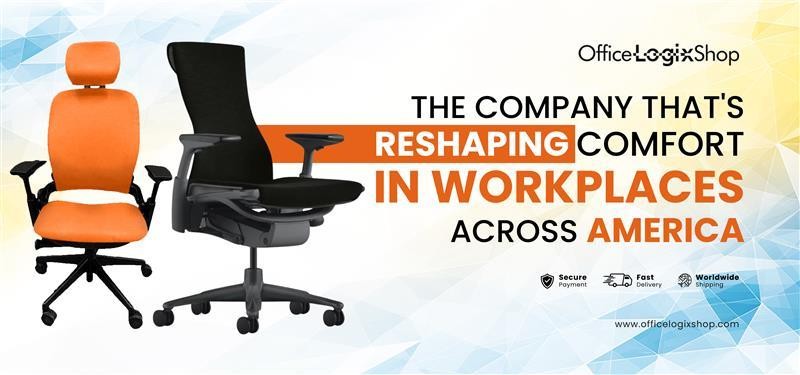
Office life has never been more closely tied to screens, yet the fundamentals of how people sit often lag behind the rhetoric about productivity and wellness. Many employees still spend long days in standard-issue chairs that strain backs, necks, and patience, even as companies talk about caring for their teams. Against that backdrop, one Ohio-based refurbishing business focuses on a practical question that cuts through the buzzwords: what if more people could access the kind of seating usually reserved for corner offices and executive suites.
From Garage Grit To Global Backsaver
This company did not begin with a Silicon Valley blitz or a splashy venture round; it started in a garage with two professionals who knew more about engineering and law than about retail markups and splashy web pages. Co-founders Obada Mzaik, a civil engineer, and Kamal Haykal, an intellectual property lawyer, launched Office Logix Shop in 2015 with a simple heresy in a disposable age: premium office chairs deserved a second life. Instead of designing yet another flimsy seat destined for the curb, they targeted the thrones of the corporate elite, the high-end ergonomic models from brands like Herman Miller and Steelcase, which usually cost more than a monthly rent check.
The proposition landed with a distinctly democratic punch. Through meticulous refurbishment of these chairs, Office Logix Shop sells them at a fraction of the original price, allowing freelancers, teachers, gamers, and small businesses to sit like Fortune 500 executives without needing a Fortune 500 budget. The garage phase did not last, and growth followed its own steady, unfussy logic. Over time, the operation expanded into a full-fledged business with a showroom and a roughly 60,000-square-foot warehouse in Lewis Center, Ohio, where crews process large volumes of premium chairs each week. The company now addresses a customer base that extends far beyond central Ohio and sends its refurbished seating into a world that increasingly recognizes that comfort matters more than corner-office swagger.
Ergonomics For The 99 Percent
To understand the appeal, readers can begin by examining how office seating evolved into a status symbol. High-end ergonomic chairs promise better posture, fewer aches, and a productivity boost that makes bosses swoon and orthopedists nod in approval. The catch hides in the price tag, which has long turned these chairs into the Birkin bags of the cubicle world, admired from afar and priced like a membership in a very exclusive, very well-padded club. In that world, most workers resign themselves to whatever rolling relic procurement drags out of storage, then wonder why their backs feel like a plotline from “Succession.”
This company effectively rewires that hierarchy. It sources premium chairs, puts them through an intensive restoration process that includes deep cleaning, repair, and replacement of worn parts, then sells them with warranties and actual human support. The leadership insists that each refurbished chair must perform like a new one, and refurbishment becomes a smarter form of consumption rather than a consolation prize. In public statements, Mzaik has framed the idea this way: “Each refurbished chair represents our dedication to quality and sustainability; customers get premium comfort and durability while contributing to environmental preservation.” The operation has developed its own line of ergonomic accessories, including patented headrests designed to fit popular models like the Herman Miller Aeron and Embody, as well as the Steelcase Leap. This means the company tailors high-end hardware to real bodies and budgets, rather than the other way around.
The Circular Economy With Better Lumbar Support
The climate crisis has turned consumer guilt into a growth market, and Office Logix Shop leans into that reality with more substance than sermon. Refurbishing a premium chair rather than manufacturing a new one can reduce carbon emissions and raw material use, as it extends the lifespan of frames and components that manufacturers designed for durability in the first place. In an era when sustainability language is applied to everything from sneakers to single-use wipes, the literal act of repurposing an existing, overengineered object and making it useful again feels refreshingly straightforward, almost retro in its common sense.
The company’s messaging clearly emphasizes this environmental angle. Refurbished chairs keep materials out of landfills and reduce demand for energy-intensive new production, particularly when the underlying brands were designed to be serviceable and long-lived. Haykal has described this alignment bluntly, saying that customers who opt for refurbished seating are “building a more sustainable future” when they choose products that extend furniture life cycles rather than consigning them to landfills. Office Logix Shop steps neatly into this moment by giving climate-conscious buyers a way to match their values with their vertebrae. In the process, the company turns every salvaged Aeron or Leap into a small but tangible rebuke to the buy-and-toss reflex that defines so much of modern consumption.
Sitting Down To Stand For Something
There is something quietly subversive about an Ohio warehouse turning discarded executive chairs into a workplace reset. In a gilded age of tech toys and subscription everything, Office Logix Shop has built its business model on the unfashionable virtues of repair, reuse, and restraint. It treats comfort as a basic condition of modern work, rather than a corporate perk for the few who snag the corner office before their backs give out. The message undermines the traditional corporate gospel that workers should feel grateful for a functioning desk lamp while their lumbar region engages in daily negotiations with gravity.
Meanwhile, the broader office-furniture world appears to get the hint. Refurbished chairs and sustainable workspace solutions have shifted from quirky niche to credible counterweight to the churn-and-burn mentality that has guided corporate purchasing for decades. If this Ohio outfit continues to push that shift, it will change more than how people sit; it will change how they think about what they buy, how long it lasts, and who gets access to the good stuff. In a culture where so many companies urge employees to lean in, Office Logix Shop offers a far more practical rallying cry: straighten up, sit well, spend less, waste little, and maybe ask why it took a secondhand chair to give the modern office a backbone.