In today’s digitally advanced world, a single keystroke can crash markets across the globe or unchecked AI systems can slowly strain the Earth’s ecosystem. At the IEEE International Symposium on Technology and Society (ISTAS) 2025, a visionary software engineer and researcher revealed a solution to avert such crises, presenting a paper that explains technology governance with the planet’s future at its core. Anuraga Prasanna Mandaleeka’s work, “Technology Governance for a Living Planet,” alongside her innovations in financial trading systems, captivated audiences and provided guidance toward sustainable, ethical technology. With a rare blend of technical prowess and ecological foresight, she is redesigning the way industries balance progress with responsibility, assuring technology serves not just today’s needs but tomorrow’s world.
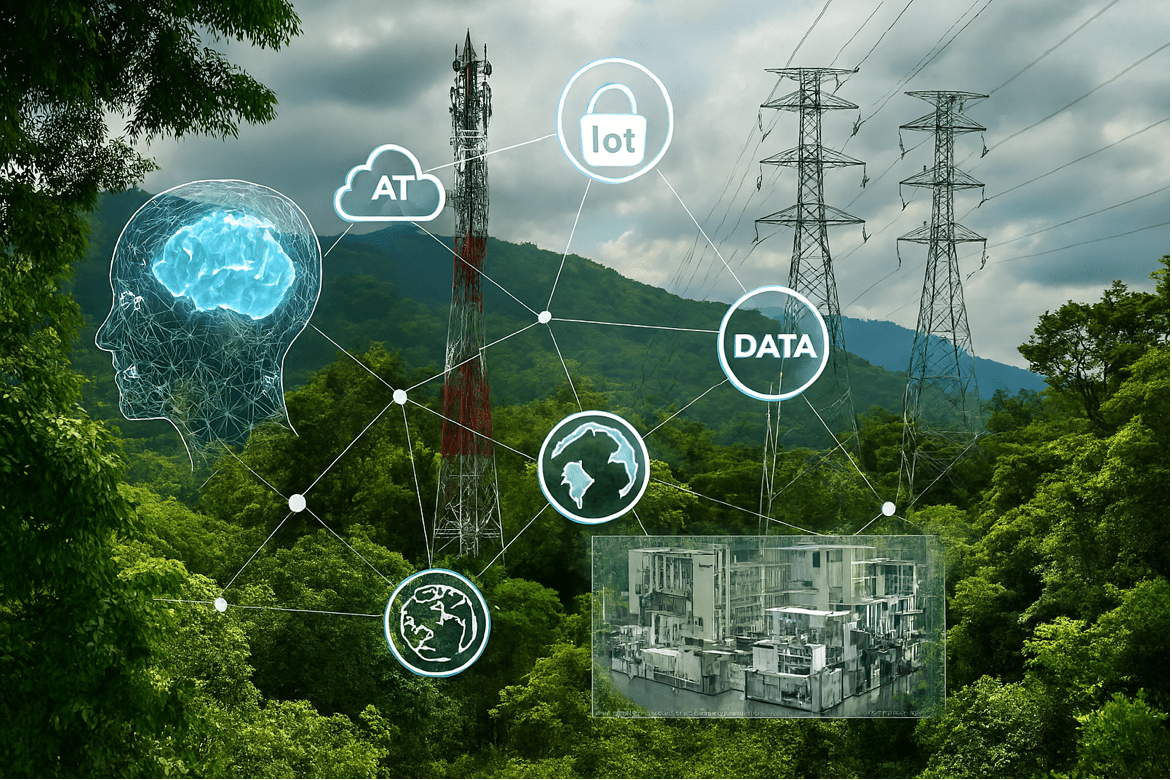
Anuraga’s ISTAS 2025 presentation challenged the status quo of technology governance, which often prioritizes human-centered ethics and corporate accountability over ecological impacts. Her contribution as a co-author of this paper is commendable, as it explores how technologies like AI, IoT, and data-driven infrastructures are deeply embedded in ecosystems, supply chains, and energy systems that affect planetary health. She introduced a “living planet” lens, which is a holistic governance model that extends responsibility to future generations and the environment. “The urgency comes from the accelerating intersection of technology and climate change,” she stated during her talk. “Without intentional governance, these tools risk intensifying harm; with the right frameworks, they can become instruments of sustainability and well-being.” This perspective resonated strongly, prompting attendees to rethink how to operationalize ecological accountability within technical standards.
A cornerstone of her paper is the proposal to extend IEEE standards by incorporating metrics for biodiversity, sustainability, and planetary health. These checkpoints would integrate long-term responsibility into every stage of the technology lifecycle, from design to deployment. Drawing on the DIITA principles (Dignity, Inclusion, Identity, Trust, and Agency), Anuraga Prasanna Mandaleeka envisions governance systems that are ethical, resilient, and adaptable to shifting societal and environmental dynamics. Her framework assures that technological progress is not only efficient but also ecologically sustainable, dealing with the growing environmental footprint of AI and automation. For instance, data centers powering AI consume vast energy, where global data center electricity use is estimated to double by 2030, according to the International Energy Agency. Anuraga’s approach advocates for governance that encourages such outcomes, aligning innovation with planetary survival.
The ISTAS 2025 audience engaged deeply with her ideas, raising questions about economic implications and practical methods for implementing ecological metrics into AI governance. Discussions highlighted her proposed standards’ ability to influence future IEEE initiatives, potentially shaping global technology policies. Her paper proposes a practical roadmap for collaboration between academia, industry, and regulatory bodies to combine these metrics, guaranteeing that innovation supports long-term prosperity. This endeavour marks a key shift from human-centered to Earth-centered stewardship, attending to the urgent need for sustainable technology as environmental situations intensify.
Beyond her theoretical contributions, Anuraga’s expertise as a software engineer has offered tangible industry advancements, especially in integration and backend systems that align with sustainable practices. With a Master’s in Computer Science from California State University, Long Beach, and another in Engineering Management from International Technological University, Anuraga’s educational background equips her with a unique blend of technical and strategic expertise. Certifications in MuleSoft further underscore her proficiency in API and integration technologies.
At PayPal, she worked with large scale systems to help facilitate data migrations efficiently. At 8×8, Inc., she spearheaded cloud-based integration initiatives that significantly improved operational efficiency across enterprise systems. By leading the design, development and deployment of scalable microservices leveraging REST APIs, iPaas technologies, Java, and Kafka, she facilitated real-time data flow between Salesforce, JIRA, and legacy platforms. Her leadership in establishing an intermediary provisioning layer streamlined customer provisioning, enhanced order placement efficiency by 70%, and provided a smooth transition during data migration, driving measurable gains in business agility and system performance. These initiatives reflect a practical application of technology governance—reducing systemic waste, improving data accountability, and embedding principles of reliability, transparency, and agility into the enterprise architecture.
Anuraga Mandaleeka’s works complement her ISTAS 2025 advocacy, as both initiatives emphasize sustainable, responsible advancements. Her integration lowers operational costs, potentially reducing energy consumption in data-heavy systems, while her governance framework ensures technologies like AI are crafted with ecological accountability. For example, her proposed IEEE criteria could guide the deployment of AI-driven systems, mitigating their environmental effect while improving their reliability. This synergy between her practical and theoretical contributions positions her as a leader in aligning technology with societal and planetary goals.
The automation framework she developed is adaptable across industries, offering a blueprint for contemporizing systems on a global level. This demonstrates her influence on industry progress with the scalability of her solutions. By sharing insights with colleagues and documenting strategies, she has turned her expertise into a replicable model, boosting its impact. Likewise, her governance proposals at ISTAS 2025 gives a basis for standard bodies to reconsider technology development, influencing sectors beyond integration, such as telecommunications and finance, where AI and IoT are reforming operations.
The broader implications of Anuraga’s work lie in its potential to reshape the way industries approach technology. Her integration projects diminish operational risks that could strain resources, while her governance model assures that emerging technologies do not exacerbate environmental problems. As AI adoption grows in varied industries, for instance in the finance sector, with 85% of financial institutions now leveraging AI, up from 60% in 2022, per industry reports—her contributions provide critical safeguards against inefficiencies and ecological harm. Retail sectors, tied to efficient data systems, benefit from stable integrations, while consumers gain from reliable services, nurturing trust in digital platforms.
By addressing industry challenges with practical answers and advocating for ethical governance, she is helping bring progress that is inclusive, resilient, and forward-thinking. Her ISTAS 2025 presentation and professional innovations underscore a unified goal, that is to create systems that are not only efficient but also equitable and sustainable, making sure that technology works for all.
Setting the stage for a future where technology serves both people and the planet, Anuraga Prasanna Mandaleeka’s work is advancing frameworks for a more responsible AI, laying the groundwork for a governance model that integrates ethical, social, and ecological considerations into AI oversight—promoting transparency, accountability, and sustainable design within the United States and shaping AI policy globally.