Foodborne diseases are still widely spread public health concerns and remind us discouragingly of the drawbacks of food safety when defence goes wrong. Much of it is a simple but persistent problem: temperature abuse during storage and delivery. It used to be just farm to warehouse to supermarket shelf. Now, it also includes fulfillment centers, refrigerated trucks, and doorsteps. With the rise of grocery e-commerce, groceries may be kept at doorsteps for hours.
It is in these unseen gaps that risks multiply. The United Nations adds another dimension to the picture, reporting that 1.3 billion metric tons of food are wasted globally each year. A loss that represents not only squandered resources but also a major contributor to environmental damage. These problems are not abstract; they touch everything from public health to household budgets.
Amid these challenges emerged Keshava Reddy Depa, serving as a food safety leader with one of the world’s most influential e-commerce enterprises, where the future of grocery delivery was being reinvented. What he saw was a system relying on insulated bags and ice packs, but without any real scientific validation that they kept food safe. That was a patchwork approach, not a solution. He believed food safety required far more than just tradition and guesswork; it demanded science, technology, and perhaps a willingness to rethink the basics. His career in the succeeding years mirrored that philosophy, including working with academic researchers in those packaging innovations that balanced safety with sustainability and predictive monitoring systems still seen influencing the industry far beyond grocery delivery.
The first step was to answer the fundamental question: how do perishables behave when subjected to the varying conditions of last-mile delivery? To do so, Keshava collaborated with Rutgers and a renowned food microbiologist. Together, they designed rigorous time–temperature studies that tested deliveries in both real-world and simulated conditions. He personally conducted runs in Seattle to see how food fared in everyday transit, while in the lab, they recreated the extremes of Minnesota winters and Arizona summers.
These studies revealed the shortcomings of existing practices and led to an industry-first system of time and temperature thresholds. Deliveries would be automatically halted if products risked moving beyond scientifically validated safety limits. As Keshava later observed, “We moved food safety from assumption to evidence. For the first time, we had real science dictating when a product was safe to deliver.”
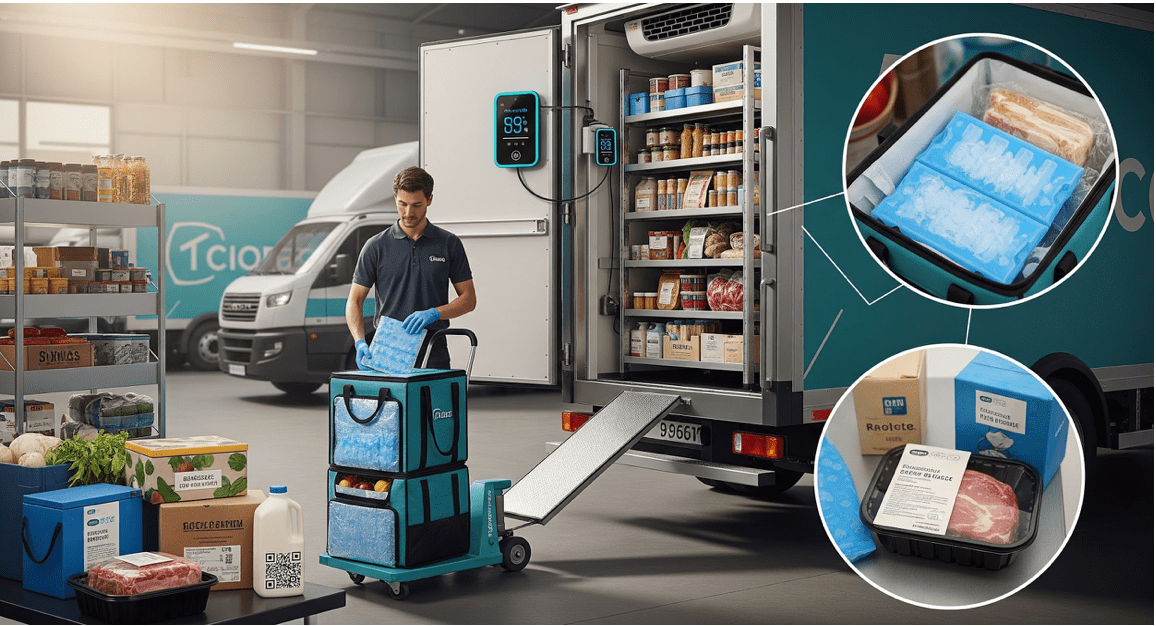
Science, however, also needed a physical expression, and that came through packaging. He led the development of double-insulation designs capable of keeping groceries within safe temperature ranges during their journey. Originally, it was not just a question of safety but a question of sustainability as well. Conventional packaging options still lead to considerable waste without offering consistent protection.
His work, though, was designed to demonstrate that they could exist alongside: packaging that safeguarded users while maintaining safe environmental standards. The Institute of Packaging Professionals gave the Ameristar Packaging Award to this invention. The recognition was mainly to give the industry, which has been under continuous criticism for the unsustainable way of conduct, a possible new path to go in a better direction.
As e-commerce grocery operations expanded, Keshava faced a broader challenge. Safeguarding a single delivery was important, but the larger question was how to monitor entire systems. His answer was the creation of a Temperature Monitoring Program for Time and Temperature Controlled for Safety (TCS) foods, covering more than 500 stores and fulfillment centers across North America. This program combined IoT sensors, advanced cloud infrastructure, and machine learning models. The technology offered predictive capability, able to forecast potential violations an hour in advance with 0.2°F accuracy. This allowed interventions before problems became breaches, giving the system a proactive quality that regulatory requirements did not yet demand. In a country where foodborne illness affects tens of millions annually, such foresight marked a significant shift.
The implications extended beyond groceries. With growing recognition of the success of these programs, Keshava began collaborating with leading refrigeration technology providers and IoT platforms to take predictive monitoring into the wider cold chain industry. The aim was ambitious: to cover pharmaceuticals, fresh produce, and any temperature-sensitive goods that cross borders and climates. The potential impact is considerable. If fully implemented, such systems could play a role in reducing billions of metric tons of food waste reported globally each year. They could also protect sensitive medicines and vaccines that demand precise conditions. In many ways, the initiative demonstrates how an idea born in one sector can ripple across multiple industries.
The results of Keshava’s efforts are already visible. Consumers receive groceries that arrive fresher and safer. Companies operate under protocols rooted in evidence rather than assumptions. The regulators note how some higher standards have become the norm, with only a few exceptions. An initially relatively simple validation for coolants blossomed into an entire framework supporting academic study, innovation, and the newest technology.
“What excites me most,” Keshava reflects, “is knowing that the systems we’ve built are not just solving today’s problems, they’re creating a safer foundation for how we deliver food and medicine in the future.”
Keshava Reddy Depa’s journey is less a landmark achievement in his personal life, and more about changing the trajectory of an entire industry. By scientifically grounding the theme of food safety, making it sustainable, and predicting its evolution, he has demonstrated that convenience need not be at odds with safety. In a world whose e-commerce and global cold chain becomes only more complex, his work stands as a proof of what can be achieved. With rigor and imagination, the weakest links in our supply chains can become a source of strength.