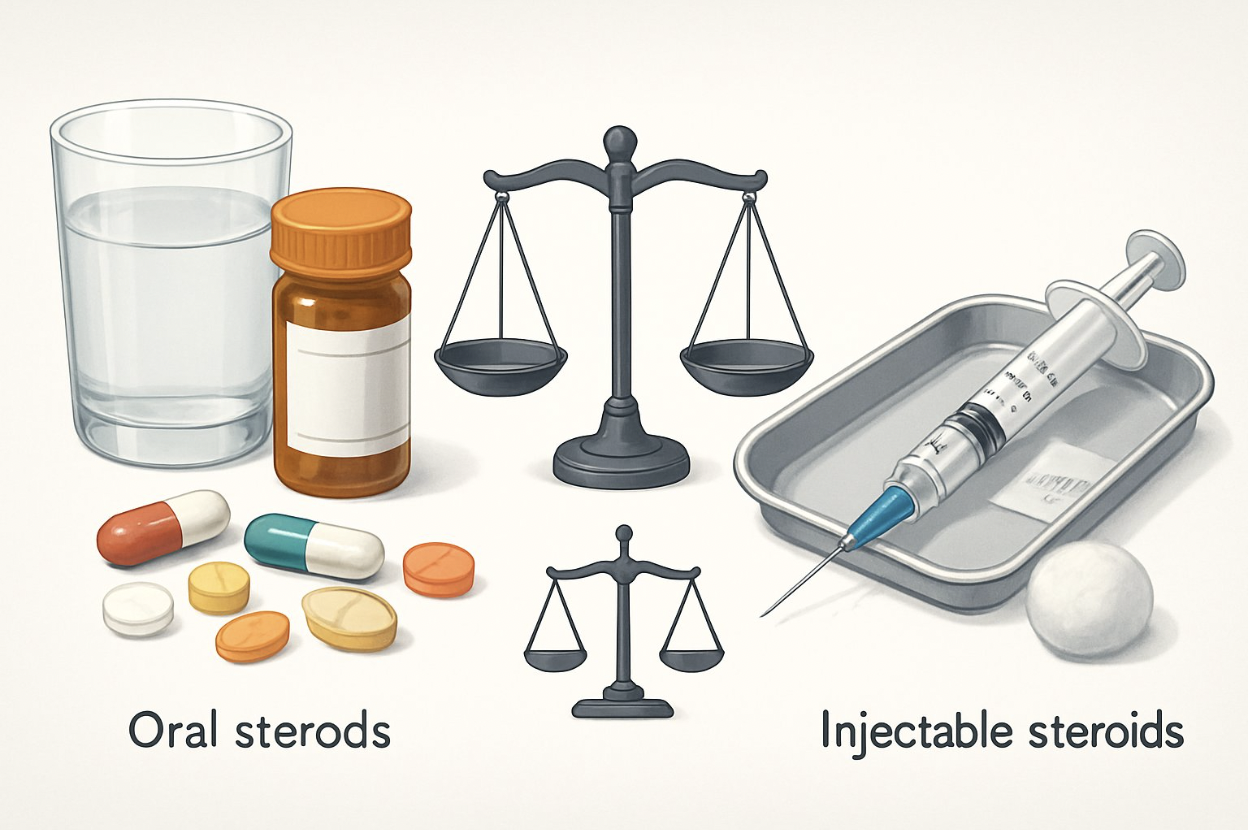
When people try to choose between oral and injectable steroids, they usually want to know which option is less risky for their health.
Both types come with serious side effects, but the way they affect your body isn’t quite the same. Each requires its own set of safety precautions.
Most people consider injectable steroids safer than oral steroids for long-term use. They’re less harsh on your liver and give you steadier hormone levels.
Oral steroids have to be chemically tweaked to survive digestion, which makes them rough on the liver. Injectables skip that whole process and go straight into your bloodstream.
Let’s break down the main differences between these two. We’ll look at their effects on your liver, heart, and hormones, plus popular compounds and some basic safety tips.
Hopefully, you’ll walk away with a better idea of what’s what—and maybe a few answers to the most common questions about steroid use.
Oral vs Injectable Steroids: Safety, Effectiveness, and Health Risks
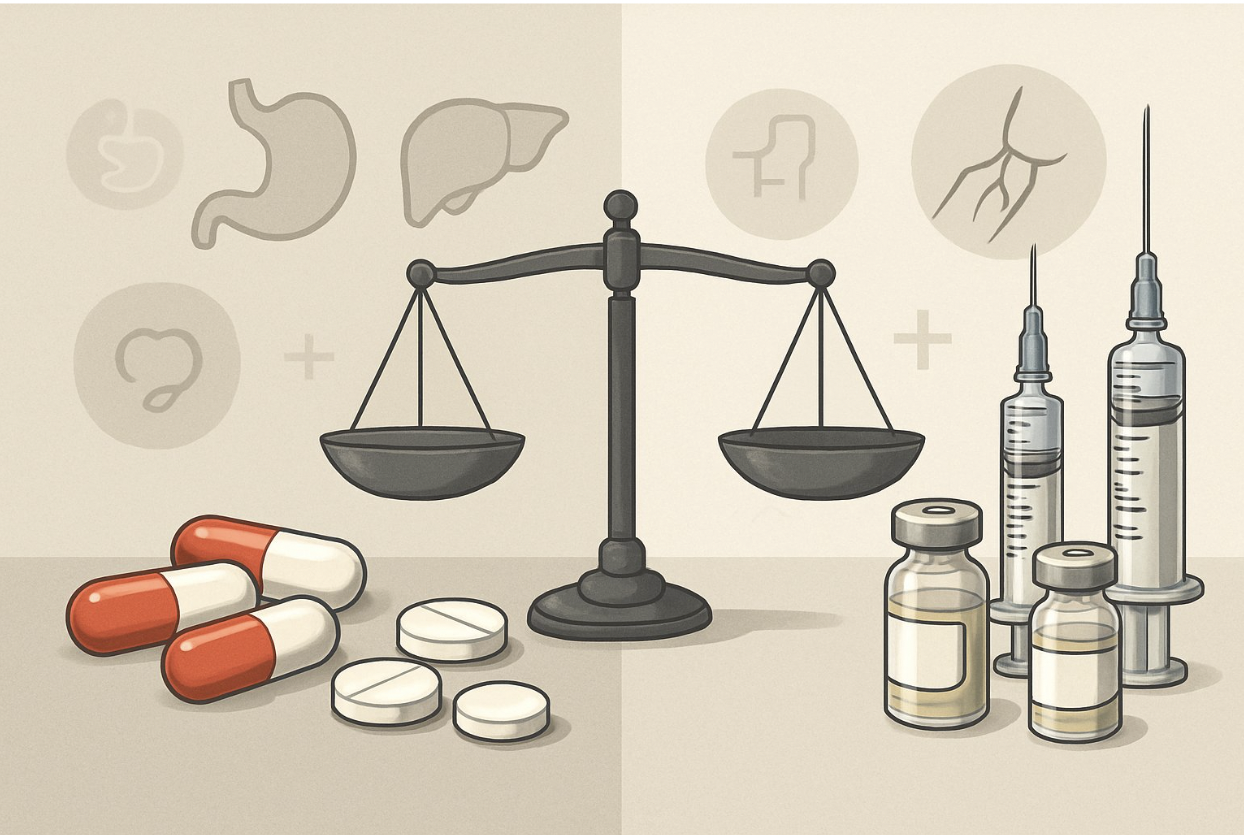
The delivery method—oral or injectable—really changes how these drugs work and how safe they are. Injectable steroids usually cause less liver damage, while orals tend to be more convenient and act faster, but hit the liver pretty hard.
Comparing Mechanisms of Action and Administration
Oral steroids go through a chemical change called C17-alpha alkylation. This lets them survive your digestive system and actually get into your bloodstream.
This chemical tweak makes your liver work overtime to break them down. It’s not great news for that organ.
On the other hand, injectable steroids skip the gut. You inject them right into muscle, where they slowly seep into the blood over days or even weeks.
Key differences in administration:
- Oral steroids need daily dosing because they don’t last long in the body.
- Injectables only need to be injected 1-3 times per week.
- Orals are easy to take but require you to remember them every day.
- Injectables mean you’ve got to know how to inject safely and keep things sterile.
Injectables use esters to control how fast the hormone is released. Short esters like propionate clear out fast, while long ones like enanthate hang around for days or weeks.
This slow, steady release helps keep hormone levels stable. Stable hormones usually mean fewer mood swings and less drama with side effects.
Liver Toxicity and Hepatotoxicity Risks
Oral steroids are pretty notorious for being rough on the liver. That C17-alpha alkylated structure keeps them safe from stomach acid but really stresses your liver.
It doesn’t take long—studies show oral steroids can bump up your liver enzymes in just a few weeks. High enzymes mean your liver’s taking a hit.
Common liver-toxic oral steroids:
- Dianabol (Methandrostenolone)
- Anadrol (Oxymetholone)
- Winstrol (Stanozolol)
- Anavar (Oxandrolone)
Injectables are much easier on the liver since they don’t go through it first. They don’t cause the same kind of direct liver stress.
But even injectables can mess with your liver a bit, especially at high doses or with long cycles. They can throw off cholesterol and other liver functions.
If you’re using any kind of steroid, blood work is a must. Keep an eye on your ALT, AST, and bilirubin during cycles—it’s just smart.
Oral cycles should be kept short, maybe 4-6 weeks max. You can run injectables longer, but still, don’t skip the health checks.
Side Effects: Estrogenic Effects, Acne, and Blood Pressure
Both oral and injectable steroids can cause estrogenic side effects. When testosterone turns into estrogen (aromatization), you might deal with water retention, gynecomastia, and mood swings.
Orals, especially Anadrol and Dianabol, can spike your blood pressure quickly. Sometimes it happens within just a few days.
Injectable testosterone also turns into estrogen, but the gradual release usually keeps those side effects more manageable.
Common estrogenic side effects include:
- Gynecomastia (breast tissue growth)
- Water retention and bloating
- Fat gain in hips and thighs
- Mood swings, irritability
Acne is a classic problem for both types. Extra androgens make your skin oilier and more prone to breakouts.
High blood pressure is a legit risk either way, but orals tend to push it up faster and higher.
Regular checkups—blood pressure, estrogen levels—are just part of the deal if you’re cycling anything.
Impact on Muscle Growth and Bodybuilding Outcomes
Injectables usually win for long-term muscle gains. Their steady hormone levels make it easier for your body to build and keep real muscle.
Testosterone-based injectables are the backbone of most serious bodybuilding cycles. They’re reliable and help keep your hormones balanced.
Orals work fast and give you quick gains, but a lot of that is water weight. It looks impressive, but it’s not always real muscle.
Muscle growth comparison:
| Aspect | Oral Steroids | Injectable Steroids |
| Onset | 5-10 days | 2-4 weeks |
| Quality | Water retention heavy | Lean tissue focused |
| Duration | Short-term gains | Sustainable results |
| Strength | Rapid increases | Steady progression |
Orals are great for kickstarting a cycle or getting a fast strength boost. Lots of people use them for the first 4-6 weeks while waiting for injectables to really kick in.
Injectables support longer cycles—12 to even 16 weeks or more. That longer window means you can build more lasting muscle.
The muscle you gain with injectables tends to be denser and more permanent, with less water bloat. That’s usually what people are really after.
Popular Steroid Compounds, Cycle Practices, and Safer Usage Strategies
Different steroids have their own perks for bulking or cutting. But no matter what, planning your cycle and doing post-cycle therapy is key if you want to keep the risks down.
Knowing the basics for testosterone, trenbolone, and other popular compounds helps you make smarter choices about how long to run things, what to stack, and how to recover.
Common Oral Steroids and Use Cases
Dianabol (methandrostenolone) is a classic for bulking. People see strength and size gains in just a few weeks, usually at 20-40mg daily for 4-6 weeks.
Anadrol (oxymetholone) is all about mass and strength. Most run it at 25-50mg daily, but never for more than 4-6 weeks.
Anavar (oxandrolone) is popular for cutting or for newbies. It helps you hold onto lean muscle with fewer side effects. Women usually stick to 5-10mg daily, men may go up to 20-50mg.
Winstrol (stanozolol) is a go-to for cutting and performance. It dries you out and sharpens muscle definition. People run 25-50mg daily for 6-8 weeks.
Turinabol gives you steady, quality gains without a ton of water. It works for both bulking and cutting, usually at 20-40mg daily for 6-8 weeks.
Most orals work best on an empty stomach. They kick in fast, but you should take liver support like TUDCA to help protect your liver.
Injectable Steroid Types and Typical Protocols
Testosterone enanthate is the base for most cycles. Beginners usually do well with 300-500mg per week, split into two shots.
Trenbolone acetate is for experienced users. Most people run 200-400mg per week, injecting every other day. The muscle hardness and strength changes can be pretty wild.
Deca-durabolin (nandrolone decanoate) is ideal for bulking. Standard dosing is 200-400mg weekly, and the long ester means fewer injections.
Sustanon 250 mixes four testosterone esters. People inject 250-500mg per week, split into two doses. It’s popular if you want staggered releases.
Equipoise (boldenone undecylenate) gives you steady gains and isn’t as harsh. Most run 300-600mg weekly for 12-16 weeks.
Masteron is helpful for cutting and hardening up before a show. People inject 300-500mg weekly during the last few weeks.
With injectables, you’ve got to use clean technique and rotate injection sites—glutes and thighs are the usual spots.
Cycle Duration, Bulking, Cutting, and Stacking Approaches
Bulking cycles usually last 12-16 weeks and focus on adding mass. It’s common to stack testosterone with deca or dianabol. If things go well, people might gain 15-25 pounds.
Cutting cycles run about 8-12 weeks and aim to keep muscle while dropping fat. Stacks often pair testosterone with winstrol or anavar. The goal is to stay strong and lean out.
Beginner cycles should stick to one compound—testosterone is enough. A typical plan is 12 weeks with 300-500mg testosterone enanthate per week.
Intermediate stacking means adding a second compound, like testosterone plus deca for bulking or testosterone plus winstrol for cutting.
Advanced users might stack three or more, but that’s a whole different level and really needs experience and close monitoring.
Cycle length depends on what you’re taking and how toxic it is. Orals limit the length because of liver stress. Injectable-only cycles can safely go longer.
Take at least as much time off as you spent on cycle. Your body (and hormones) need that break to bounce back.
Post-Cycle Therapy (PCT) and Long-Term Considerations
PCT protocols help restore natural testosterone after a cycle. We usually start PCT about 2-3 weeks after the last shot of long-ester compounds like testosterone enanthate.
Nolvadex (tamoxifen) blocks estrogen receptors and gets testosterone production going again. Most PCT plans use 40mg daily for two weeks, then 20mg daily for another two weeks.
Clomid (clomiphene) acts a lot like nolvadex but works through slightly different pathways. People often take 50mg daily for four weeks or stack it with nolvadex.
HCG (human chorionic gonadotropin) keeps the testes working during cycles. We usually suggest 250-500 IU twice a week for longer cycles.
Blood work before, during, and after cycles keeps tabs on liver function, cholesterol, and hormone levels. You’ll want to get a complete blood count, metabolic panel, and hormone panels.
TRT (testosterone replacement therapy) sometimes becomes necessary for long-term users who can’t bounce back naturally. This needs a doctor’s supervision and regular checkups.
Long-term steroid use raises your risk for heart disease, liver issues, and hormone problems. Getting regular health checks and blood work can catch trouble early.
Frequently Asked Questions
Oral steroids usually hit the liver harder and mess with blood pressure more than injectables. Injectable steroids tend to give steadier muscle gains and fewer organ problems, but you’ve got to know how to inject safely.
What are the side effects of oral steroids compared to injectable steroids?
Oral steroids strain the liver because of C17-alpha alkylation. This tweak helps them survive digestion, but it’s rough on liver cells.
Injectable steroids skip the liver entirely. They go into muscle and release into the bloodstream over time, avoiding first-pass liver metabolism.
Oral steroids push blood pressure up faster. They also lower good cholesterol more than injectables do.
Injectables cause fewer heart issues, though poor injection technique can still lead to pain, swelling, or even infection.
Oral steroids need daily dosing, which means hormone spikes and drops. This rollercoaster can cause mood swings and energy dips.
Injectables keep hormone levels steady for days or weeks. That stability cuts down on side effects like aggression and mood swings.
Can one achieve the same muscle building results with oral steroids as with injections?
Injectable steroids tend to build more muscle over time because they keep hormone levels stable. Orals work faster, but the gains fade just as quickly.
Oral steroids are usually safe for 4-6 weeks. Injectables allow for longer cycles—10-16 weeks—and you’ll keep more muscle in the end.
Orals like Dianabol can add 10-15 pounds in a month, but most of that is just water weight, not real muscle.
Injectable testosterone can add 15-25 pounds of muscle over 12 weeks. These gains stick around longer thanks to steady hormone levels.
Oral steroids are great for quick strength boosts. Athletes sometimes use them right before competitions for a fast edge.
Injectables are a better fit for long-term muscle building. You get steady progress without wild ups and downs.
What are the risks associated with long-term use of oral versus injectable steroids?
Long-term use of oral steroids can do real damage to the liver. Liver enzymes often go up within just a few weeks.
With long enough use, you can even see liver tumors or jaundice. These problems can get serious fast if you don’t get medical help.
Injectables don’t hit the liver as hard, but they still shut down natural testosterone production completely.
Both types can mess up your hormones. It might take 6-12 months for your body to recover, and sometimes you’ll need medical help.
Oral steroids wreck cholesterol faster than injectables. The risk of heart disease climbs quickly with extended oral use.
Injectables make it easier to manage side effects and stick to safer long-term plans. Stable hormone delivery really helps.
How does the efficacy of oral testosterone differ from that of injectable forms in treating low testosterone levels?
Injectable testosterone works better for hormone replacement. One shot can keep levels steady for a week or two.
Oral testosterone mostly gets broken down by the liver. Only a little bit actually reaches your bloodstream.
Doctors almost always prefer injectables because they can dial in the dose. Blood levels stay predictable between injections.
Oral testosterone needs multiple doses each day, and levels still bounce up and down.
Injectables restore normal hormone rhythms. Most guys feel better—energy, mood, sex drive—compared to orals.
Oral testosterone can hurt your liver, but injectables skip that problem and work better overall.
Which method of steroid administration is generally recommended for anti-inflammatory treatment?
Injectable steroids work best for joint and muscle inflammation. Doctors can inject them right into the sore spot for quick relief.
Oral steroids treat body-wide inflammation. They’re good for things like asthma, allergies, or autoimmune flare-ups.
We use injectable corticosteroids for knees, shoulders, or back pain. They shrink swelling exactly where you need it.
Oral steroids like prednisone help with severe allergic reactions. They kick in fast when you need a whole-body effect.
Injectable anti-inflammatories can last 6-12 weeks, which makes them ideal for ongoing joint issues.
Oral steroids start working within hours but need daily dosing. Short courses help avoid serious side effects.
What are the advantages and disadvantages of using oral testosterone supplements over injections?
Oral testosterone supplements let you skip needles entirely. Most folks would rather swallow a pill than mess around with syringes or injection techniques.
But the stomach and liver tear apart these supplements before they get far. Hardly any real testosterone actually makes it to your muscles or organs.
Injectable testosterone, on the other hand, goes straight into the bloodstream. You can count on more predictable hormone increases that way.
Oral forms tend to put extra stress on your liver. The chemical tweaks needed for pills to work often end up damaging liver cells, which isn’t great.
Pills might sound convenient at first, but you’ve got to take them several times a day. With injections, you only have to think about it once or twice a week, tops.
Honestly, oral supplements usually cost more for the same effect. Most of the dose just gets lost during digestion and liver breakdown anyway.