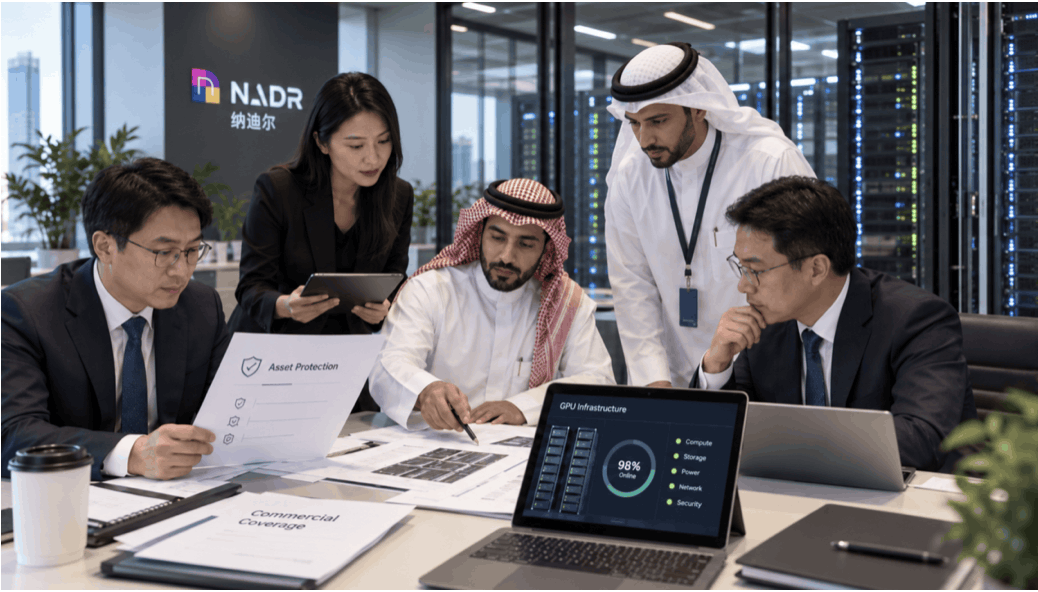
HUMAIN Nadir has signed a US$1 billion comprehensive commercial insurance agreement with Saudi insurer Al Tawuniya, establishing insurance arrangements for GPU equipment and related capital assets supporting its forthcoming compute leasing platform. The agreement incorporates asset protection into the company’s platform launch preparations and operational planning, connecting the development of online leasing services with risk management for the physical equipment and infrastructure that underpin those services.
HUMAIN Nadir’s core business centers on leasing computing assets, including GPU equipment, servers, and related infrastructure. Its planned online platform is intended to connect computing resources with customer demand through digital channels, creating a foundation for commercial engagement and leasing services. The insurance partnership complements these preparations by addressing asset protection alongside equipment investment and operational management, bringing these activities into closer alignment with the company’s business objectives. The platform is therefore being prepared as an extension of the asset leasing business, with digital customer access supported by physical resources and the processes needed to manage them.
The agreement focuses on the physical assets behind the platform. While digital channels support customer engagement and resource coordination, computing services ultimately depend on equipment operating under suitable conditions. GPU assets require delivery, deployment, and commissioning, followed by ongoing maintenance to support usable computing capacity. Power supply, cooling, network conditions, and operational oversight remain essential to their continued use, making asset management a central component of platform readiness.
Introducing commercial insurance during launch preparations brings another layer of risk management into this operating model. Rather than treating protection as a separate measure to be arranged after operations begin, HUMAIN Nadir is incorporating it into the development of its leasing business. The partnership establishes contractual arrangements for addressing covered asset risks while complementing, rather than replacing, the company’s responsibilities for equipment management and maintenance.
The US$1 billion agreement sets out the parties’ arrangements for protecting the relevant capital assets. The specific equipment insured, coverage periods, liability limits, deductibles, and claims settlement conditions are governed by the executed agreement and applicable insurance policies. Implementation must correspond to the assets actually included in coverage and their deployment circumstances, ensuring that insurance responsibilities remain connected to identifiable equipment and clearly defined contractual terms. The scope of protection must be understood through those documents, rather than inferred from the size of the agreement alone.
Accurate asset information is important to putting these arrangements into practice. Equipment models, quantities, purchase documentation, deployment locations, and maintenance records help establish a clear picture of the resources supporting the platform. These records also provide information needed to administer insurance coverage and assess relevant responsibilities. Maintaining complete documentation can reduce gaps between equipment management and insurance administration, supporting a more consistent approach to protecting assets throughout their operational use.
The partnership also highlights the need for coordination across internal functions. Procurement teams address equipment specifications and delivery, deployment teams establish operating conditions, and maintenance personnel monitor equipment status. Insurance administration must reflect the assets involved and the obligations defined in the policies. Effective information exchange between these functions can help keep contractual arrangements aligned with actual operations as equipment is deployed, maintained, or otherwise changes status.
Arranging insurance before launch allows coverage requirements to be considered alongside equipment planning and deployment decisions. This creates an opportunity to organize documentation and clarify responsibilities before leasing activities begin. As the resource base develops, equipment additions, deployment changes, and other updates to asset circumstances will require corresponding attention. Keeping information current will be important to maintaining alignment between the business’s operational requirements and its insurance arrangements.
Commercial insurance and technical operations serve distinct purposes. Routine inspections, monitoring, troubleshooting, and maintenance are directed at preventing problems, identifying irregularities, and responding to equipment issues. Insurance addresses risks and losses within the agreed scope of coverage. The agreement with Al Tawuniya therefore forms one part of HUMAIN Nadir’s asset risk management approach, working alongside the technical and administrative measures necessary to support its computing resources.
For prospective customers, the platform’s resource base, service capabilities, and operating responsibilities will remain important considerations. Insurance does not replace the ability to deliver computing services or resolve technical problems. However, clear communication about equipment resources, maintenance arrangements, and coverage boundaries can help explain how the underlying assets are managed. This distinction supports a more accurate understanding of the platform’s capabilities and the responsibilities associated with its services.
The partnership extends platform preparation beyond customer-facing channels to the underlying arrangements supporting the business. GPU equipment performs computing tasks, infrastructure provides operating conditions, and operational teams coordinate resources and services. Insurance offers protection within the contractual scope. Bringing these functions together requires clear responsibilities and consistent management, so that equipment resources can support an ongoing leasing business rather than remain an inventory of purchased assets.
As preparations advance, attention will also need to remain on the productive use of equipment. Matching configurations to customer requirements, allocating resources appropriately, and maintaining equipment condition all influence how effectively computing assets serve the business. Commercial insurance supports risk management but does not guarantee equipment utilization, operating income, or investment returns. Keeping these boundaries clear allows insurance protection and commercial operations to perform their respective roles.
Following the signing, practical implementation will involve organizing documentation, verifying information, and coordinating responsibilities for insured assets. Records will need to reflect actual operating conditions, with appropriate communication when equipment circumstances change. These tasks are central to translating the agreement into operational support. Implementation will also require continuity between initial planning and subsequent asset management. Maintaining that connection can help ensure that the company’s resource records, maintenance information, and insurance documentation describe the same operating circumstances, providing a clearer basis for coordinating action across the relevant operational teams as the business develops.
The agreement with Al Tawuniya adds an asset protection component to HUMAIN Nadir’s forthcoming compute leasing business, linking GPU equipment management, insurance arrangements, and platform development. As launch preparations continue, the company’s focus will be on aligning online services with physical resources and structured operational management, establishing a stronger foundation for the planned platform.
Company: HUMAIN Nadir
Contact Person: Daniel Morgan
Email: [email protected]
Website: nadir.vip
Telephone: 14842089823
City: New York