The American Reporter
Wednesday, September 2, 2026
  • Login
  • World
  • National
  • Science
  • Business
  • Health
  • Education
  • Lifestyle
  • Entertainment
  • Sports
  • Technology
No Result
View All Result
  • World
  • National
  • Science
  • Business
  • Health
  • Education
  • Lifestyle
  • Entertainment
  • Sports
  • Technology
No Result
View All Result
The American Reporter
No Result
View All Result

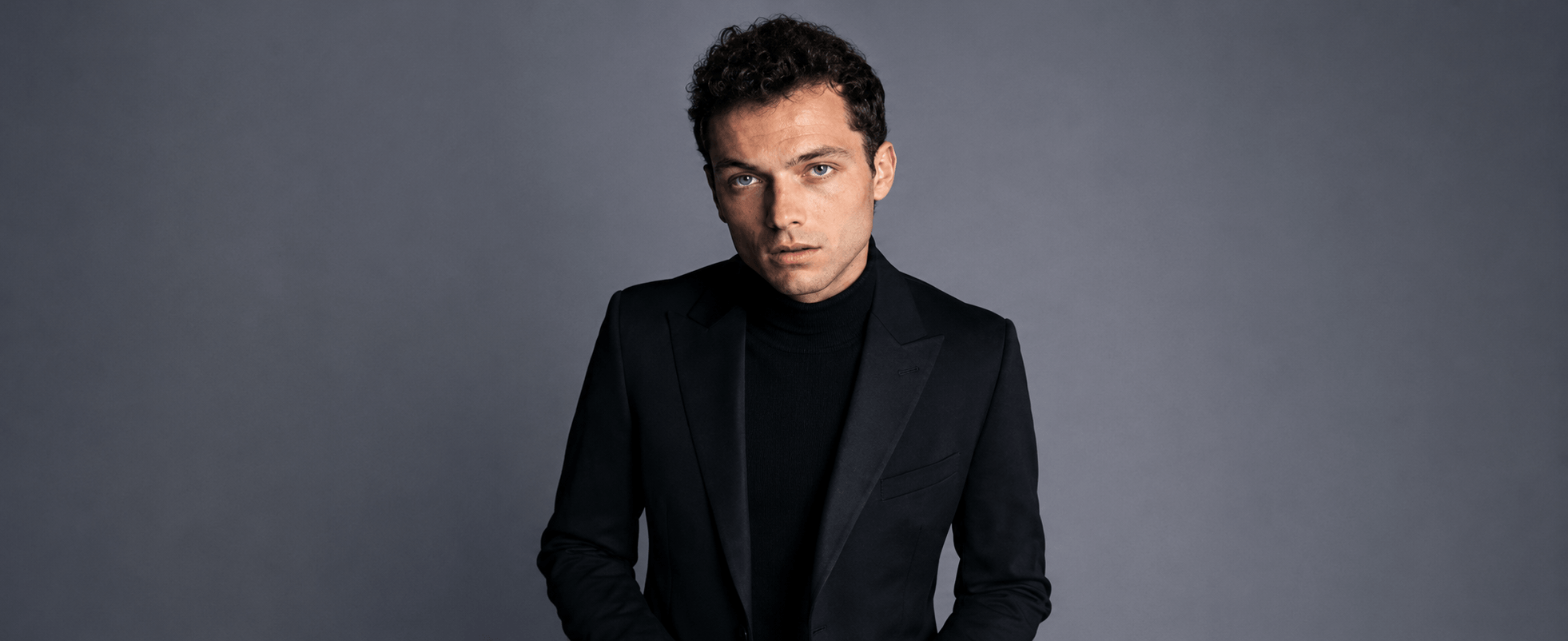
MAXIMILIEN SCHMITT: “My creative path has been a fragile equilibrium between constant change and strong commitment.”

French actor Maximilien Schmitt opens up about his acting journey and artistic vision – between Paris, London and NYC. 

Jennifer Ross by Jennifer Ross
September 2, 2026
in Entertainment
Reading Time: 8 mins read
MAXIMILIEN SCHMITT: “My creative path has been a fragile equilibrium between constant change and strong commitment.”

Mr. Schmitt, what has been the tipping point for you to choose acting as a career, and not just as a hobby?

When I was studying law at 21 years old in Paris, I felt that something was missing in my life. I couldn’t sing, I couldn’t dance but I remembered I had tried theater when I was 4 or 5 years old. I had this sense that I could express something on stage. To kickstart my acting journey, I started working with Vincent Fernandel, a renowned French acting coach. It was a true revelation: the work was not focused on learning lines but more on training the memory with images and sensations. 

RELATED POSTS

Virtual Influencers and the Future of Digital Celebrity

AI in Film and Television Production

I decided to go explore my craft where the great masters taught, so I chose New-York and the Lee Strasberg Institute. Not coming from a family in the arts, I had to follow in the footsteps of the industry’s greatest. 

What line of actors are you in?

I grew up with the classics: Audrey Hepburn in My Fair Lady, Mulholland Drive by David Lynch, Ali MacGraw and Ryan O’Neal in Love Story… So, I obviously aspire to become an actor who can portray such universal characters, who stay in our culture and collective imagination. 

In a more traditional register, I’ve been struck by the performance of Francis Huster in the French classic Lorenzaccio by Alfred de Musset, at the national theatre of La Comédie Française. What a performance to be so engaged on stage for more than 3 hours in a row!  

You seem to be fixated with the notion of “transformation”. What do this say about you?

Indeed! I have been obsessed with this idea of being able to change both in my professional and my personal life. How can I improve? I have this fear of being stuck somewhere. It might explain my desire to move from Paris to London for my master’s degree at LAMDA, and then this desire to go back to NYC this year. The vibration to live in a city where you were not born is just thrilling to me.

“I aspire to become an actor who can portray universal characters, who remain in our culture and collective imagination.”

This acute need for change could be translated into a kind of instability – how do you handle it? 

In my eagerness to move, I still commit undeniably to my craft. I just spent an intense year doing a Master in directing at LAMDA while acting in a modern adaptation of Macbeth called Untimely Ripped at the Golden Goose theater. Having a strict course schedule helped me find some balance in having somewhere to go back to. 

And the more you do, the more you do! While directing during the day, I was acting at night, and both were like communicating vessels. 

I also don’t have a backup plan, so it’s either I’m taking advantage of every opportunity to sharpen my craft, or I’ll fail achieving my vision.

What are the themes that truly move you in film or theatre, and that you wish to explore in your work?

I’ve always been intrigued by how miscommunication can lead to insane situations. Especially the weight of “quid pro quo” in relationships: someone says a cross word and it can lead to the end of a marriage or a civilization! The work of James L. Brooks (Terms of Endearment, As Good as It Gets, and more recently Ella McCay) is a true inspiration for me in terms of filming the small interactions of everyday life and showing how big of an impact they can have. His work offers a tender approach to masculinity and how to listen to each other when the divide between men and women can seem unconquerable.

I also love the freedom that fiction offers compared to documentary. With fiction, you can stretch a topic so much that at one point you keep asking the question of: How wrong can it get? In a relationship, how far miscommunication can lead to disaster? 

On a lighter note, I’m a big dreamer so fiction allows me to envision the world in a hopeful way.

Talking about your vision of the world, are you politically engaged?

I’m strongly aware of how every choice is political because it will have an impact: in the roles you take, in the production-size you choose, in the budget you allocate to certain creative aspects… I’m currently in the process of casting the actors for the play I’ll direct in London this summer and I try to question my bias of how I could choose certain ethnicities over other, and what does this say about me/the play/the message I want to convey. 

“Fiction allows me to envision the world in a hopeful way.”

What kind of characters do the industry usually see you in?

Due to my looks, I usually get the romantic French lead or the nice guy. But the last years, some directors told me they were seeing a glimpse of sadness in my eyes and that I could play more “damaged” and provocative characters. 

A dream role would be either a good rom com because I grew up watching the classics of the 2000s like Notting Hill, but also a villain in a James Bond film or a character who’s struggling in a drama like Adam Driver in Marriage Story.

Do you think you can play everything?  

(Laughs) Yes, until proven otherwise! 

ShareTweet
Previous Post

Denis Kitaev, his Rethinking of Luxury Living, and the Ideas Behind Vesper

Next Post

The Best Ballet Classes in Melbourne for 2026

Jennifer Ross

Jennifer Ross

Jennifer has been a part of the journey ever since The American Reporter started. As a strong learner and passionate writer, she contributes her editing skills for the news agency. She also jots down intellectual pieces from health category.

Related Posts

Virtual Influencers and the Future of Digital Celebrity

Virtual Influencers and the Future of Digital Celebrity

by Sargundeep Kaur
August 7, 2026
0

Imagine scrolling through Instagram and stopping at a celebrity campaign that looks completely real- the face is flawless, the outfit...

AI in Film and Television Production

AI in Film and Television Production

by Sargundeep Kaur
August 4, 2026
0

For decades, filmmaking has been a strange combination of art and technology. Cameras became digital, editing moved from film strips...

The Most Valuable Entertainment Companies Don’t Sell Stories

The Most Valuable Entertainment Companies Don’t Sell Stories

by Sargundeep Kaur
July 15, 2026
0

I used to think the biggest entertainment companies won by telling better stories. The evidence seemed obvious. Better scripts attracted...

The Quiet Return of Long-Form Storytelling

The Quiet Return of Long-Form Storytelling

by Sargundeep Kaur
July 15, 2026
0

For most of the internet’s history, progress seemed to move in only one direction. Articles became shorter, videos became faster,...

Entertainment Is Becoming a Participation Economy

Entertainment Is Becoming a Participation Economy

by Sargundeep Kaur
July 15, 2026
0

One idea has been quietly bothering me lately. We still describe entertainment as something we consume, but the more I...

Next Post
The Best Ballet Classes in Melbourne for 2026

The Best Ballet Classes in Melbourne for 2026

Tajel Shah Discusses Building Effective SOPs: Foundational Strategies for Administrative Excellence

Tajel Shah Discusses Building Effective SOPs: Foundational Strategies for Administrative Excellence

Latest News

Tajel Shah Discusses Building Effective SOPs: Foundational Strategies for Administrative Excellence

Tajel Shah Discusses Building Effective SOPs: Foundational Strategies for Administrative Excellence

September 2, 2026

The Best Ballet Classes in Melbourne for 2026

September 2, 2026

MAXIMILIEN SCHMITT: “My creative path has been a fragile equilibrium between constant change and strong commitment.”

September 2, 2026

Denis Kitaev, his Rethinking of Luxury Living, and the Ideas Behind Vesper

September 2, 2026

The Moment Money Stops Feeling Like a Problem and Starts Feeling Like Power

September 1, 2026

Matthew Fleeger’s Investment Thesis on Downturns

September 1, 2026

How Sergey Petrossov’s Aero Ventures Is Positioned for the New Aircraft Tax Environment

August 31, 2026

EcoShield Celebrates America’s 250th: How a Pest Control Company Embodies the American Dream

August 29, 2026

Jack Fascitelli Shares the Art of the Tier-One Pitch: Securing High-Volume Placements in Saturated Markets

August 29, 2026

Black Banx Enters a Depth Phase After Reaching 115.3 Million Customers

August 29, 2026

James (“JDub”) Warring Highlights Why Golf is the Ultimate Mental Game

August 26, 2026

Interview with Joy Xu: Rebuilding How Investors Understand Value Between Cross-Border Capital and Sustainable Cities

August 26, 2026
  • Home
  • About Us
  • Our Staff
  • Contact Us
  • Privacy Policy
  • Editorial Policy
  • Use of Cookies

© 2019 - The American Reporter

Welcome Back!

Login to your account below

Forgotten Password?

Retrieve your password

Please enter your username or email address to reset your password.

Log In
No Result
View All Result
  • Home
  • About Us
  • Our Staff
  • Contact Us
  • Privacy Policy
  • Editorial Policy
  • Use of Cookies

© 2019 - The American Reporter

This website uses cookies. By continuing to use this website you are giving consent to cookies being used. Visit our Privacy and Cookie Policy.