The American Reporter
Friday, August 7, 2026
  • Login
  • World
  • National
  • Science
  • Business
  • Health
  • Education
  • Lifestyle
  • Entertainment
  • Sports
  • Technology
No Result
View All Result
  • World
  • National
  • Science
  • Business
  • Health
  • Education
  • Lifestyle
  • Entertainment
  • Sports
  • Technology
No Result
View All Result
The American Reporter
No Result
View All Result

Hamid Taherypour’s Sculpture Built from a Sound

Kyle Matthews by Kyle Matthews
June 15, 2026
in Entertainment
Reading Time: 5 mins read
Hamid Taherypour’s Sculpture Built from a Sound

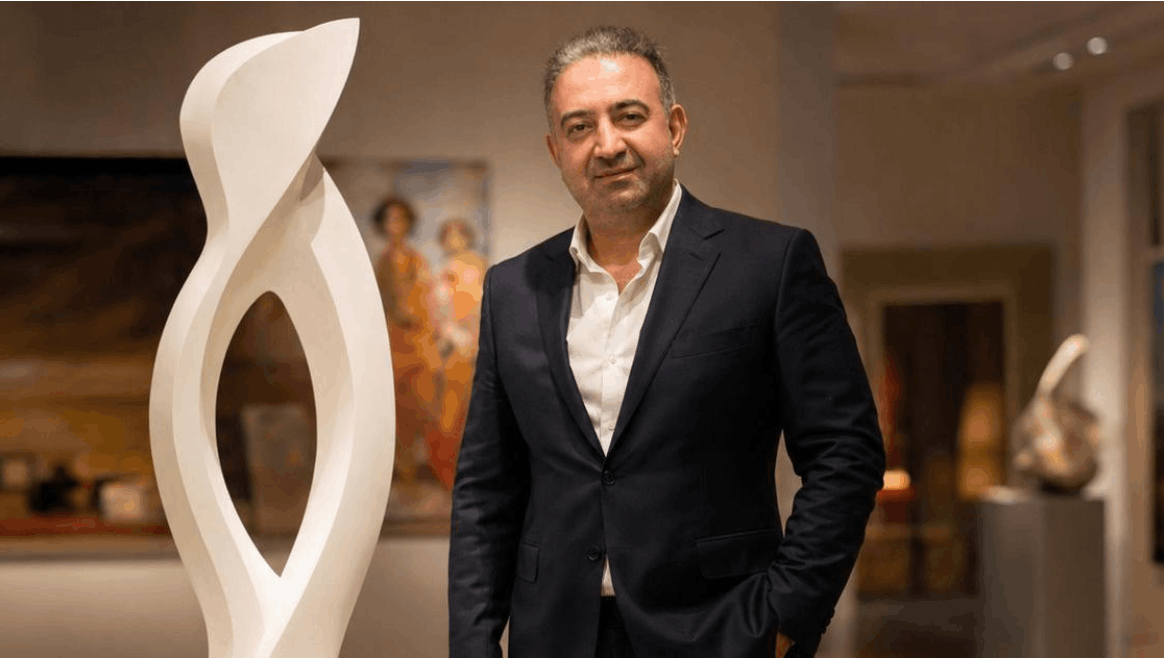
Hamid Taherypour’s sculpture begins with a small act of translation. Its source is a single letter in Persian and Arabic that carries the sound H. By adding, removing, or relocating dots, the same basic form can become other letters, and those letters can change words, meanings, and entire sentences. The idea is simple, but not simplistic. It suggests that language can turn on the smallest visual decision.

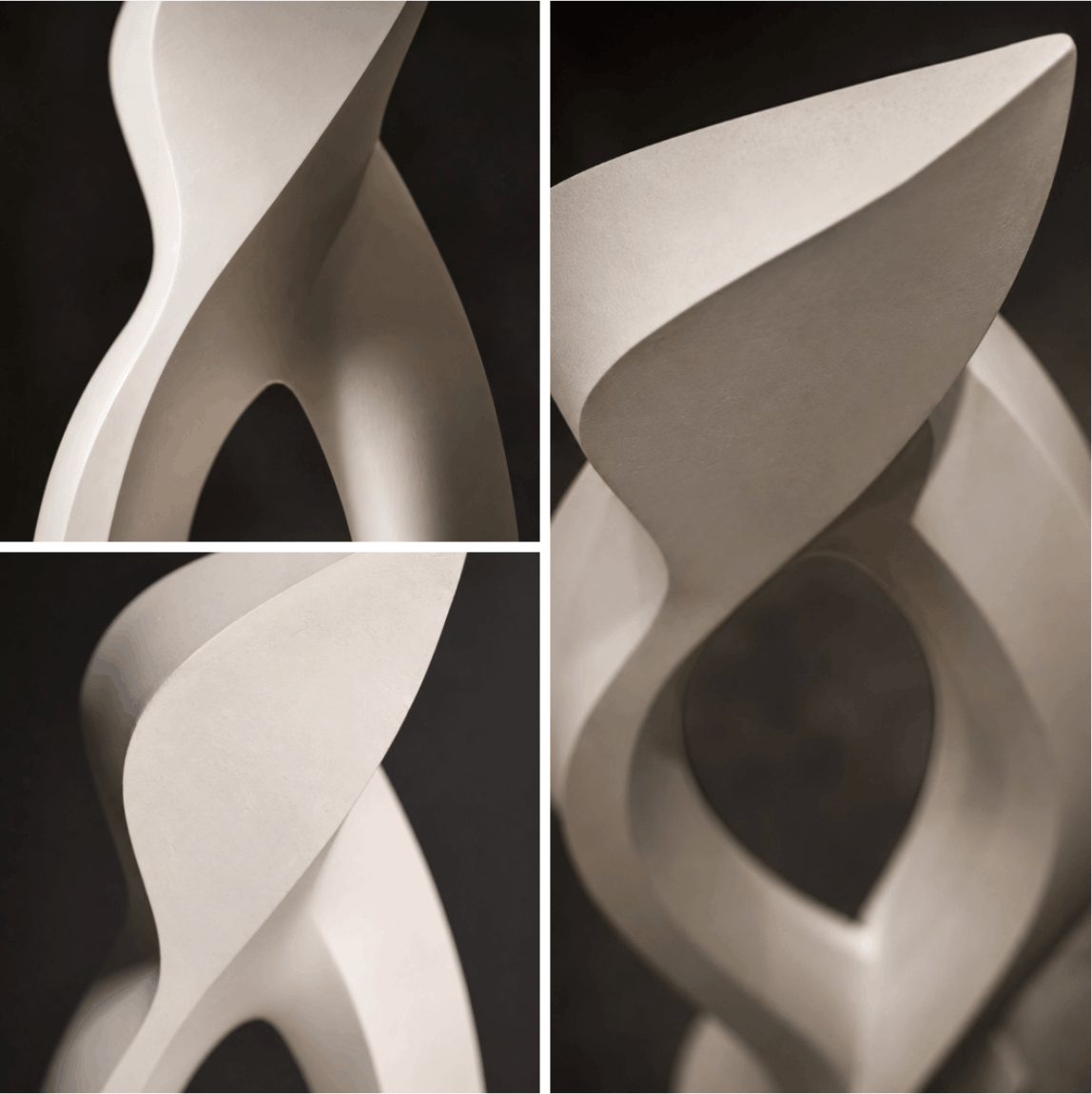
The sculpture does not present this idea as a lesson in script. It avoids literal illustration and instead draws from the memory of the letter. The form rises in a tall, pale curve, opening at the center and closing again near the base and upper edge. It has the elegance of a written sign, but also the stillness of an object that has left the page behind. What was once a mark becomes a body.

RELATED POSTS

Virtual Influencers and the Future of Digital Celebrity

AI in Film and Television Production

The central opening is the most compelling part of the work. It gives the sculpture breath. The void is not empty in a passive sense. It holds the space where sound, language, and meaning might pass through. This makes the piece more than a formal exercise. It asks the viewer to consider how absence can carry weight, and how a missing or displaced mark can alter what we understand.

There is a calligraphic quality here, though the work is not calligraphy. The gesture has been slowed, thickened, and made architectural. A written movement that might normally take less than a second is turned into something one must walk around. That shift from speed to duration is one of the sculpture’s strengths. Taherypour seems interested not only in the shape of the letter, but in the physical experience of following its movement.

The white surface gives the piece calmness and clarity. It allows the play of light and shadow to become visible without distraction. At the same time, this restraint has a cost. The surface can feel slightly too controlled for a concept built on transformation, uncertainty, and the fragile movement from one meaning to another. A more tactile finish, or a stronger trace of process, might have added tension. The sculpture is elegant, but at moments its elegance softens the risk of the idea.

Still, the work has a thoughtful presence. It does not rely on scale or spectacle. Its ambition is quieter: to turn a linguistic structure into a spatial encounter. The viewer does not need to read the original letter to feel the movement of the form, but the conceptual background adds a necessary depth. Without that context, the piece may be seen mainly as an abstract vertical sculpture. With it, the work becomes a meditation on how language, identity, and perception can shift through minute changes.
This dependence on context is both a limitation and an opportunity. The sculpture benefits from explanation, but it is not weakened by it. Some works need a story to open fully. Here, a carefully written title or wall text would help connect the formal grace of the object to the linguistic instability that inspired it.

As part of Hamid Taherypour’s recent practice, the sculpture shows a serious engagement with form, sign, and inner experience. It is not a flawless work, and that is part of its interest. Its strongest moments come when it resists becoming merely beautiful and begins to suggest the instability of meaning itself. A dot moves, a letter changes, a word becomes another word. In that small shift, Taherypour finds a sculptural language of transformation.


ShareTweet
Previous Post

Best 8 AI Fleet Optimization Software Platforms

Next Post

The Last Sanction Standing: Why Canada Refuses to Follow Its Allies on Igor Makarov

Kyle Matthews

Kyle Matthews

The idea of The American Reporter landed this businesswoman to the digital avenue. Kyle brought life to this idea and rendered all that was necessary to create an interactive and attractive platform for the readers. Apart from managing the platform, she also contributes her expertise in business niche.

Related Posts

Virtual Influencers and the Future of Digital Celebrity

Virtual Influencers and the Future of Digital Celebrity

by Sargundeep Kaur
August 7, 2026
0

Imagine scrolling through Instagram and stopping at a celebrity campaign that looks completely real- the face is flawless, the outfit...

AI in Film and Television Production

AI in Film and Television Production

by Sargundeep Kaur
August 4, 2026
0

For decades, filmmaking has been a strange combination of art and technology. Cameras became digital, editing moved from film strips...

The Most Valuable Entertainment Companies Don’t Sell Stories

The Most Valuable Entertainment Companies Don’t Sell Stories

by Sargundeep Kaur
July 15, 2026
0

I used to think the biggest entertainment companies won by telling better stories. The evidence seemed obvious. Better scripts attracted...

The Quiet Return of Long-Form Storytelling

The Quiet Return of Long-Form Storytelling

by Sargundeep Kaur
July 15, 2026
0

For most of the internet’s history, progress seemed to move in only one direction. Articles became shorter, videos became faster,...

Entertainment Is Becoming a Participation Economy

Entertainment Is Becoming a Participation Economy

by Sargundeep Kaur
July 15, 2026
0

One idea has been quietly bothering me lately. We still describe entertainment as something we consume, but the more I...

Next Post
The Last Sanction Standing: Why Canada Refuses to Follow Its Allies on Igor Makarov

The Last Sanction Standing: Why Canada Refuses to Follow Its Allies on Igor Makarov

Is Corporate America Becoming Too Dependent on Subscription Revenue?

Is Corporate America Becoming Too Dependent on Subscription Revenue?

Latest News

The Rise of Sustainable and Circular Fashion

The Rise of Sustainable and Circular Fashion

August 7, 2026

Virtual Influencers and the Future of Digital Celebrity

August 7, 2026

Belle Burden: Attorney, Author, and the Voice Behind One of 2026’s Most Talked-About Memoirs

August 7, 2026

The Evolution of B2B Sales in a Data-Driven Economy

August 6, 2026

Redesigning Curricula for Human-Machine Collaboration

August 6, 2026

Baby Boomers Own 2.3 Million U.S. Businesses. Nicholas Mukhtar Says Most Aren’t Ready to Hand Them Off

August 6, 2026

Does Your Healthcare Data Governance Framework Support Clinical Innovation?

August 5, 2026

Autonomous Robotics in Industrial and Service Sectors

August 4, 2026

Personalized Medicine and Genomic Health Profiling

August 4, 2026

AI in Film and Television Production

August 4, 2026

Smarter Living: The Evolution of Connected Home Ecosystems

August 4, 2026

Micro-Credentials vs Traditional Degrees

August 4, 2026
  • Home
  • About Us
  • Our Staff
  • Contact Us
  • Privacy Policy
  • Editorial Policy
  • Use of Cookies

© 2019 - The American Reporter

Welcome Back!

Login to your account below

Forgotten Password?

Retrieve your password

Please enter your username or email address to reset your password.

Log In
No Result
View All Result
  • Home
  • About Us
  • Our Staff
  • Contact Us
  • Privacy Policy
  • Editorial Policy
  • Use of Cookies

© 2019 - The American Reporter

This website uses cookies. By continuing to use this website you are giving consent to cookies being used. Visit our Privacy and Cookie Policy.