In biologics manufacturing, inefficiency rarely announces itself loudly. It settles in quietly, becomes routine, and over time, starts to look like design. Few areas illustrate this better than buffer management, a function so fundamental that its limitations are often mistaken for inevitabilities.
Buffers are the cornerstone of the stability of a process. They control the chemical environment to a level where biologic products that are sensitive can be made with consistency, quality, and compliance. However, in spite of their extraordinary role, the handling of buffers has always been subjected to a strict rationale: prepare in batches, use within a short time, discard, and repeat.
Over time, entire facilities have been built around this assumption. Preparation schedules are locked in advance. Recipes are fixed. Once a batch begins, intervention is avoided. The result is a system that works, but only by accepting a steady undercurrent of inefficiency. Production pauses for cleaning cycles. Changeovers stretch longer than anyone would prefer. Space, labor, and capital are all committed to managing a constraint that few have seriously attempted to remove.
This persistence is not accidental. In GMP-regulated environments, the cost of error is high. Real-time intervention introduces validation and compliance risks, leading the industry to favor stability over flexibility.
At one large-scale biologics manufacturing operation, however, this assumption came under scrutiny. Addressing these entrenched constraints required a different way of thinking, one that did not treat buffer limitations as fixed, but as solvable. Abantika Ghosh spearheaded the technical architecture behind this shift. She aligned process engineering, automation, and validation teams to rethink how buffer systems could function under live manufacturing conditions.
The shift began with a simple but disruptive question: what if buffers did not have to be static?
Instead of treating them as consumables with a predetermined lifecycle, the idea was to manage them as dynamic process elements. These are systems that could be monitored, adjusted, and sustained in real time without compromising quality. It sounds straightforward in hindsight. It was anything but straightforward in practice.
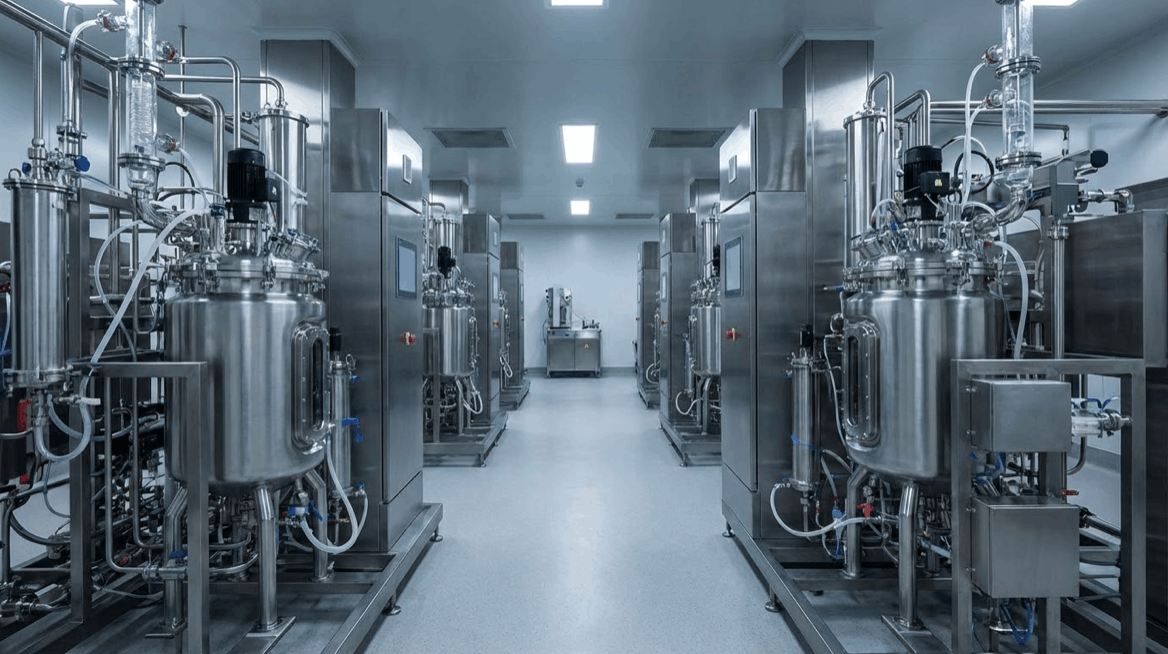
At the center of this effort was a real-time buffer batch top-up process for large-scale stainless-steel environments. Abantika led the design of this novel system and directed its implementation, enabling operators to adjust buffer composition while the batch was still in use, keeping it within required specifications for longer than traditional methods allowed. In effect, it separated buffer usability from the narrow windows that had historically defined it.
This was not a tweak to an existing system. It required building a new control philosophy from the ground up.
Under her technical direction, the architecture relied on continuous feedback, integrating process data directly into control decisions. Instead of monitoring conditions and reacting after the fact, the system operated in a closed loop, constantly adjusting to maintain stability. Analytical inputs were no longer passive; they became active drivers of control logic. Inline conditioning allowed buffers to be derived and refined from shared stock solutions, reducing the need for repeated preparation cycles.
Designing such a system meant navigating a series of trade-offs. Precision had to be maintained without introducing instability. Flexibility had to coexist with compliance. And every adjustment had to be defensible within a regulatory framework that is, by design, cautious about change.
At the time, there was no ready-made template to follow. No vendor solution offered this capability. Abantika defined the control strategy and validation approach, while working with cross-functional teams to translate it into a deployable system. The work required original automation strategies, bespoke control logic, and a validation framework that balanced rigor with practicality.
The impact became evident in live manufacturing. Buffer systems that once constrained production became less limiting. Campaign planning improved, interruptions reduced, and operations became more flexible.
Manual interventions declined, equipment utilization improved, and facilities required fewer resources dedicated to buffer infrastructure. This was not an incremental change; it addressed a long-accepted structural constraint.
What stands out is not just the improvement itself, but the nature of the improvement. In complex manufacturing systems, gains are often incremental, small optimizations layered over time. Here, the change was structural. It addressed a constraint that had long been accepted as part of the landscape.
Inside the organization, the work also revealed something less visible but equally important: the kind of leadership required to make such a shift. Buffer systems operate at the intersection of chemistry, automation, and regulation. Moving them from static to dynamic control demanded not just technical skill, but the ability to navigate risk, something Abantika brought by bridging process understanding with control-system design and validation strategy.
Most approaches, in such contexts, lean toward caution. Optimize what exists. Avoid unnecessary risk. Improve within boundaries. Under Abantika’s direction, this effort took a different path, not by ignoring those boundaries, but by carefully expanding them.
Beyond its immediate application, the approach has broader relevance. As manufacturing grows more adaptive, dynamically managed systems offer a more flexible alternative to fixed infrastructure.
In contract development and manufacturing organization (CDMO) environments, this means planning capacity with greater agility. It involves building systems that adjust in place rather than scaling for every scenario.
Its significance extends further. The architectural principles pioneered in this work, specifically real-time monitoring and demand-driven buffer utilization, have since been integrated into the manufacturing frameworks of some of the world’s most significant life sciences organizations. This includes a global leader in scientific instrumentation and bioprocessing solutions known for its vast Fortune 500 footprint, as well as a premier research-based biopharmaceutical powerhouse dedicated to complex immunology and oncology treatments. By adopting these predictive control strategies, industry titans have transitioned from rigid, batch-heavy infrastructure. They now operate the more agile, continuous manufacturing models required for the next generation of biologics. This has influenced how buffer infrastructure and automation strategies are executed at scale, while also serving as a reference architecture for other organizations to develop comparable systems. As a result, buffer preparation is increasingly treated as a continuous, controllable capability rather than a rigid batch activity.
The architecture also demonstrated measurable impact: buffer usability extended from roughly 5 days to nearly 30 days, changeover times dropped from multi-day durations to under half a day, and manual handling was reduced significantly. Facilities avoided substantial capital investment while reducing cleaning cycles and utility consumption. These outcomes drove adoption across other large-scale manufacturers.
Seen in that light, the contribution is not just a solution to a specific problem, but a shift in how that problem is framed. It suggests that some of the constraints embedded in manufacturing systems are not as fixed as they appear; they persist not because they are unsolvable, but because they have not been approached differently.
Biologics manufacturing will continue to grow in complexity. Processes will become more interconnected. Expectations around efficiency, sustainability, and responsiveness will only increase. In such an environment, the ability to rethink foundational elements, not just optimize them, becomes a defining advantage.
Buffer systems, long treated as a constraint to manage, may well become an example of what happens when that mindset changes. And in that shift, from acceptance to redesign, lies the real significance of the work, and the role professionals like Abantika Ghosh played in enabling it.