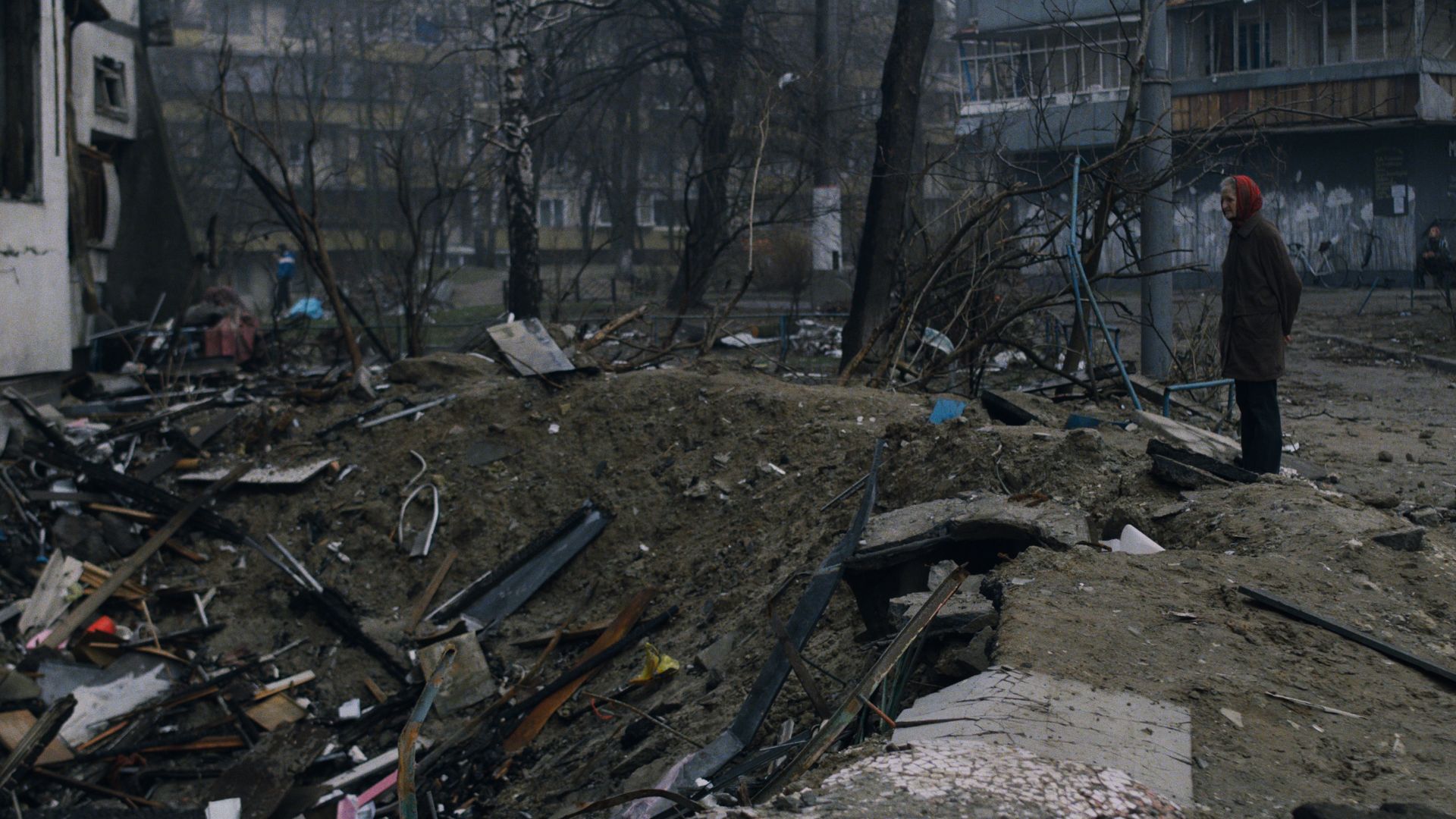
Over four years ago, on Feb. 24, 2022, Russian forces crossed into Ukraine, launching what has become the largest armed conflict on European soil since World War II. A relentless humanitarian catastrophe followed: millions displaced, cities reduced to rubble, and an entire generation of Ukrainians forced to rebuild their lives from scratch, many of them far from home. And as the war continues to rage, Stan Polovets, co-founder and chairman of The Genesis Prize Foundation (GPF), continues to make the case that global attention and sustained support for Ukraine’s civilian population cannot afford to waver.
The war’s consequences have long surpassed any neat military or geopolitical framing. The United Nations estimates that more than six million Ukrainians remain displaced abroad, with millions more internally displaced within the country. Civilian infrastructure, including power grids, hospitals, and water systems, has been systematically targeted. The psychological toll on survivors, including children who have spent formative years living under the threat of missile strikes, will take decades to fully reckon with. These are not abstract statistics to the network of Jewish activists and NGOs that The Genesis Prize Foundation has been supporting and amplifying.
From Anniversary to Action: The Genesis Prize’s Role
Co-Founders of the Genesis Prize Natan Sharansky and Stan Polovets convened a gathering at the Peres Center for Peace and Innovation in Tel Aviv in February 2025 marking the third anniversary of the invasion. The event was not merely ceremonial. More than 40 representatives from 21 Genesis grantee organizations participated, either in person or via video, to share field reports, assess shifting humanitarian needs, and confront a particularly uncertain political moment: the curtailment of USAID funding and the prospect of a peace process driven more by external political pressure than by the needs of Ukraine’s population.
That gathering reflected how The Genesis Prize Foundation has chosen to operate throughout the conflict. Rather than treating Ukraine as a single campaign or a news cycle to which to respond, the foundation sees it as an issue that demands ongoing focus, relationships with frontline organizations, and the willingness to focus on the issue even when the world’s attention has moved elsewhere.
“From the outset of the war, Jewish activists and NGOs, many from Israel, immediately sprang into action, providing assistance to those in dire need,” Polovets said at the 2025 commemoration. “We are proud to honor these organizations and to support their work in helping the Ukrainian people in their quest to live freely in security and peace.”
The 2023 Honorees: A Network of Organizations Still Working
The foundation’s decision to structure its 2023 Genesis Prize around Ukraine rather than an individual laureate was, at the time, a break from a decade of tradition. It was also a deliberate acknowledgment of the scale of the collective response that had emerged across the Jewish world since February 2022. The organizations recognized as 2023 Genesis Prize honorees, including United Hatzalah, The Jewish Agency for Israel, IsraAID, HIAS Israel, Hillel CASE, NATAL, the JCC Association of North America, BlueCheck Ukraine, Project Kesher, World Jewish Relief, and others, were chosen precisely because they were not waiting for institutional direction. They were already there.
Actor and activist Liev Schreiber, who co-founded BlueCheck Ukraine to vet and fund humanitarian aid initiatives, joined last year’s commemoration via video from New York. His continued participation in the foundation’s programming is emblematic of the kind of long-term engagement Stan Polovets has sought to cultivate. The goal has never been to generate a single burst of fundraising attention, but to build durable relationships between donors, civil society organizations, and the communities they serve.
Eli Beer, founder and president of United Hatzalah, is appreciative. “We are deeply grateful to The Genesis Prize Foundation for their leadership and generous funding,” Beer said at last year’s event. “With the support of GPF and others, we are able to focus our attention on delivering aid to those who need it most.”
Over the past three years, these organizations have collectively delivered medical care, psychological support, food assistance, resettlement services, and trauma therapy to hundreds of thousands of Ukrainians. For a conflict that has remained largely out of Western headlines for extended stretches, their persistence has been extraordinary.
The Broader Stakes: Jewish Identity and the Meaning of Solidarity
Natan Sharansky, who was born in Donetsk, the Ukrainian city annexed by Russia in September 2022, has framed the foundation’s engagement with Ukraine as inseparable from Jewish values. “International support is critical to making sure Ukraine prevails in this fight,” he stated at the 2025 anniversary event. “It is also critical for Jews to continue contributing to this effort so that we remain true to our foundational values of standing up for freedom, human dignity, and justice.”
“We designed the Genesis Prize to honor not just professional achievement, but the application of Jewish values to the challenges of the broader world,” said Stan Polovets. “Ukraine has become one of the defining tests of that principle.”
The connection between Jewish identity and solidarity with Ukraine has also taken on new significance in the context of rising antisemitism and challenges facing diaspora Jewish communities globally. The foundation’s sustained focus on Ukraine reflects a conviction that Jewish communal institutions have both the obligation and the capacity to act as humanitarian actors on the world stage, for Jewish populations and for all people whose dignity and safety are threatened.
A Philanthropic Model Built for Moments Like This
Understanding what makes The Genesis Prize Foundation’s Ukraine engagement possible requires understanding how the foundation’s philanthropic model works. Each year, the $1 million Genesis Prize is typically awarded to an individual and the laureate directs those funds to causes of their choosing, often attracting additional matching donations that multiply the impact significantly. The Genesis Prize Foundation’s philanthropic approach has, over more than a decade, leveraged more than $50 million for charitable initiatives across 30 countries.
“It is the only Jewish organization awarding an annual $1 million to individuals who do not take the money but turn around and invest it back into the community, often doubling or tripling the contribution through matching donations,” Polovets has explained. That model has allowed the foundation to remain nimble, channeling resources toward needs that shift with global circumstances. Ukraine is a vivid illustration: when the invasion began, the foundation was able to pivot quickly, and it has remained committed to the cause as the conflict enters its fourth year.
That agility matters. Humanitarian crises do not follow news cycles, and donor fatigue is a well-documented phenomenon that affects even the most devastating ongoing conflicts. The Genesis Prize Foundation’s commitment to remembering Ukraine year after year, convening organizations, maintaining relationships, and directing public attention, functions as a counterweight to the tendency of the broader philanthropic world to move on.
Looking at Year Four
As the war entered its fourth year, the humanitarian picture remained grim. Reconstruction costs are estimated in the hundreds of billions of dollars. The mental health infrastructure needed to support survivors, particularly children, barely exists. Resettlement programs for displaced Ukrainians are straining the capacity of host countries. And the geopolitical framework that will govern any eventual peace process remains deeply unclear, with significant implications for the millions of Ukrainians still waiting to go home.
Stan Polovets does not suggest that The Genesis Prize Foundation can solve these problems. What he has argued, consistently and with conviction, is that Jewish funders and organizations have a responsibility to show up: to bear witness, to provide resources, and to sustain interest when others grow weary. The organizations recognized in 2023 are still working on the ground in Ukraine. The foundation is still convening them. And four years after Russia’s invasion, that sustained commitment stands as a meaningful response to a crisis that has tested the conscience of the entire international community.