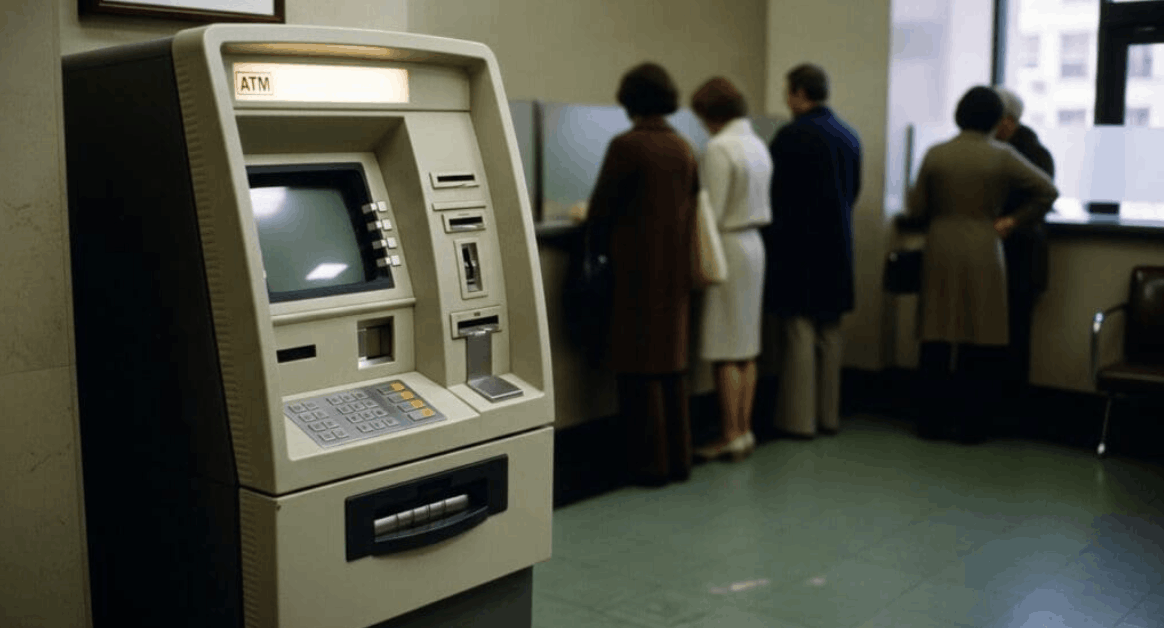
Even as digital payments dominate headlines and fintech startups race to create cashless futures, one corner of the financial services industry is quietly expanding across America: the ATM business.
ATMInvestors.com, an US-based ATM investment and portfolio management company (that also buys and runs laundromats and other businesses across the country), led by founder and CEO CJ McMahon, announced this week that it has completed more than $4 million in ATM portfolio acquisitions as part of an aggressive nationwide growth strategy focused on scaling cash-access infrastructure across the United States.
The expansion reflects a broader shift occurring inside the ATM industry, where operators, private investors, and infrastructure companies are consolidating fragmented regional portfolios into larger national networks. While consumers increasingly use digital wallets and contactless payments, industry leaders say cash access remains critical for millions of Americans, particularly in convenience retail, hospitality, gaming, and underserved banking markets.
The team at ATMInvestors.com has positioned itself at the center of that trend by marketing ATM ownership as a passive-income investment vehicle. The company acquires and manages ATM businesses for accredited investors, handling everything from sourcing and due diligence to maintenance, cash logistics, and merchant onboarding. According to the company, it now oversees thousands of ATM units nationwide and emphasizes long-term recurring cash flow for investors.
McMahon, who has built the company around acquisition-driven growth, is part of a new generation of young entrepreneurs reframing ATMs not simply as machines, but as infrastructure assets similar to self-storage, car washes, or franchise portfolios.

The strategy mirrors consolidation efforts seen across the broader financial technology and cash-management sectors. In recent years, companies such as Brink’s, PAI, and NCR Atleos have pursued acquisitions aimed at strengthening ATM servicing, logistics, and transaction-processing capabilities nationwide. Brink’s previously acquired PAI to deepen its ATM management footprint in the United States, citing the growing importance of outsourced ATM operations and digital monitoring systems.
More recently, Brink’s announced plans to acquire NCR Atleos in a multibillion-dollar transaction designed to create one of the world’s largest integrated ATM and cash-management platforms.
At the same time, the cryptocurrency ATM sector has experienced its own acquisition wave. Bitcoin Depot announced in 2025 that it acquired National Bitcoin ATM assets across 27 states, expanding its kiosk footprint by more than 500 locations.
Industry analysts say the renewed interest in ATM infrastructure comes down to one key factor: consistent transaction revenue.
Unlike many speculative fintech ventures, ATM operators generate recurring income through surcharge fees and servicing agreements tied to high-traffic retail locations. For investment-focused firms like ATMInvestors.com, that predictability has become a major selling point in a higher-interest-rate environment where investors increasingly seek cash-flow-producing assets.
The company says its acquisition criteria focus on profitable ATM routes with stable merchant contracts and scalable operations. Once purchased, ATMInvestors.com transitions the assets into its management system while investors receive distributions tied to transaction activity.
The company also promotes the tax advantages associated with ATM ownership, including accelerated depreciation and financing opportunities tied to ATM portfolios.
Across the industry, operators are competing to modernize legacy ATM businesses while maintaining access to physical cash. Companies such as Cardtronics, NRT Technologies, and Pacific Processing have all pursued acquisition strategies aimed at expanding geographic reach and improving operational scale.
For McMahon and ATMInvestors.com, the latest acquisitions represent more than short-term growth; They are part of a larger push to institutionalize what was once a fragmented small-business sector dominated by independent operators.
That transformation is increasingly attracting private capital.
ATMInvestors.com describes itself as “America’s fastest-growing ATM investment firm,” pitching ATM ownership as a hands-free alternative to real estate or traditional small-business investing.
Whether America eventually becomes fully cashless remains an open question. But for now, the ATM business, long considered a mature industry, appears to be entering a new phase driven by consolidation, operational efficiency, and investor demand for stable income-producing assets. And companies like ATMInvestors.com are betting there is still significant value in the nation’s cash economy.