For most founders, the dream of running a successful company starts with a vision. Founders want to build something that moves the needle, disrupts an industry, and reaches new heights. But as the venture starts to grow and scale, it becomes clear that the dream isn’t as easy to achieve because something keeps stealing their momentum: technical gravity.
Technical gravity is the pull that takes a good idea and forces it to work in the real world. It shows up as constraints, time, money, systems that do not match, and people who need things explained twice. Early on, a vision can stay clean because nothing has been built yet. Once you start building, details appear, edge cases pop up, and tradeoffs become real. Technical gravity is not a villain; it is just reality doing its job. If you plan for it, test early, and keep tightening the work, the vision can still ship, just in a form that fits what the world will allow.
But technical gravity can also pull you in directions you never meant to go. Eventually, what began as strategic leadership slowly starts to shift into a cycle of constant intervention. Strategy meetings get bumped because a midnight release broke. High-level growth planning is sidelined by another infrastructure emergency.
The reality is that as companies scale, technology stops being a support system and starts competing for your focus. As a result, more founders are turning to an operational partner built to handle the technical weight so leadership can stay focused on the big picture.
The inflection point: When tech becomes a distraction
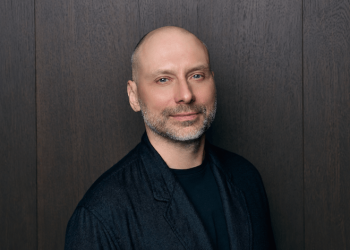
Artur Balabanskyy, co-founder and CTO of Tapforce, learned technical gravity the hard way. “In my first startup, I lived inside the product,” he says. “I wrote the code, picked the stack, approved every change, and it felt efficient. And for a while, it was.”
Then the product got real users, real revenue, and real consequences. The work stopped being about clever building and turned into keeping the lights on. “A deployment that used to take 10 minutes suddenly needed checklists because someone (probably me) had once screwed up a git command,” Balabanskyy says. “A small bug fix (usually mine) could break three other things. The backlog grew faster than I could clear it, and at the same time, my calendar filled up with sales calls, investor talks, and customer meetings. I was still ‘owning’ the technical decisions, but the truth was I was drowning in them.”
The moment it clicked for Balabanskyy was a week when everything hit at once. A big-name client needed an urgent triage, a release went sideways, and he was stuck in long threads with contractors about a UI change that kept expanding into bigger architectural trade-offs. None of it was exciting work, but all of it mattered, and it all demanded his immediate attention.
“I kept thinking, every hour I spend on these low-impact calls is an hour I’m not spending with customers, leading the team, or moving the business forward. That feeling of being trapped between growth and upkeep is why I eventually built Tapforce,” he says. “I wanted an agency that does the boring, critical parts well — the workflows, the deployments, the maintenance, the steady improvements — so founders can keep their focus where it belongs. Tapforce isn’t there to ‘do code.’ We’re there to protect the founder and keep the product stable while the company grows.”
Moving beyond the project mindset
Many companies make the mistake of hiring a traditional development shop to fix a single problem. But a one-off project doesn’t solve a long-term focus problem.
“I built my agency to operate differently,” says Balabanskyy. “I want to serve as an operational partner that centralizes and streamlines your entire technical ecosystem. By embedding alongside leadership, Tapforce manages the systems and workflows that typically pull founders back into the weeds.”
Technical gravity becomes your competitive edge
Partnering with a team that handles technical gravity helps a startup grow because it changes where the founder’s energy goes. Working with Tapforce is not about giving up control of technology. It is about removing the constant pull of maintenance, fixes, and small decisions that slow everything else down. You stop reacting to issues and start setting direction. Conversations move from what broke today to what needs to exist six months from now.
With a partner managing the operational side, product decisions come from customers and the market, not from what your team can barely keep running. You get long stretches of focus back. Planning becomes possible again. The company starts to move as a system instead of a series of urgent problems.
This is how modern startups scale. Strong founders are not the ones buried in dashboards and deploy scripts. They are the ones who create clarity, set priorities, and keep the team aligned.
“These are all things I needed desperately when I built my first startup,” Balabanskyy recalls.
When technology is treated as a stable base instead of a daily distraction, growth stops feeling fragile. Tapforce exists to absorb that technical pull so founders can lead. The world is complex enough. Your company does not need extra chaos to prove it is working.