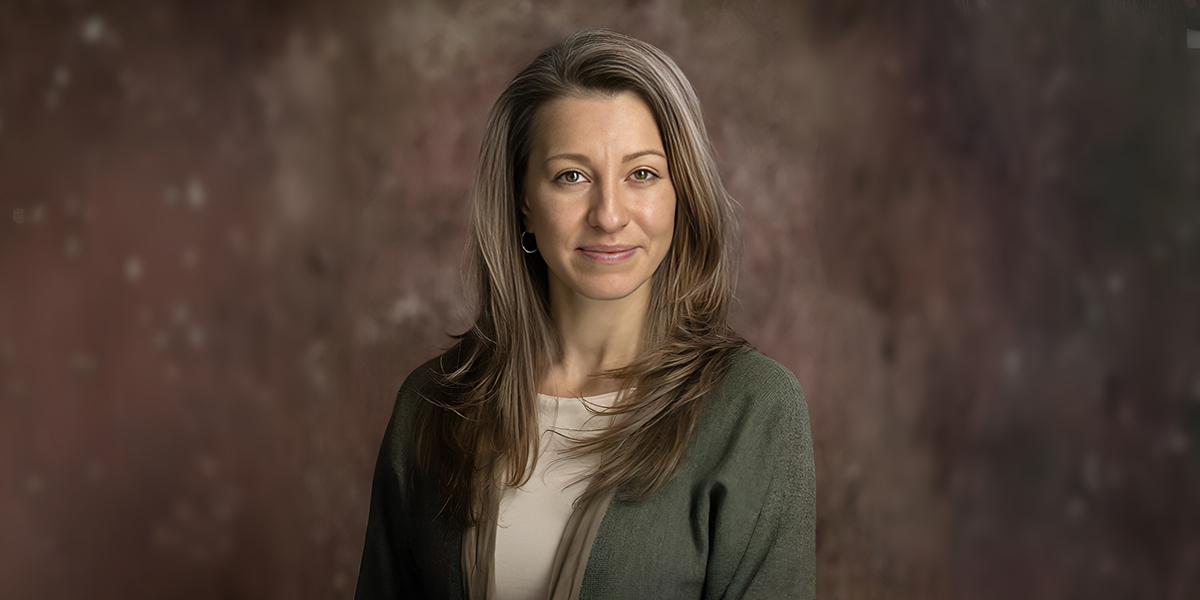
Dr. Karina Menali is the founder of Kai Wellness, which began with the idea that healing begins the moment someone feels seen. Her work combines science, spirit, and presence. She has spent years studying integrative medicine across the US, Japan, and China. Her practice treats the whole person instead of a list of symptoms. In this exclusive interview, Dr. Karina shares her vision for the future of integrative care and speaks about training, new ideas, and the art of listening. She explains why Kai Wellness keeps one rule in focus: the treatment is created with the patient, not handed to them. This is why at Kai Wellness, each session is private, calm, and careful to create a safe space where healing can happen.
Q1. Dr. Menali, what was your original vision when you founded the practice, and how has that vision evolved as integrative medicine continues to expand globally?
Dr. Karina Menali: Essentially, Kai Wellness was founded on the premise of offering service in any capacity as necessary to meet evolving needs. In a culture of medical specialization, we went against the grain and specifically chose to focus on the entirety of the human being. I’m delighted to see this futuristic vision shared by the masses as more and more people seek truly holistic care that goes beyond physical medicine.
Integrative medicine is expanding, and so is its definition. Ancient wisdom and healing practices that include modalities to address frequency, emotions, energetics, and soul-level healing are becoming less and less taboo. Kai Wellness continues to evolve with this current in our offerings to meet folks where they are and support their healing, their becoming, and their thriving at entirely new levels.
Q2. You have trained extensively across functional medicine, Chinese medicine, somatic therapy, and shamanic healing. How do you decide which modalities to bring together for a specific client, and what does this synthesis reveal about the body’s natural intelligence?
Dr. Karina Menali: No two sessions are alike. I offer an experience every time that is as unique as the individual that is in front of me, and that can change in seconds.
Think about it: we are composed of infinite molecules and subatomic particles that reconfigure themselves each moment. Our lives are like a river, sometimes flowing, sometimes choppy, sometimes dried up, sometimes flooding, sometimes swirling around like an eddy.
My job is to open an emergent space for what needs to happen in the life of the individual at a particular moment in time. Sure, there are long-term goals. Often, we work together systematically toward specific outcomes. Many times, people are confused and stuck and have no idea what their next steps might be. We are all like a clear night sky, seemingly full of random stars. But when we zoom out and identify a constellation, a pattern, then it becomes possible to transform how we see and free ourselves to continue to flow.
Over decades of practice, I have found that a specific combination of modalities provides the framework for this fine-tuning, to tug at just the right string and maximally affect the whole web. When the right treatment is given at just the right time, the entire human organism reorganizes itself in harmony. This is the highly personalized and deeply intuitive approach I take with each client. No protocols, just precision and results.
Q3. Innovation in healthcare often focuses on technology, yet Kai Wellness emphasizes consciousness and energetic balance. How do you see the future of integrative medicine blending both technological innovation and intuitive healing?
Dr. Karina Menali: What is the definition of technology? It can be said that we humans ARE technology! Our energy is a form of technology. Therefore, when it is in balance, it can be cultivated and directed in intentional ways, which, of course, requires consciousness.
Certainly, we rely on biometrics like lab testing and imaging. At the same time, a lot of information comes through intuitive channels. These are in no way mutually exclusive; they are entirely compatible and interdependent.
There are countless studies showing how being in nature (think “earthing” and “forest bathing”), meditation, accessing higher states of consciousness, and developing intuitive healing abilities yield profoundly transformative results.
For those who think only science is valid, look no further than published research that illustrates these phenomena; it is abundant. For those who have firsthand experience with non-physical matter, this is an easy concept. The trick is discerning the difference. There is a tendency among some people to aggrandize artificial technology and intelligence and minimize the more subtle energy and intuitive realms. This is detrimental.
Some of the greatest innovations and discoveries came through intuitive means. Long before any modern technologies, some of the world’s revered ancient technological feats remain mysteries (think Egyptian pyramids, think Pythagoras, Aristotle, Acupuncture, etc).
There is nothing but conflict and fragmentation in separating matter from the immaterial. That is what the Dark Ages were about. Nowadays we are moving toward integration. To combine tech and intuition and cultivate the benefits of both… that is wholeness.
Q4. Many of your patients describe transformative experiences that go beyond physical healing. How do you define true wellness, and what role does emotional and spiritual restoration play in long-term recovery?
Dr. Karina Menali: Any doctor who has practiced long enough and kept their mind open to possibilities will say the same thing: humans are much more than our physical selves. It is a well-established fact that spiritual connection and emotional balance play monumental roles in our sense of well-being and physical health.
Ask any doctor who works with terminal illness such as cancer, and they will confirm: mindset is everything.
Our deepest beliefs, be they conscious or unconscious, shape us more than most of us care to admit. Among professionals who treat trauma, shame, and mental and emotional issues, this is a well-established fact.
The truth is, when we are riddled with inner conflict, emotional or spiritual, our mood, our bodies, our desire to live, and the sense of aliveness greatly suffer. Study after study shows how loneliness and broken-heartedness are some of the biggest killers of our time. We are living in a time of material abundance but emotional and spiritual sickness.
To help bring about deep healing at the emotional and spiritual level is the starting point to the recovery of most ailments. Not all, but indeed most.
Q5. Training seems to be a cornerstone of your professional evolution. Are you currently developing new educational programs or mentorship pathways to help the next generation of practitioners learn the Kai Wellness approach?
Dr. Karina Menali: That’s flattering! I will consider it. My experience as a teacher and clinical supervisor in integrative medicine and healing schools has been rewarding. Perhaps developing a training in truly integrative medicine and healing is in my future; I remain open to possibilities.
Q6. As you look ahead, what breakthroughs or collective shifts do you hope to see in integrative and functional medicine, both within your own practice and across the healthcare landscape?
Dr. Karina Menali: Definitely a move away from the business model toward true healing. Integrative and functional medicine have become consumed by greed. People are scared into buying mountains of supplements, and are not given timelines for when to stop using expensive products. The model is not always about recovery at the deepest level but about creating dependency. This deeply saddens me.
Within my own practice, I dream of a day when I can say that 90% of my practice consists of clients, and 10% patients. The differentiating factor is that clients come for prevention and wellness care, whereas patients come for treatment of illness. Right now, the percentages are reversed, and that tells me there is a long way to go for people to empower themselves to adopt a balanced lifestyle and place more value and emphasis on prevention.
Conclusion
Dr. Karina Menali believes that healing is a partnership. She holds knowledge from many fields, which helps her find the exact solution for the person in front of her. Her approach is simple, personal, and full of care. She builds a path with her patients, step by step, without pressure or fear. Kai Wellness is a place shaped by compassion and attention. It is a place where the mind, body, and spirit sit at the same table. Dr. Karina believes we all carry a natural ability to heal. With the right support, that ability grows. This is why her treatments are gentle yet powerful, and her understanding of each person guides her choices with care. Her work at Kai Wellness is a reminder that healing can be a shared and meaningful journey.