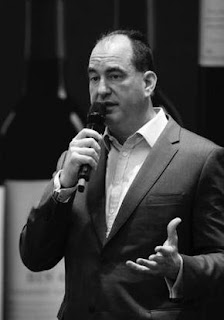
Robert Foye did not set out to write a book on private equity. The seasoned executive has 30+ years’ experience in management and leadership in consumer products and wine. He was far more likely to have written a book on general management or leadership. But a late career detour into the global wine industry and running a private equity-owned portfolio company led him to write Private Equity Mastery: The Ultimate Playbook for Investors, Executives, and Entrepreneurs. The book has had some unexpected success and is currently number two globally on Amazon’s best seller list for the private equity category. More importantly, it seems to be a book that actually explains private equity in a way that the average investor or executive can actually understand how it works. More on that later in the article.
The Career Leading to Private Equity (and Wine)
Foye was classically trained in Finance. He received a BA and MBA from Rice University in Houston Texas, and then promptly obtained his CPA, CMA, and CFA (The CFA stands for Chartered Financial Analyst and is an intensive three year program that many investment bankers and money managers obtain). After a stint in audit and general consulting, Foye moved on to a 23 year career in Finance, Marketing, Sales, and General Management with The Coca-Cola Company, and was relocated to places like Hong Kong, UK, Indonesia, and China.
While he was based in Shanghai, China, the wine bug bit, and he left Coke to join Treasury Wines Estates (TWE), the largest publicly traded wine company in the world and the second largest Australian wine company by volume. His five years there is a unique part of wine history and is recognized as one of the greatest episodes of value creation in a wine company in a five year period of time. He initially ran Asia and Europe and then was eventually promoted to global COO. During his tenure, Asia profits grew from 15% of TWE’s global profits to 50%, and the stock price quadrupled, from 4.50 A$ per share to 19 A$ (market cap from $2 billion USD to more than $10 billion USD). Penfolds became the most valuable wine brand in the world, led by its immense consumer pull created in the Chinese market and globally.
After a management fallout, Foye left TWE, took a year off and then joined Accolade Wines, the largest wine producer by volume from Australia and a key competitor to TWE. He joined as global COO and was promoted three months later to CEO, a position which he held another four and a half years until the end of 2024. Accolade’s financial results were much bumpier due to the significant effects of COVID and a practical ban (through restrictive tariffs) on Australian wine by China. The company made some real operational progress and was a favorite of its customers (Accolade won the supplier of the year as voted by its Australian customers for the entire alcohol category, beating out not just wine companies, but also the much larger spirit and beer companies as well. They achieved similar results in the UK, rated number one in wine by customers). Financial progress, however, was far more difficult. The COVID and China effects strangled the results of the entire Australian wine industry, and ultimately Accolade was forced to change ownership. During almost all of Foye’s tenure, Accolade was owned by Carlyle, the respected global private equity behemoth. It was a “portfolio company” owned and operated fully under the private equity model. This is where things get interesting, and where the origins of the book began.
The Private Equity Model and Wine
Private equity ownership is completely different than public or family ownership. Under private equity ownership, a private equity company controls and manages the company for accelerated, immediate and compressed financial returns. Every decision (capital expenditures, marketing budgets, personnel, etc.) are governed and driven by a simple question: Does this add value in the time frame which we will own the company? Governance is more hierarchical, decisions are made with more pace, and financial restructurings and asset sales are much more frequent.
In the context of the wine business, this can create some real tension and issues. Wine is an agricultural product and is randomly influenced by nature. It is capital intensive. It is highly fragmented and competitive. And it’s very cyclical. Rather than a long-term marriage, it more resembles a relationship with a fickle partner.
But at times, private equity sees value. Sometimes on the wrong side of the cycles, sometimes without thinking fully through the nature of the wine industry. Several other big names in the wine industry have recently experienced private equity ownership, including Duckhorn, Chateau Ste. Michelle, and Silver Oak to name a few. Most of these deals are in process but will surely at a minimum take extra effort and time to realize the expected returns versus expectations on their original acquisition dates.
Furthermore, most of the time, when private equity takes over a business, the management team and employees don’t really understand the private equity model: how it works, what drives it, how it’s incentivized, and how to operate and be successful in the new environment.
This also applies to investors who put their money into private equity funds. They quickly learn that the risk, return, and liquidity profiles are much different in private equity than publicly traded stocks and bonds. Understanding is usually minimal, resulting in sub-optimized financial results.
The Private Equity Book: Private Equity Mastery
This lack of understanding of private equity is what Foye tries to tackle with the book. He has tried to use his experience in investing and managing a private equity portfolio company to explain private equity to the rest of us. In his own words, “What I tried to accomplish is to create the book I wished I had to read before I invested in PE funds and ran Accolade as CEO. I have read so many articles and books on private equity, but not one of them could explain the basic model end to end and how to be successful within the model in any understandable detail.”
The book goes into detail about the basics of the private equity model: how it chooses companies to buy, how it goes through the process of purchasing them, managing them for value, and then exiting ownership at the highest possible price. It delves into the detailed nuances of value creation strategy, incentives, operating culture, reporting, and financial pressures. It also includes “deep dives,” which go through in layman’s terms key concepts like valuation, due diligence, purchase and exit mechanics, and carry interest (the main way that private equity firms and employees get paid). It is written for people without a Finance degree, and I would say is generally easily understandable and pleasurable reading. It’s also packed with real-world business cases of private equity deals—why they succeeded or failed, and the key lessons investors and executives can take from each.
The book does not specifically delve into private equity and wine, but reading the pages, one gets the sense that all of the mechanisms, actions, and incentives in the private equity model are exacerbated and made even more pronounced in an industry like wine. Foye says there may be another book later about wine—offering a far broader perspective on the industry and his experiences, well beyond the private equity context.
For anyone who one day may find themselves working in a private equity-owned company or investing in a private equity fund, I highly recommend the book. For those already in a private equity-owned company, it’s a must read. I am sure your chances for success with private equity will improve at least a bit with a greater understanding of how the model works.
The book is available in most formats, including an audio book. As mentioned, it has garnered surprising success for a first time author, moving up to number two globally on Amazon for books in the private equity category.
I will have a glass to that.