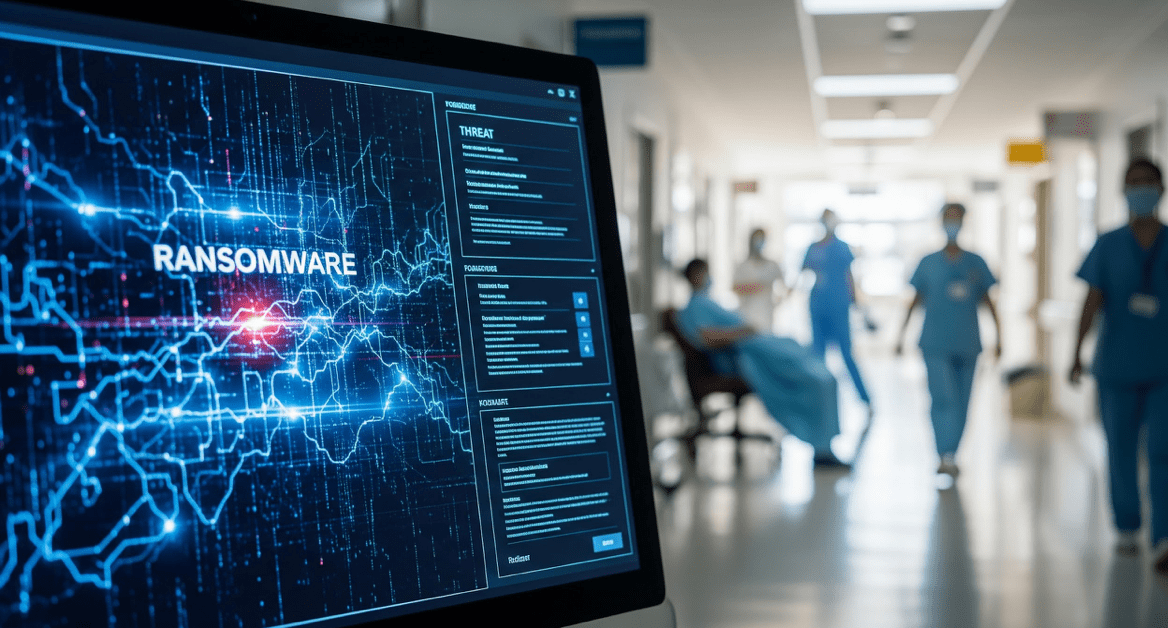
Every day of system downtime caused by ransomware translates into an average loss of $1.9 million for healthcare organizations. On paper, that statistic might look like a technical glitch measured in hours. In practice, it translates into missed prescriptions, interrupted vaccination appointments, and anxious patients waiting for access to insurance services. The cost is measured not only in millions of dollars but in human worry and disrupted care.
The steadiness of healthcare’s technology infrastructure is almost never noticed and is most frequently taken for granted, until it stops working. In the eras before the current one, a silent combination of architecture, foresight, and persistence was necessary to ensure that every single one of the millions of digital interactions worked as it was supposed to. For over ten years, Prakash Velusamy has been a key part of this quiet but critical work. He is a Solution Architect focused on observability and Site Reliability Engineering at a Fortune 5 healthcare organization. He has guided projects that transformed patchwork systems into reliable foundations, influencing patient care.
From Maintenance to Modernization
In 2014, when Prakash became part of the organisation, he confronted a terrain marked by legacy equipment, end-of-life software, and monitoring systems that were disconnected from each other. Various business units had their proprietary tools, and needless repetition was the norm. The technical problems caused inefficiencies and increased costs. However, the human implications were significant, with unresolved vulnerabilities and delays in identifying system failures putting patient services at risk.
Prakash’s response was to look at the bigger picture. Managing more than ten people, he designed and instituted a superior monitoring system that integrated the existing tools into a single system. There were definite benefits, including $ 1.5 million in savings and faster ways to pinpoint systems that were not working at their best. But the deeper impact was subtler. The new system meant fewer interruptions for people waiting for time-sensitive medications. It was the kind of change that moved his role from day-to-day maintenance into the realm of architecture and strategy.
Integrating at Scale
The acquisitions of a leading U.S. retail pharmacy chain and one of the nation’s largest long-term care service providers presented another test. The integrations were complex: two large companies with their own IT systems needed to be absorbed without disrupting existing services. Prakash led a small team tasked with scaling the monitoring platform to accommodate thousands of new systems. His approach was methodical, expanding the platform while introducing observability tools that could provide visibility across the expanded network.
The integration worked. The company was able to extend pharmacy services into senior living, nursing homes, and assisted care environments. For patients, it meant tailored medication services delivered with fewer disruptions. For the organization, it meant expanding its presence in sectors where reliability is critical.
A Shift to Proactive Monitoring
As digital ecosystems became more complex, Prakash’s role shifted again. The company needed monitoring tools capable of anticipating failures, not just reacting to them. He evaluated multiple solutions on their scalability, long-term viability, and cost before leading a team of more than 15 to implement AppDynamics and Dynatrace. These systems now monitor over a billion transactions daily.
“Every transaction represents a patient relying on us,” he recalls. “We needed a system that doesn’t just tell us when something breaks but warns us before it does.”
The change from reactive to predictive has been a vital one. This shift enabled the organization to safeguard critical healthcare deliverables. The organization also protected access to essential services like vaccinations, urgent care, pharmacy benefits management, and high-cost specialty medicines that require complex manufacturing and clinical oversight. For millions of Americans, this meant continuity of care across prescriptions, insurance plans, and specialized treatments, all with minimal interruptions. Behind every digital interaction is an invisible layer of reliability that Velusamy helped design.
Transforming Site Reliability
Perhaps his most ambitious undertaking has been the digital site reliability transformation. Heading a team of more than twenty, he developed a modern observability platform capable of supporting applications across hybrid and multi-cloud environments. Automation, self-healing mechanisms, and AI-driven insights are now part of the system’s design.
One innovation stands out. He built a homegrown solution to capture Google-standard web vital metrics, providing precise data on user experience. The tool saved the company hundreds of thousands of dollars while offering a way to tie technical performance directly to patient journeys. For users, it translated into faster, smoother access to critical digital healthcare services.
Setting a Benchmark
The tangible outcomes include millions saved, significant efficiency gains, streamlined processes, and a framework that 84% of healthcare competitors have yet to achieve. What makes these achievements compelling is that they are always related to patient outcomes. A decrease in system downtime, for instance, directly affects prescription pick-up delays and ensures the timely administration of vaccinations. Streamlined monitoring reduces disruptions in pharmacy services, urgent care clinics, insurance transactions, and specialty medicine distribution. These areas rely on reliability and timely service. In an industry where timing can influence health, reliability matters.
Industry experts witnessing these transformations point out that the organization has become a benchmark for reliability in healthcare IT. By consolidating monitoring tools, reducing redundancies, and adopting AI-driven observability, it has achieved a standard that remains elusive for much of the sector.
Looking Ahead
Today, Prakash serves as a Principal Software Development Engineer. His work continues at the intersection of observability, cloud-native technology, and artificial intelligence. The goal is to make healthcare more accessible. This will be achieved by reducing costs and making healthcare technology resilient enough to predict and resolve issues.
“As healthcare evolves, our systems must not only keep up but anticipate challenges before they arise. My focus is on building resilient, intelligent infrastructures that ensure technology empowers people rather than hinders them,” he says.
Looking at the career of Prakash Velusamy, it becomes clear that the engineering efforts that the end user does not see directly influence outcomes in the real world. He has done everything from renewing old systems to forecasting billions of transactions. His work demonstrates the small, but regular and patient-centered, contributions that are essential for reliable healthcare IT. His work is an example of the positive role that tech leadership can have without being in the limelight when the cost of downtime is measured both in money and in the care of patients.