Dr. Elizabeth (Beth) Pegg Frates is a revolutionary leader in Lifestyle Medicine education, an outstanding educator who has received several teaching accolades from Harvard Medical School and Harvard Extension School over two decades, and the latest recipient of the #IStandWithHer 2024 She for She Award at the Women in Medicine Conference given to a woman in medicine who mentors and lifts up other women. With 25 years of experience in medicine, Dr. Frates educates people in developing and maintaining healthy lifestyles, working hand-in-hand with clients to design unique wellness paths. She is also the co-author of “The Lifestyle Medicine Pocket Guide,” “Essentials of Clinical Nutrition in Healthcare,” and multiple other publications in this domain. While being the founder and serving on the Board of Directors of Paving Wellness, a non-profit dedicated to bringing the principles of lifestyle medicine to the public, Dr. Frates and her team empower other healthcare professionals to run group lifestyle medicine interventions. In addition, they distribute information about exercise, nutrition, sleep, stress resilience, social connection, sense of purpose, energy management, time-outs, attitude adjustments, goal setting, and the importance of variety. Paving Wellness has a focus on total wellness.
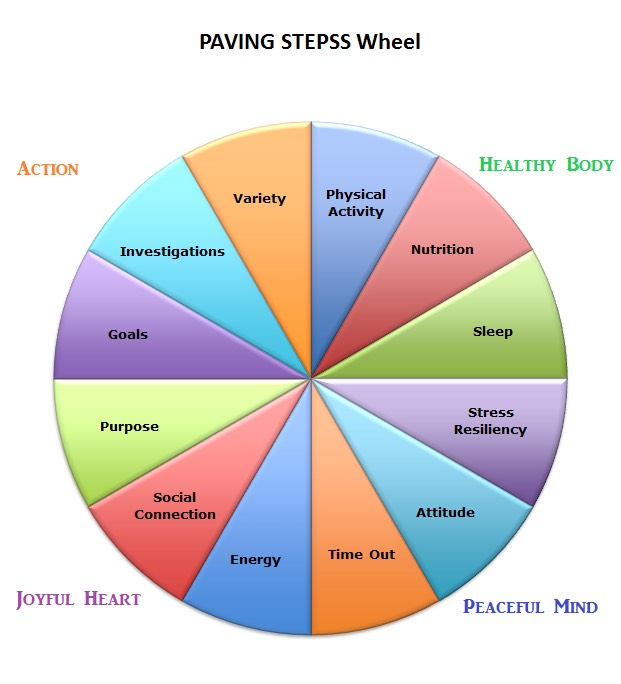
Her philosophy for living, “Working toward a healthy body, peaceful mind, and joyful heart,” stimulates many around the globe. In this interview, Dr. Frates shares her journey, insights into well-being, and information about the multiple courses that she conducts for the purpose of spreading knowledge within these areas to as many people as possible. More information on PAVING the Path to Wellness can be found at www.pavingwellness.org
Can you start by telling us a bit about your background and what led you to focus on integrating lifestyle medicine into medical education?
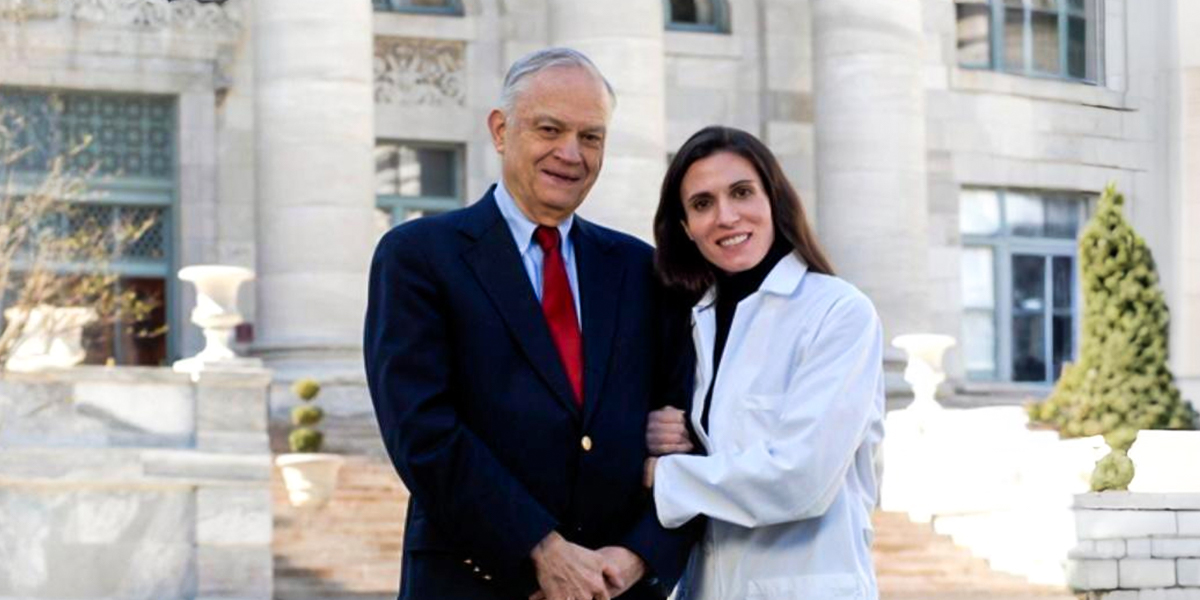
My father suffered a heart attack and stroke, leaving him paralyzed on the left side when he was 52 years old. At that time, it was my first year at Harvard College, and I was majoring in economics, planning to take over the family business. However, it was the family business that created the perfect storm of circumstances and unhealthy living that led to my father’s heart attack and stroke. He was overweight, overworked, and over-stressed. He ate fast food and dined almost exclusively on hot dogs, sausages, pretzels, and anything else he could find on the streets of New York City on his way to and from his office from Grand Central Station. On a day-to-day basis, he ate fast, talked fast, and walked fast; many times, he did all three at the same time. He hardly slept due to the volume of work he had, the stress that work caused, and the many deadlines he had looming over his head. Thus, his stress levels were extremely high, and his stress resilience was extremely low. He would stress eat, mostly hard candies that he had stashed in his middle drawer at work. This lifestyle led him to his health setback: heart attack and stroke.
Fortunately, there were Pritikin Centers open at that time, and my dad participated in their cardiac rehabilitation programs. My mom went with him. They learned about healthy eating, cooking, stress resilience, and the joys of exercise. My dad made a full recovery, except for fine motor motion in his left hand. He also made a complete lifestyle change, which allowed him to live 27 of the best years of his life after his heart attack and stroke.
My dad’s health setback set me on a course to medical school and then ultimately to lifestyle medicine. I was determined to learn all I could about how to prevent heart attacks and strokes and make sure people made lifestyle changes before they suffered a health setback like my dad.
In medical school in the 1990s, exercise was covered with respect to cardiovascular health, which was great. However, nutrition, stress resilience, sleep, and social connection were not covered formally in the curriculum. Risky substances were covered as we were all taught about the dangers of smoking and the toxicity of excess alcohol.
When I graduated from Stanford Medical School and started my internship at Mass General Hospital, I realized that no one was really learning about nutrition, stress, and sleep in other medical schools either, as I compared notes with my fellow interns. During my residency at Spaulding Rehabilitation Hospital in the Harvard Department of Physical Medicine and Rehabilitation Medicine, I learned more about exercise and how physical therapy was crucial for recovery from health setbacks like stroke, traumatic brain injury, amputations, and spinal cord injuries. But, there was little information about the other pillars. We did work with dietitians and speech and language pathologists on the topic of nutrition, but that was it.
I knew something had to change. It was in my last year of residency when I had elective time, that I chose to do my elective at Harvard Medical School, teaching in the core curriculum as a tutorial facilitator for the human central nervous system and behavior course. I dove into teaching and learned from many phenomenal mentors like Dr. David Cardozo and Dr. Bernard Chang. For many years after that, I remained on the faculty and served as a tutorial facilitator in a variety of courses in the core curriculum at Harvard Medical School. I usually brought up the six pillars of lifestyle medicine in the case discussions, but there was no formal teaching in these pillars at the time. For a few years, there was a short course on nutrition in the 2000s, but then that disappeared.
How do you approach incorporating lifestyle medicine and nutrition into medical curricula, and what impact do you believe it has on future healthcare professionals?
The idea to bring lifestyle medicine to the medical students came from a medical student. One year, it was 2008, I was presenting a poster at a Harvard Medical School event and one student named Timothy McGlaston was listening to my poster presentation on how to prescribe exercise. He suddenly said, “This is applicable to so many of the diseases we learn about in medical school. You need to teach this to my whole class.” We brainstormed how we could provide information on lifestyle medicine to the Harvard Medical Students. Our idea was to create a lunch and learn for which I would provide healthy lunches to the students, and while they ate the delicious and nutritious meals, I would talk about the six pillars. This became the first official lifestyle medicine interest group with a faculty advisor. I have served as the faculty advisor since that day.
I shared this methodology of creating a formal lifestyle medicine interest group with the American College of Lifestyle Medicine in about 2014, and together, we have partnered to bring these lifestyle medicine interest groups (LMIGs) into medical schools across the country. There are over 110 LMIGs in medical schools now out of the 195 medical schools in the US.
Actually, my family set up a scholarship in my father’s name, The Donald Anderson Pegg Leadership Award, in collaboration with the American College of Lifestyle Medicine. The award was created to encourage medical students and other healthcare professional students to launch LMIGs in their schools so that lifestyle medicine could reach schools across America. You can learn about the award here. https://lifestylemedicine.org/project/dap-student-scholarship/ Students can fill out an application now. The deadline is April 1, 2025. Medical students and healthcare professional students looking to be leaders in their schools will be interested in this opportunity. This scholarship is a powerful one.
The impact that we can have is enormous if we are able to get nutrition, exercise, sleep, stress resiliency, and social connection into the core curriculum of medical schools and even in pre-medical schools. Speaking of pre-med, I teach two courses per year at Harvard Extension School at the bachelor’s and master’s level on lifestyle medicine. I have pre-meds, nurses, practicing physicians, PhDs, and other healthcare professionals in the classes, as well as parents, retired lawyers, business people, and others enrolled in the courses and eager to learn about the power of healthy lifestyles. I started teaching these courses at the Extension School in 2014.
If we can get nutrition into the core curriculum of medical schools, then we will have a much better chance of fighting the many chronic diseases that are plaguing our nation and the world, like diabetes, obesity, cardiovascular disease, metabolic syndrome, hypertension, and even some cancers. Our article on the proposed nutrition competencies for medical school and residency is a critical step in making this happen. This article was published in the JAMA Open in September. You can find it here. https://jamanetwork.com/journals/jamanetworkopen/fullarticle/2824217 The book I co-edited with some Harvard Medical School colleagues titled Essentials of Clinical Nutrition in Healthcare.
(https://www.mhprofessional.com/essentials-of-clinical-nutrition-in-healthcare-9781264581887-usa) covers these competencies. Now that we have nutrition competencies for medical schools and residency and we also have resources to help teach these competencies, I am hopeful that more faculty will feel empowered to teach nutrition courses.
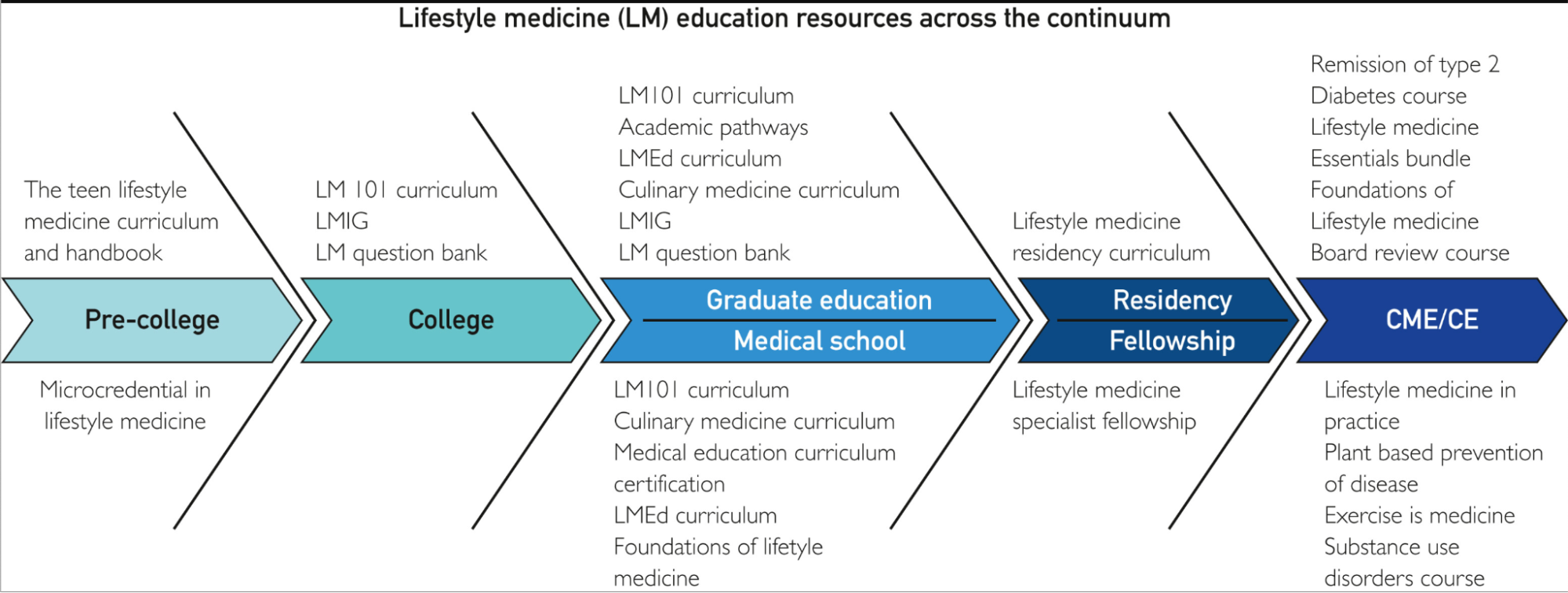
If medical school or healthcare professional school faculty want to teach an introductory course to students, there is an entire FREE curriculum available at the American College of Lifestyle Medicine (ACLM). I shared 14 decks of PowerPoints (PPT) with 150-200 slides in each PPT and gave them to ACLM in 2018. I collaborated with staff at ACLM, and they formatted, standardized, and put their logo on the slides with copyright. We co-created an entire curriculum that follows along with the Lifestyle Medicine Handbook, which I co-authored in 2018 and updated in 2020. The lifestyle medicine curriculum is available for free here. https://lifestylemedicine.org/project/lm-101/ On the ACLM website, it says “LM at $1,150” which is the price that they value its worth. But, I want this resource to be free, and it is free. So, ignore the $1,150 and realize you can download it absolutely free which is a gift that thousands of medical school educators and educators in other healthcare professional schools have already taken advantage of. Ideally, this course would be offered to all first-year students in all medical schools and healthcare professionals’ schools to give the students the lens of lifestyle and help them appreciate how the six pillars of lifestyle medicine can impact health and help treat chronic conditions.
Lifestyle medicine addresses the root cause of chronic disease, and that’s exactly what we need right now. We need to tackle the root cause of our epidemic of chronic conditions.
What are some of the biggest challenges you’ve encountered in promoting lifestyle medicine and nutrition education within the medical field?
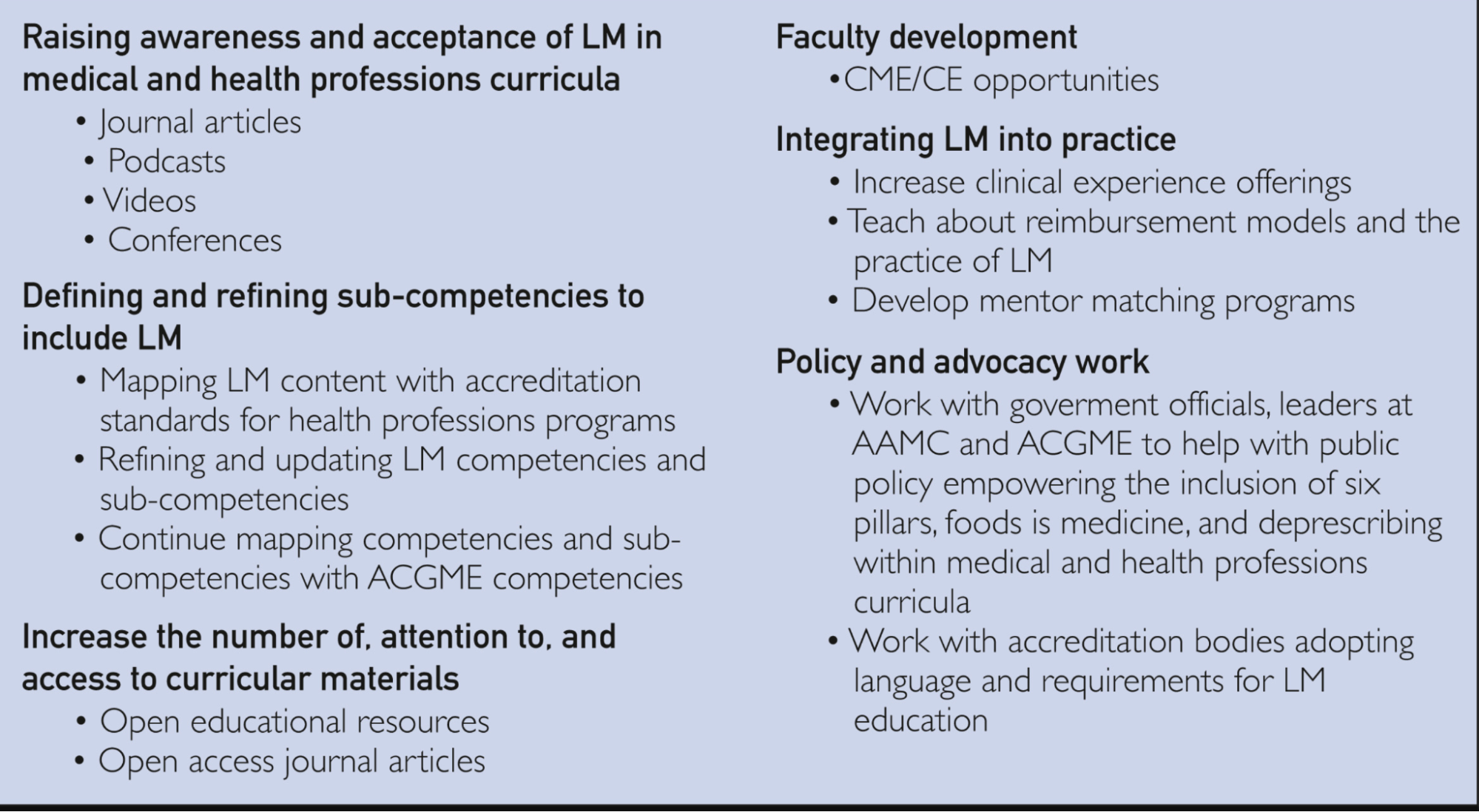
There are many challenges to adding new material to an already full medical school curriculum. I tackled this topic with some colleagues in a recent article published by Mayo Clinic Proceedings: Quality, Innovations, and Outcomes titled “Lifestyle Medicine in Medical Education: Maximizing Impact.” It is available to download for free here.
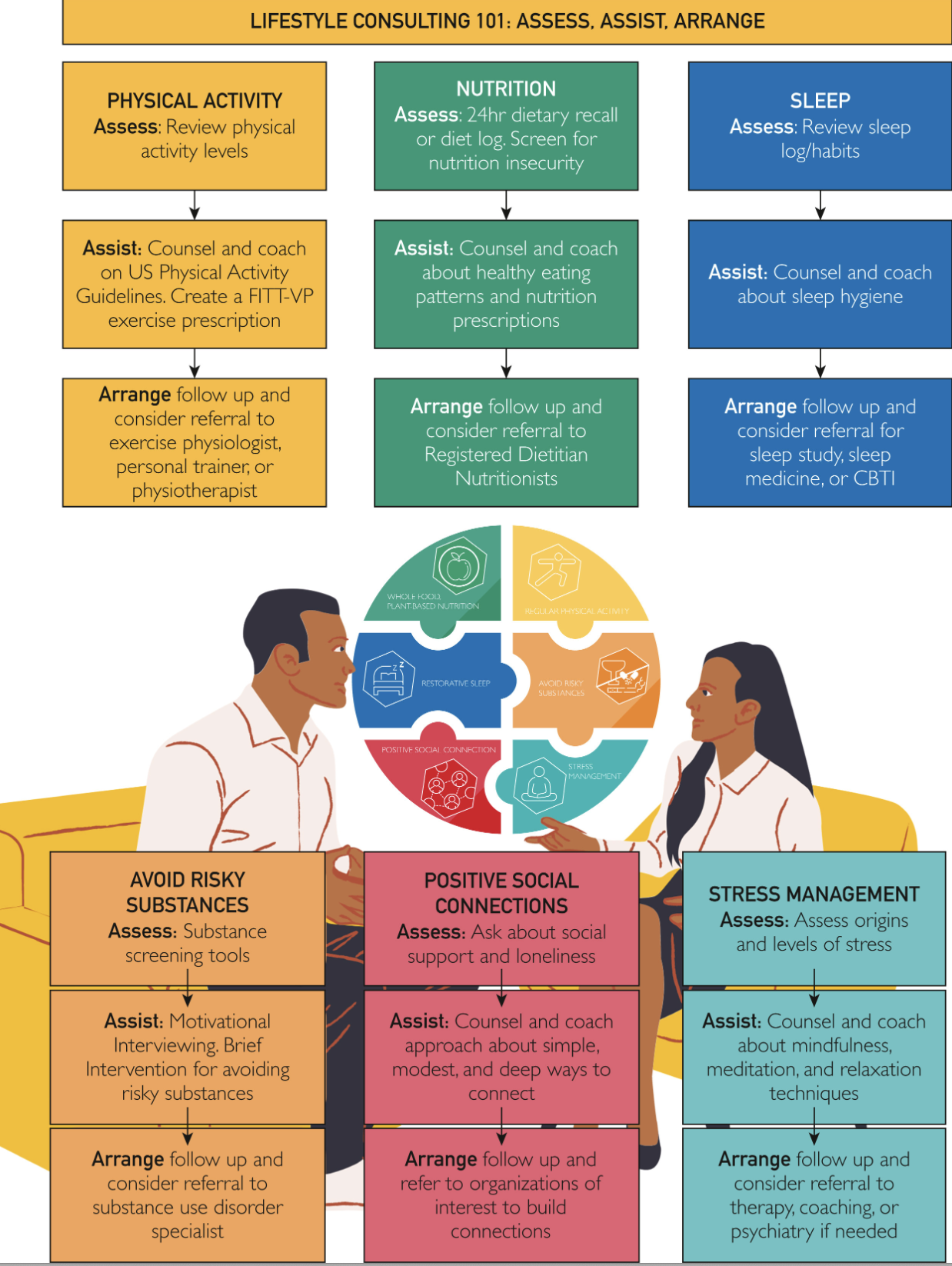
https://www.mcpiqojournal.org/article/S2542-4548(24)00044-4/fulltext The barriers to teaching lifestyle medicine include lack of experienced faculty who are trained in lifestyle medicine or certified, lack of time for new material to be added to the core curriculum, and the fact that the medical board exam questions don’t include questions on the six pillars, among others. In the article, we point out solutions and resources that will help faculty overcome these barriers. The following three figures are from this article.
What are your future goals for advancing the role of lifestyle medicine and nutrition in medical education, and how do you plan to achieve them?
Currently, I am working on a curriculum to accompany the Lifestyle Medicine Pocket Guide. This will be an 8 module course that faculty will be able to use for an elective or perhaps they can incorporate the modules into current courses related to lifestyle medicine. This will be ready for release soon on the website www.lifestylemedicineteaching.org.
The more healthcare professionals learn about lifestyle medicine in continuing medical education courses, workshops, online courses, and books, the more comfortable they will be with teaching it to their trainees and students.
I have a series of videos on the Harvard Medical YouTube channel on lifestyle medicine that are 5-10 minutes long and cover the basics of lifestyle medicine for physician self-care. That is available here. https://www.youtube.com/playlist?list=PL9hnCXfz_xynSZoAM5ApQwTHCgnNvOebF
In addition, I have partnered with Harvard Medical School, Executive Education, and Emeritus to create two online courses that faculty, healthcare professionals, or even interested patients can take. Health and Wellness: Designing a sustainable nutrition plan. https://execonline.hms.harvard.edu/health-and-wellness
There is another course titled Lifestyle and Wellness Coaching, which is also available online through Harvard Medical School Executive Education and Emeritus. https://corporatelearning.hms.harvard.edu/individuals/executive-education/lifestyle-wellness-coaching
The American College of Lifestyle Medicine has several courses from which to choose, all of which are on lifestyle medicine. Their Free Essentials Bundle is a great way for faculty to learn about lifestyle medicine. This is available here. https://portal.lifestylemedicine.org/ACLM/Education/Campaigns/White-House/WHconference-SignIn.aspx
I will keep teaching, lecturing, and writing about lifestyle medicine. My life’s mission is to help people adopt and sustain healthy lifestyles.