Over more than two decades of sustained combat operations following 9/11, U.S. Special Forces were among the first to deploy and remained on the front lines throughout the Global War on Terror. During this period, thousands of U.S. service members sustained injuries—most commonly to the extremities—with blast trauma identified as the leading mechanism of injury across the force.¹
While this particular data reflects the broader U.S. military population, Army Special Forces operators have faced similar patterns of complex, high-impact injuries, often resulting from years of repeated deployments to austere and high-risk environments. These injuries—both visible and invisible—carry profound long-term effects not only for the Green Berets themselves but also for their families, caregivers, and support networks.
The Green Beret Foundation (GBF) was launched with the specific mission to provide a comprehensive range of services and financial assistance to help these heroic Green Berets through challenging times. The organization has been a staunch advocate for Green Beret soldiers and their families, providing both emergency and ongoing support.
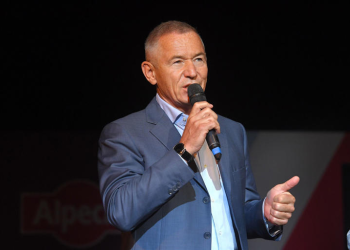
GBF’s founder, Aaron Anderson, designed the program to deploy from five pillars of support: Casualty Support, Health & Wellness Support, Family Support, Gold Star & Surviving Families Support, and Transition Support. But Anderson also believes that a new approach to advocacy for these elite soldiers is essential to providing the emergency and continuous assistance that Green Berets and their families require.
Unique challenges require personalized solutions.
Special Forces families face a multitude of unique challenges beyond the typical experiences of enlisted members of the Armed Forces. These challenges range from frequent deployments to high-risk environments that demand constant vigilance to limited communication opportunities with family and friends during deployments. Moreover, the exceptionally high operational tempo these soldiers face can significantly impact their mental health.
To help alleviate the unique pressures that traditional Veteran support models don’t fully address, a new approach must recognize the distinct challenges these soldiers face, including not just physical rehabilitation but also emotional, financial, and logistical obstacles.
Advocacy must be forward-looking, not simply reactive.
The conventional approach to veteran services is a reactive model – responding to the soldier’s problem or crisis, after it has already occurred. However, the need for a more proactive approach is evident. Advocacy must evolve to include long-term, holistic support—not just crisis response. The Green Beret Foundation works to minimize or prevent future challenges for soldiers and their families through forward-thinking, preventive advocacy.
A purely reactive approach to advocacy for Army vets doesn’t build strong networks or shape long-term agendas. It is programs like Steel Mags, educational scholarships, and Gold Star family services that sustain engagement, build family resilience, and provide care that extends far beyond moments of injury or loss.
Addressing the lived experience of Green Beret soldiers
Effective advocacy in the modern era necessitates culturally competent and regiment-informed solutions. This is the distinct position from which the Green Beret Foundation operates. The entire organization is built on an understanding of the Special Forces culture, privacy concerns, and the demands of service. This type of advocacy ensures that any support given is truly aligned with the soldier’s lived experience.
The foundation has forged strong partnerships with medical professionals, military organizations, private industry, and veteran services. It is by addressing the lived experience of Green Beret soldiers that advocacy raises awareness and generates essential support for these service members who have undertaken missions that protect our country and our citizens.
¹Benavides JM, Benavides LC, Pumiglia L, Stern CA, Stallings JD, Gurney J. Breaking point: Musculoskeletal combat injuries in Iraq, Afghanistan, and Syria—Epidemiology and future directions of care on the battlefield after over two decades of war. J Trauma Acute Care Surg. 2025 Aug 1;99(3S Suppl 1):S27–S31. doi: 10.1097/TA.0000000000004705. Epub 2025 Jul 3. PMID: 40622148.