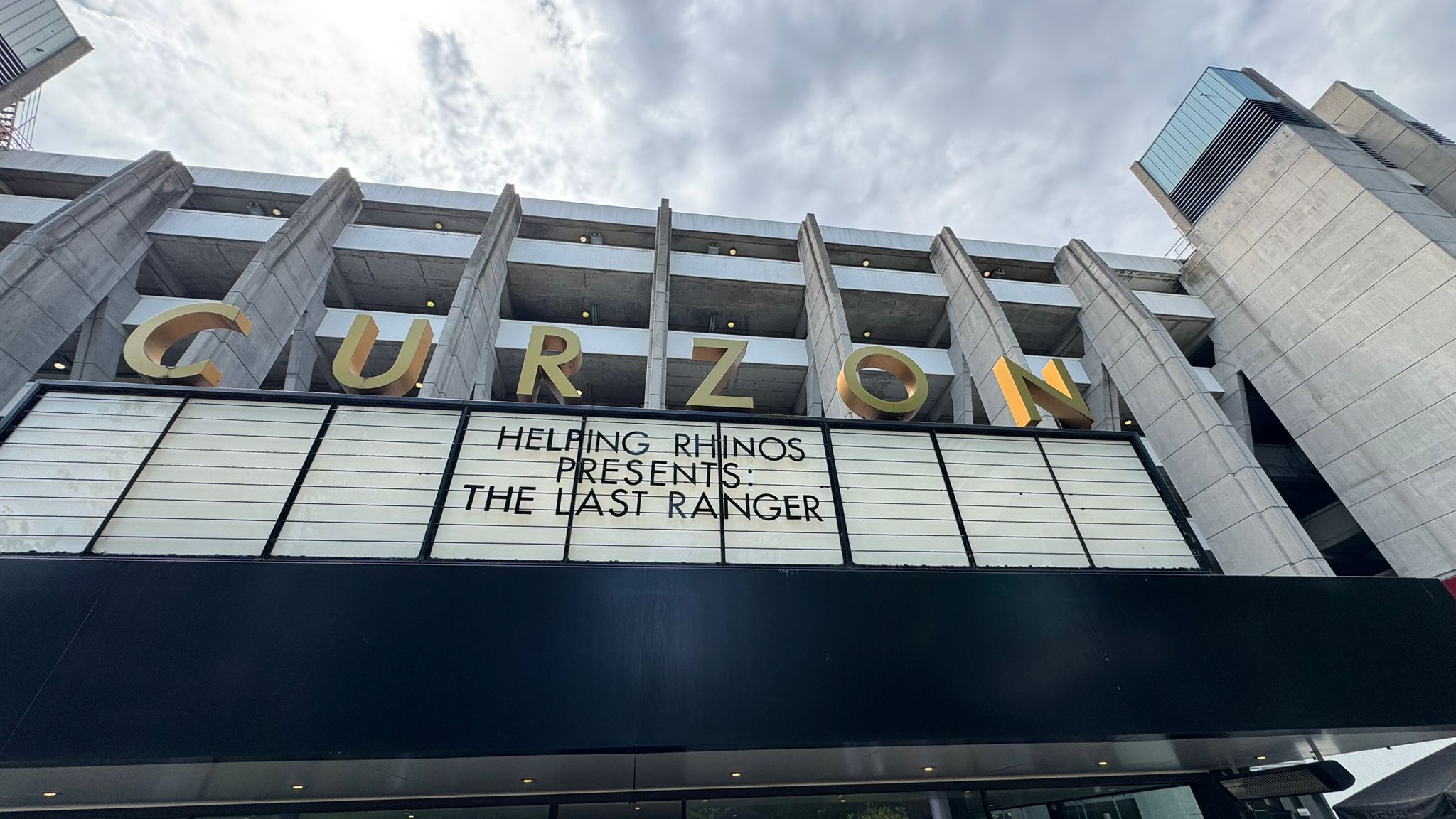
On June 21, 2025, strangers filled London’s Curzon Bloomsbury cinema and sat in collective silence, watching the final moments of a rhino’s life unfold on screen. “The Last Ranger,” a short film honored with an OSCAR™nomination and recognized internationally for its raw power, chose not to turn away from the reality of poaching.
Frame by frame, the film offered a glimpse into what’s being lost, and what it means to stand in the way of that loss. Helping Rhinos, the global nonprofit that hosted the screening, designed the event not just as a showcase but as a catalyst.
Through a simultaneous livestream, attendees across the world joined those in the theater to witness the film’s message. Together, they helped raise nearly £30,000 in a single evening.
Those funds will be directed toward expanding Rhino Strongholds, protected landscapes where rhinos can safely live and breed without the threat of poachers. They will also help reinforce efforts on the ground, supporting the rangers who walk these lands with determination, despite their limited resources.
Since its founding in 2012, Helping Rhinos has worked side by side with conservation partners in Africa to protect wildlife through tangible, community-driven action. The organization supports everything from emergency veterinary care to education programs for the next generation of conservationists.
The screening marked another step in Helping Rhinos’ ongoing efforts to reach new people with their message and to turn awareness into lasting protection for rhinos fighting to survive.
Inspired by One Rhino Who Refused to Give Up
“The Last Ranger” was inspired by the survival of Thandi, a black rhino who lived through a brutal poaching attack in 2012 and went on to give birth to five healthy calves. Her journey of survival and strength became the emotional heart of the film, showing what’s possible when animals are given a second chance.
Written by David S. Lee and directed by Cindy Lee, the short film follows a ranger whose ordinary day turns into one he’ll never forget when he’s called to a scene no ranger ever wants to see. The character’s experience reflects the real-life trauma that many frontline rangers face, often with little recognition, yet immense responsibility.
What makes the film stand out is that it doesn’t rely on narration or statistics to tell the story. Instead, it uses quiet moments, powerful visuals, and emotion to help viewers truly feel what it means to lose a rhino—and to understand the weight carried by those who tirelessly try to protect them. In that silence, the film captures what many others leave out: the stillness after the tragedy, and the strength it takes to return the next day and keep going.

An Orphaned Calf Arrives Days Later
Only two days after the film aired, the urgency of its message arrived in heartbreaking form. In the KwaZulu-Natal region of South Africa, a baby rhino was discovered beside the body of her mother, who poachers had targeted. The calf was far too young to survive on her own, and without immediate intervention, she would not have made it through the night.
Rangers acted quickly, transporting her to the Zululand Rhino Orphanage, one of the few facilities in the country equipped to care for rhino calves orphaned by poaching. The team at the orphanage—backed by Helping Rhinos—began caring for the calf right away, feeding her every two hours with specially formulated milk.
Caregivers stayed by her side through the night, working patiently to gain her trust and provide comfort in the absence of her mother. For the months ahead, they would become her temporary crash (“crash” is the term used for a group of rhinos) until she was ready to return to a protected reserve.
Her arrival was a powerful and timely reminder that the story told on screen wasn’t fiction, but a reality that was still unfolding, just days later and thousands of miles away.
What It Takes to Protect a Rhino
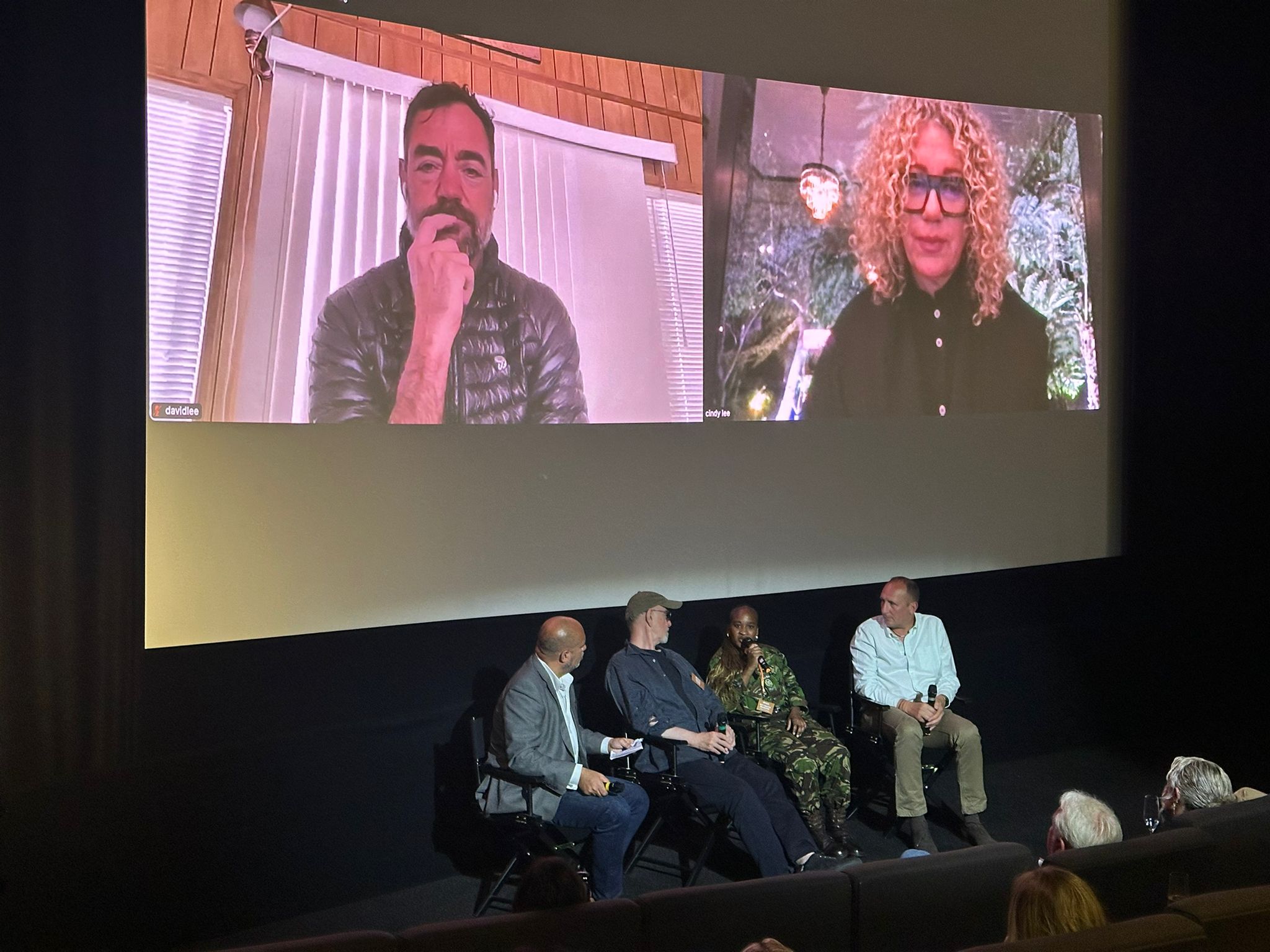
When the final scene faded to black, the theater stayed quiet, the weight of the film still sinking in. Then Peter Egan, a well-known actor and Helping Rhinos patron, stepped forward to moderate a post-screening panel that brought together some of the most prominent voices in wildlife protection.
On stage were Simon Jones, CEO of Helping Rhinos; Dr. Marc Abraham OBE, a wildlife veterinarian and advocate; Sgt. Felicia Mogokane of the Black Mambas; and the filmmakers themselves. Joining remotely from Los Angeles, writer David S. Lee spoke about how the film was based on real people, events, and emotions.
Sgt. Mogokane, who leads daily unarmed patrols through some of the most poaching-prone areas in South Africa, shared what it means to walk 20 kilometers each day under threat, without the protection of weapons. Since the Black Mambas began in 2013, they’ve reduced poaching in their region by more than 60 percent, relying on visibility, community trust, and environmental education as their most powerful tools.
The panel spoke openly about burnout, danger, and grief, but also about progress, perseverance, and what keeps them going even when the odds feel stacked against them.
A Global Audience United by a Shared Purpose
The screening sold out all 134 seats in the London cinema, while another 116 ticketed viewers tuned in online from across the world. Families, students, and conservation supporters participated together, many watching in small groups and commenting live throughout the event.
Helping Rhinos staff remained active behind the scenes, responding in real time to questions, facilitating donations, and coordinating live auction bids through the livestream platform. Whether seated in the theater or watching from a different continent, attendees weren’t just passive viewers, but participants in a growing movement.
The sense of community was immediate and sincere, with viewers showing up ready to help. The thousands of dollars raised by the end of the evening helped fund the very efforts shown in the film, giving each donor a tangible connection to the mission.
Making Protection Permanent Acre by Acre
The money raised is already making an impact, helping to expand Rhino Strongholds—large, protected conservation areas where rhinos can roam freely, form crashes, and live without the constant threat of poaching. These areas not only give rhinos a fighting chance at survival but also support countless other species and help restore fragile ecosystems that have been damaged by conflict and development.
In Kenya, Helping Rhinos supports work at Ol Pejeta Conservancy, where the black rhino population has grown from just 20 individuals in 1993 to 166 today. In South Africa, the organization helps fund aerial surveillance, veterinary care, ranger salaries, and land restoration programs in regions where habitat loss remains a serious threat.
These Strongholds aren’t conceptual. They’re mapped, monitored, and actively maintained through boots-on-the-ground partnerships with trusted local conservation teams.
How Women Are Rewriting the Rules of Protection
The Black Mambas have changed what many people assumed conservation enforcement had to look like. Since 2013, the all-female unit has patrolled 20,000 hectares of South Africa’s Greater Kruger National Park entirely on foot—uniformed, unarmed, and completely visible to those passing through.
Their presence alone acts as a powerful deterrent. By staying visible and rooted in the communities around them, they disrupt poaching activity not through confrontation, but connection.
Helping Rhinos became a major partner of the Black Mambas in 2017, supporting the team’s daily patrols and helping grow their educational outreach. Their Bush Babies program now reaches more than 2,000 schoolchildren with weekly conservation lessons and regular field visits to nearby reserves.
Many students who once saw conservation as someone else’s job are now beginning to see it as their own, ready to step into roles as future protectors of the land and the wildlife they’ve learned to protect and come to care about.
How to Join the Fight
Rhinos play a critical role in the ecosystems they call home. Their grazing patterns help maintain grassland health, supporting a wide range of plant and animal life. A hundred years ago, more than 500,000 rhinos lived in the wild. Today, fewer than 27,000 remain across Africa and Asia.
Poaching, shrinking habitats, and inconsistent conservation support continue to threaten their survival. Helping Rhinos isn’t waiting for another crisis to respond. Their teams are already on the ground feeding orphaned calves, supporting ranger patrols, and developing safer habitats where wildlife can recover.
What the organization needs now isn’t recognition, but allies—and you can be one of them. To get involved in supporting Rhino Strongholds and anti-poaching efforts, visit HelpingRhinos.org. The time to act is now, before the opportunity to protect these animals is gone for good.