Written By Shameem Kazmi
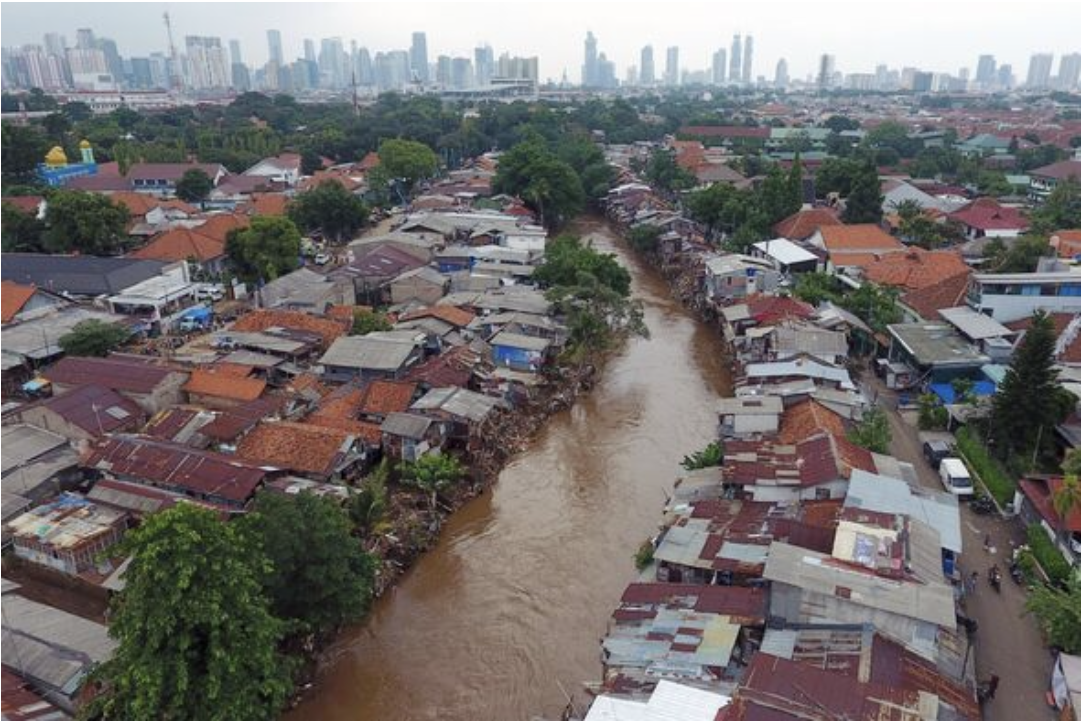
Jakarta is sinking, not metaphorically, not gradually, but physically and visibly, day by day. Parts of the Indonesian capital are now dropping by as much as 25 centimetres a year, and by 2050, it is estimated that over a third of the city will be submerged (World Bank). This is not a theoretical problem. It is already forcing tens of thousands of residents to relocate from low-lying areas where homes are regularly flooded, roads become impassable, and clean water is increasingly difficult to access. The issue of land subsidence in Jakarta is well documented, and yet solutions have often been delayed or politicised. Instead of urgent infrastructure upgrades or sustainable water sourcing policies, many communities are left to fend for themselves.
Jakarta is not alone. Across Southeast Asia, major cities like Manila, Bangkok, and Ho Chi Minh City are following a similar trajectory, a dangerous descent shaped by climate change, unchecked development, and global indifference. In Manila, millions of residents live in coastal or riverine areas vulnerable to typhoons and storm surges, made worse by rising sea levels. In Bangkok, the entire city was once part of a river delta, and it is now suffering from extreme urbanisation and shrinking groundwater reserves.
The reasons behind the sinking of Southeast Asian cities are complex, but not mysterious. In Jakarta, the culprit is a combination of excessive groundwater extraction, rapid urban expansion, and a lack of resilient infrastructure. More than 60 percent of residents rely on underground wells for water because piped access is limited and inconsistent (Indonesia Ministry of Public Works). Urban planning has failed to account for population growth and climate vulnerability, leading to a situation where basic infrastructure crumbles under pressure from both people and nature. Without proper oversight, industries and developers have contributed to this silent collapse.
As this water is drawn out, the land compresses and collapses. The irony is painful. The city is sinking because people are trying to survive. Solutions such as rainwater harvesting, expanding piped water access, and investing in decentralised treatment systems have been proposed, but implementation remains inconsistent. Meanwhile, residents in flood-prone areas build temporary barriers and rely on social networks to cope.
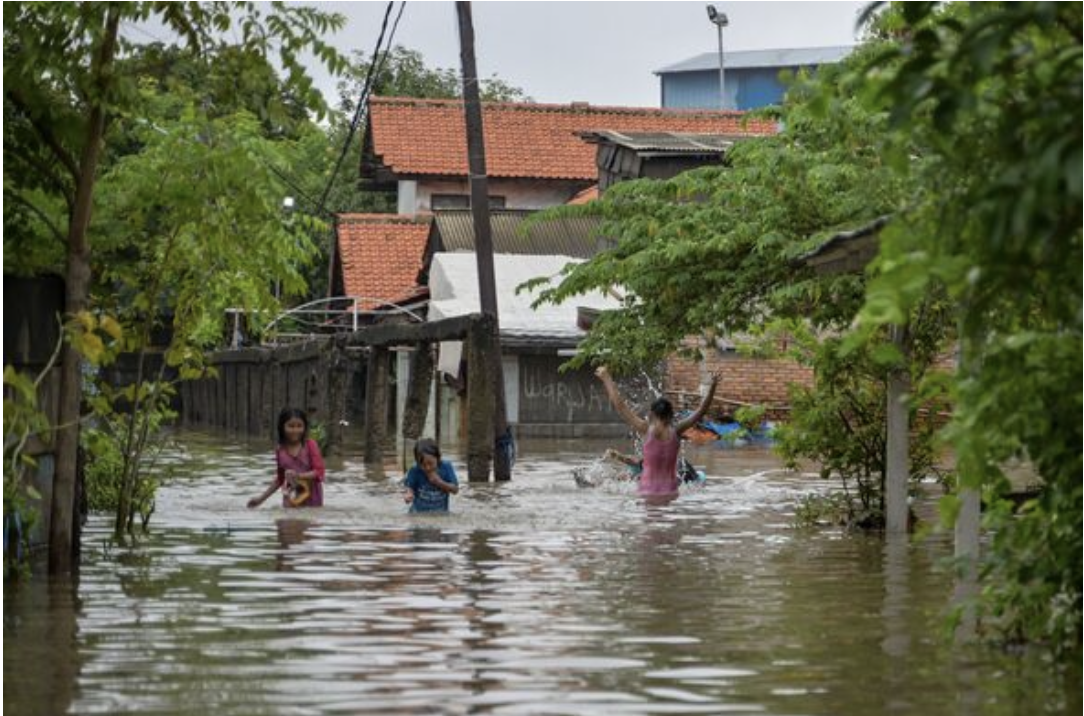
Rising sea levels, increasingly intense monsoons, and heavier storm surges all act as accelerants. As oceans warm and expand, coastlines retreat and tides creep higher. In Manila, where subsidence has been measured at between 10 and 15 centimetres annually in some areas (PHIVOLCS), extreme flooding events have become more frequent and more violent. It is not uncommon for entire neighbourhoods to be submerged during rainy seasons, displacing thousands and damaging livelihoods. Climate forecasts suggest these patterns will only worsen over the coming decades, placing unprecedented strain on already fragile infrastructure.
Despite the staggering scale of the risk, global media attention remains sporadic at best. This lack of visibility reinforces a dangerous narrative: that some crises are less urgent simply because they happen far away or affect people outside the usual centres of power. When a major European or North American city experiences flooding, it dominates headlines. But when Southeast Asian communities are forced to rebuild their lives every season, the world moves on. This unequal attention reflects a broader issue of climate injustice.
Perhaps the most unjust part of this story is that Southeast Asia is paying a heavy price for a problem it did not create. The region accounts for only a small fraction of historic greenhouse gas emissions. Yet it faces some of the most brutal consequences of a warming world (Global Carbon Project). The principle of ‘common but differentiated responsibilities’ enshrined in international climate law is rarely upheld in practice. Instead, developing countries are expected to adapt with limited support, and in many cases, carry the economic burden alone.
Meanwhile, promises of climate finance from wealthier nations fall short or arrive too late to make any meaningful impact (UNFCCC). Adaptation funds are often delayed, under-delivered, or tied to conditions that prevent them from reaching the most vulnerable communities. In the absence of adequate international support, local governments are forced to divert limited resources away from essential services towards emergency flood response and rebuilding efforts.
Indonesia’s proposed solution to Jakarta’s sinking has been to move its capital altogether. Nusantara, a newly planned city in East Kalimantan on the island of Borneo, is set to replace Jakarta as the country’s administrative hub by 2045. The government hopes to relieve pressure on Jakarta while creating a model for smart, green development. But critics argue that moving the capital will do little to help the millions still living in sinking districts. It is a politically expedient solution that risks leaving the most vulnerable behind.
There is no single fix, but the direction is clear. First, international climate finance must be redirected toward real resilience projects such as flood management, sustainable housing, clean water access, and community-led adaptation. Second, governments must prioritise urban planning models that incorporate climate risk. This means ending the destruction of natural flood buffers like mangroves and wetlands and investing in green infrastructure that can absorb future shocks.
In many ways, what is happening in Southeast Asia is a glimpse of what is to come for other parts of the world. As the climate crisis deepens, even cities once thought untouchable will feel the water rise. Miami, Shanghai, Lagos, and even London faces varying levels of risk. Learning from the hard-earned lessons of Jakarta and Manila is no longer a matter of charity or diplomacy. It is a necessity.
Jakarta and Manila are not anomalies. They are early warnings. Ignoring them now will cost the world dearly later. If we cannot rally around the stories of these cities, if we cannot invest in their protection and listen to their people, we risk losing not just them but a future where any city can truly be safe.
For more articles from Shameem Kazmi, click here.
Shameem Kazmi on Linkedin