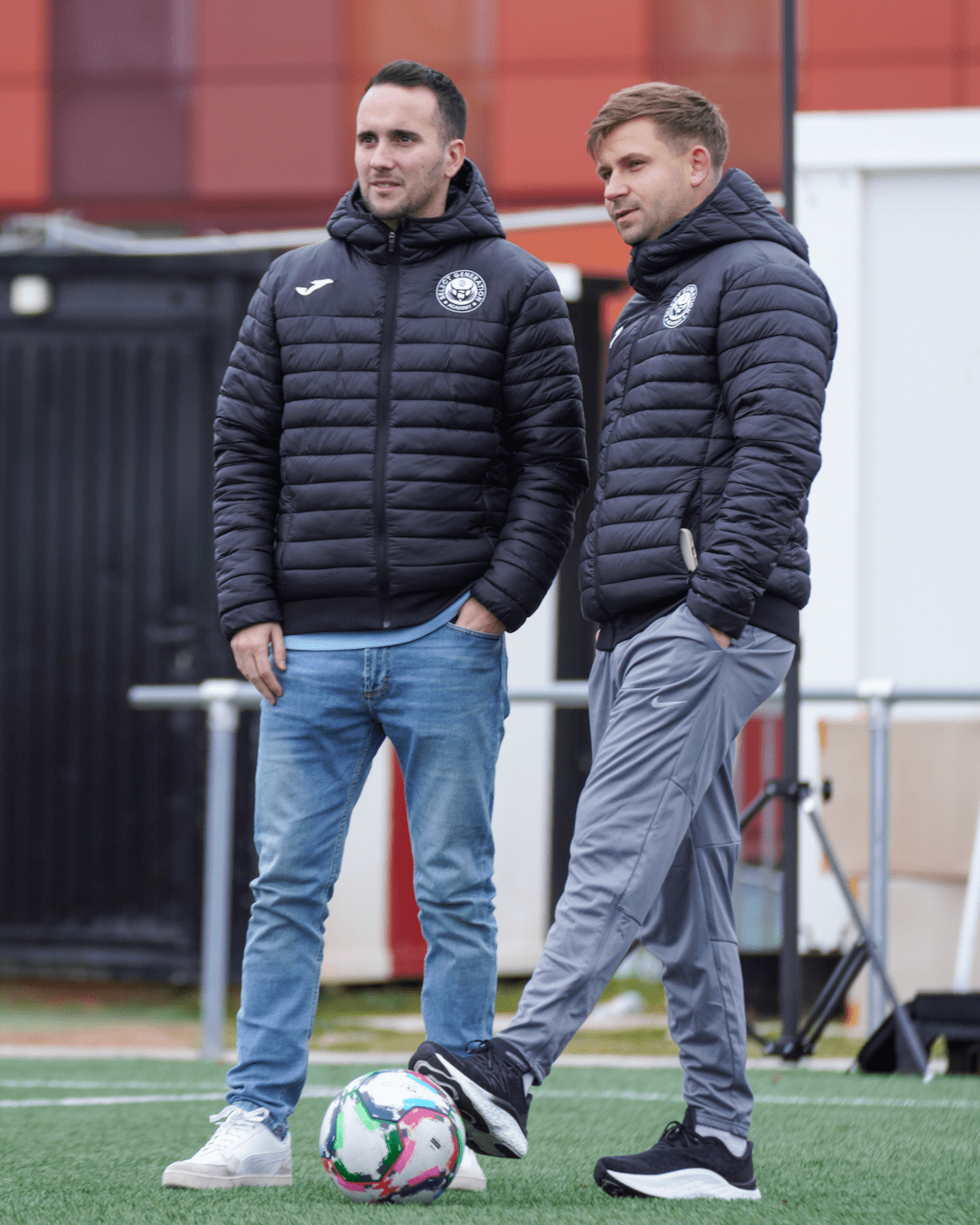
When Sam Henneberg co-founded Select Generation, he wasn’t chasing flash. He wasn’t interested in building a talent pipeline that looked good on paper but left athletes unprepared for the real world. What he wanted—what the entire team wanted—was something different: a structure that prioritizes people over profit, purpose over publicity, and long-term development over short-term gains.
That’s the foundation on which Select Generation was built, and it’s the same commitment that guides the organization today.
For Henneberg, who also serves as Director of Soccer, the mission isn’t abstract. It’s personal.
“We’ve been through this,” he says. “We’ve played at the collegiate level. We’ve experienced the pressure, the transfers, the mental fatigue, and the uncertainty. So when we say we want to help players reach the next level, it’s not a slogan. It’s a shared memory.”
And it’s a shared responsibility.
A Clear Vision in a Crowded Space
Select Generation started as a global talent identification agency, but it’s never functioned like one. There’s no flashy recruiting funnel or cookie-cutter formula here. Players are selected intentionally, scouted live, or recommended by trusted voices. The process is high-touch, mentorship-driven, and rooted in long-term support.
“We’re not pay-to-play,” Henneberg emphasizes. “We’re not handing out false hope. When we commit to a player, it’s because we believe in them. And once they’re part of Select, we stay in it with them.”
That commitment shows in how the team operates. Coaches aren’t just trainers—they’re collaborators in a young athlete’s future. Staff members aren’t just admins—they’re partners in every stage of the journey.
“Every single day, we’re talking,” Henneberg says. “We talk about rule changes, recruiting timelines, what we’re seeing in college programs, and how players are adapting. Everything filters back to one question: how do we make this better for them?”
Grounded in Experience, Not Just Policy
As NCAA eligibility rules evolve and recruitment timelines tighten, Select Generation isn’t just reacting—they’re anticipating. The difference? Perspective.
“Our whole team has lived it,” Henneberg says. “We understand how stressful recruiting can be—how isolating it feels when you’re navigating rules you don’t fully understand. That’s why we’re so proactive. We translate the system. We simplify it. But also, I think we are honest with our guys, and they know we are not going to tell them they are ready for D1 if they are not. But that doesn’t mean they still will not be ready later down the line!”
And while technology plays a growing role in recruiting, from AI-assisted scouting reports to video platforms, Henneberg believes that people still matter most.
“AI is cool. Data has its place. But no tech will replace the value of a coach watching you live, seeing your work ethic, and feeling your presence. That’s why our scouting is still boots-on-the-ground. It has to be. I did an MBA in data, so I love the insights, and it definitely helps the lads with recovery, and also along with watching films to see where they can improve.”
Growth From the Inside Out
That human-first approach isn’t just for athletes. It’s the same philosophy that drives internal team development.
“We’re a small team,” Henneberg says. “There’s no corporate HR department. But what that means is that everyone gets hands-on experience in everything. Our staff learns how to run an agency, how to coach, how to scout, and how to communicate. It’s all cross-functional.”
It’s also all intentional. While there may not be formal training modules, professional development occurs in real-time, every day.
“We teach through action,” he adds. “We ask questions. We give responsibility. Everyone’s invested because everyone’s voice matters.”
The result? A team that’s aligned, agile, and always learning together.
Building Players, Not Products
When asked how Select Generation evaluates potential athletes, Henneberg doesn’t launch into metrics or algorithms. Instead, he talks about attitude.
“Yes, we look at technical skills and athleticism,” he says. “But what really matters is mindset. Is this player hungry to grow? Are they willing to be coached? Do they take feedback seriously? That’s what tells us if they’re ready for this journey. If you received a full ride to a D1 school, you don’t need us, and players need to understand that. It is a two-way commitment to development.”
Select Generation’s success stories include athletes now playing in top collegiate programs and even attracting interest from European academies. But the real victories, Henneberg says, are quieter.
“It’s not just about where they end up—it’s about who they become along the way. Watching a player thrive in a program we helped them access, knowing they feel seen and supported—that’s the win.”
Beyond the Offer Letter
For Henneberg and his team, the relationship with a player doesn’t end with placement. In many ways, that’s just the beginning.
“So many athletes come back to us after their first year,” he says. “Sometimes they need to transfer. Sometimes they’re thinking about going pro. Sometimes they just need to talk. And the fact that they come back—it says everything. It means we built trust.”
That trust is what distinguishes Select Generation in a crowded landscape of agencies and recruiters. It’s also what makes their work sustainable.
“This is a relationship business,” Henneberg explains. “If you’re not building honest, long-term relationships, you’re not really in it for the athlete. You’re in it for yourself.”
A Future Built on Purpose
Looking ahead, Select Generation plans to continue growing—but not at the cost of its core values.
“We want to expand,” Henneberg says, “but we want to do it the right way. We’re not here to scale just for the sake of it. Every new athlete we bring on, every new partnership we form—it has to serve the bigger mission.”
That mission? To make elite-level soccer more accessible, navigable, and human.
“There’s too much noise out there. Too many athletes are being sold dreams that aren’t real,” he says. “We want to cut through that. We want to be the place where families say, ‘They cared. They showed up. They helped my kid believe again.’”
The Role of Technology: Tool, Not Replacement
Select Generation is open to digital tools—Henneberg mentions AI platforms and recruiting software as areas of growing interest—but he’s cautious about depending on them too heavily.
“We’ll use whatever helps us serve players better,” he says. “But it’s never going to replace a conversation. It’s never going to replace a live scout. Technology can enhance our process, but it’s not the process itself. I’ve watched too many videos and given too many opportunities to players just because they scored a hat trick on film, and then they turn up to train at an elite level, and it hurts our relationship with that coach, but more importantly, the players’ confidence and development.”
What matters most, he adds, is staying adaptable.
“The landscape’s changing—NIL, JUCO rules, video platforms, all of it. And that’s great. But we’ll always lead with mentorship. With honesty. With presence.”
The Select Generation Difference
In an industry often built on speed and scale, Select Generation is building something else: depth. Each athlete they work with is known, guided, and empowered to find their own path, not someone else’s agenda.
“Our job,” Henneberg says, “isn’t just to help players get recruited. It’s to help them become who they’re meant to be—on and off the pitch.”
That, more than any tagline or metric, is what defines the Select Generation difference.