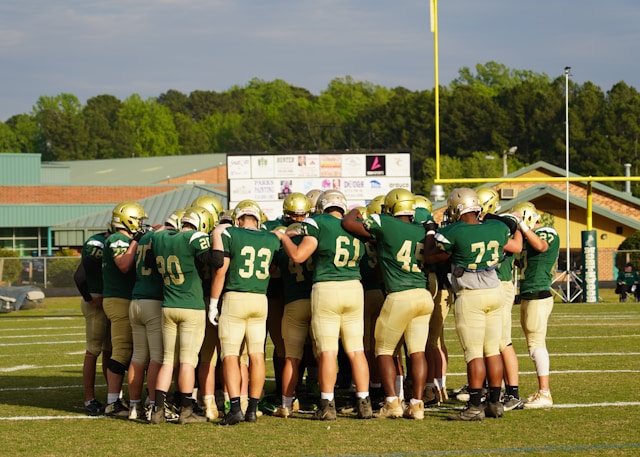
Ayden Hector understands what it takes to be part of a high school football team. Whether building trust, fostering communication or overcoming challenges, the right attitude can inspire greatness in players, the game, and life. As a proud defensive back for the Colorado State Rams, Ayden was named to the all-conference team after racking up 24 tackles and three interceptions during the 2022 season.
In just one spectacular game with the CSU Rams, he made eight tackles, intercepted a pass, and returned a pass for a touchdown. But he credits his field success to his team’s ability to work together, both on and off the field. For Hector, teamwork is far more than a strategy—it’s the backbone of success and a powerful tool for personal growth. He learned to trust his teammates and understands the importance of communication, camaraderie, commitment, and overcoming challenges.
The 5 Cs of Teamwork
Communication
On the field, players rely on verbal cues, hand signals, and an intuitive understanding of the field to execute plays effectively. Not picking up on these transmissions can disrupt the entire flow of a game. Communication ensures everyone is aligned and working toward the same objective. However, good communication with your teammates starts before the big game, in the locker room, and during practice on the field, to build chemistry among players and coaches.
The ability to talk openly during practice, share ideas, or give constructive feedback helps players understand each other’s strengths and weaknesses. This building of communication skills will translate into better coordination during games, where split-second decisions can make all the difference. Teams that communicate well often appear seamless in their execution, as though they’re operating with one mind.
Commitment
In high school football, student-athletes will discover the importance of accountability and dependability. These traits are also highly regarded by employers and colleagues in a professional setting. Understanding that once you’ve committed to the team, you’ve decided to attend practice, have good off-field conduct, and demonstrate good sportsmanship on the field. Being dependable is the backbone of being an athlete – who is expected to lead by example.
Football requires perseverance, selflessness, and the resilience to bounce back from failure. It also requires a willingness to support teammates during their challenges and hold each accountable when veering off track. Winning requires sacrifice, which demands commitment to the sport. Often, players are called upon to put the team’s needs above personal desires. This type of collaborative spirit is critical because success is rarely achieved alone.
Coachability
Ayden Hector attributes his success on the field to being coachable, which means actively listening to directions and following them to the best of his ability. He was a dedicated student during high school, achieving honor roll each year he attended Eastside Catholic in Washington state. At the same time, he played defensive back, was a three-time All-State selection, and was selected to participate in the Adidas and Polynesian Bowls.
Hector understands that team effort isn’t optional—it is the heart of high school football. Coaches direct that team, which depends on players who execute well-planned plays and support each other during intense moments. Being coachable means being open-minded to new ideas, humble when told ways to improve, and motivated when challenged by the coach.
Camaraderie
Every football player has a unique role, but everyone must perform as part of a team. The team becomes more synchronized when players trust each other, embrace their responsibilities, and encourage others to perform at their highest level. Friendships and mutual support off the field will foster trust and builds camaraderie on the field. When players know they can count on each other, it fosters an environment where risks can be taken and challenges tackled together.
A team that trusts each other on and off the field is far more resilient, especially in high-pressure situations. Camaraderie and trust within a team don’t happen overnight; it’s built through consistent effort and mutual respect. Small actions, like attending practice on time, showing respect in the locker room, and spending some time together off the field, will earn the confidence and camaraderie of your teammates.
Challenges
Football is filled with adversity, from tough opponents to unexpected injuries. Ayden Hector believes that what separates great teams is their ability to face these challenges together. It can make a difference when a team suffers a defeat, how they respond. Facing challenges with both strength and compassion will often speak louder than the loss itself. Teams that rally around each other during difficult times build resilience that carries through to how they respond to future obstacles.
Conflict and ego are inevitable in athletics. However, football emphasizes the importance of resolving these challenges constructively. Unity should be prioritized over individual pride to overcome the most challenging internal struggles successfully. Adversity isn’t just a hurdle; it’s an opportunity for players to work together and become stronger and more connected. These moments of collective resilience improve the team’s performance and impact each player’s character and resilience.
The lessons learned in high school football extend far beyond the gridiron. Collaborating with others, being committed to your individual role, and working toward a shared goal are invaluable in nearly every aspect of life. Navigating relationships and overcoming challenges are skills that translate seamlessly into real-world situations.