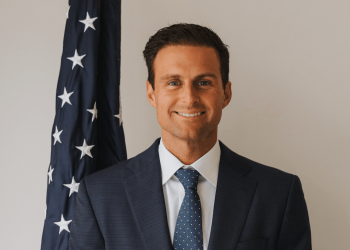
A Florida military veteran’s five-year legal battle to reunite with his children has escalated into a complex jurisdictional conflict involving state, federal, and tribal courts.
Joseph Mundo, a resident of Orange County, Florida, alleges systemic violations of his parental rights and federal law after his ex-partner, Shelby Vandever, relocated their two minor children to the Navajo Nation in 2019.
The dispute centers on conflicting court orders. A Florida circuit court granted Mundo primary custody under the Uniform Child Custody Jurisdiction and Enforcement Act (UCCJEA) in September 2024, asserting Florida’s jurisdiction as the children’s “home state.” However, the Navajo Nation’s Crownpoint Family Court has maintained temporary custody for Vandever since October 2024, citing allegations of abuse and the tribe’s sovereign authority. The Navajo Supreme Court has explicitly rejected UCCJEA applicability, stating tribal courts are not bound by state custody statutes.
Mundo maintains Vandever unlawfully retained the children after a 2019 visit to New Mexico, where she has resided since fleeing Florida. Court documents reveal a 2020 Crownpoint order initially granted him temporary custody, but Vandever asserts she never received notice of these proceedings due to a postal address change. The case intensified in October 2024 when Mundo attempted to enforce the Florida order with New Mexico law enforcement, resulting in new abuse allegations and a tribal protection order valid until April 2025.
Key legal conflicts include:
- A Florida “Order to Return/Pick-Up Minor Child” issued without prior notice to Vandever, which Mundo attempted to enforce in New Mexico.
- The Navajo Nation’s invocation of its Domestic Abuse Protection Act (DAPA) to assert jurisdiction, citing the children’s tribal membership and alleged abuse occurring partially on tribal lands.
- Pending motions in New Mexico’s Eleventh Judicial District Court to dismiss Mundo’s petition to domesticate the Florida order, arguing the Navajo Nation has stronger ties to the children.
Mundo describes years of blocked communication, including having purchased devices that were never used for contact. He alleges Vandever’s family stranded him in remote desert conditions during a 2019 visit and that recent abuse allegations are retaliatory. The children, now aged 11 and 5, reportedly have not seen their father in over five years.
The case highlights tensions between tribal sovereignty and federal law and could set precedents for how state custody orders are enforced on tribal lands and the PKPA’s role in interstate disputes. A Crownpoint hearing on February 11, 2025, will address permanent custody, with broader implications for similar multi-jurisdictional cases.