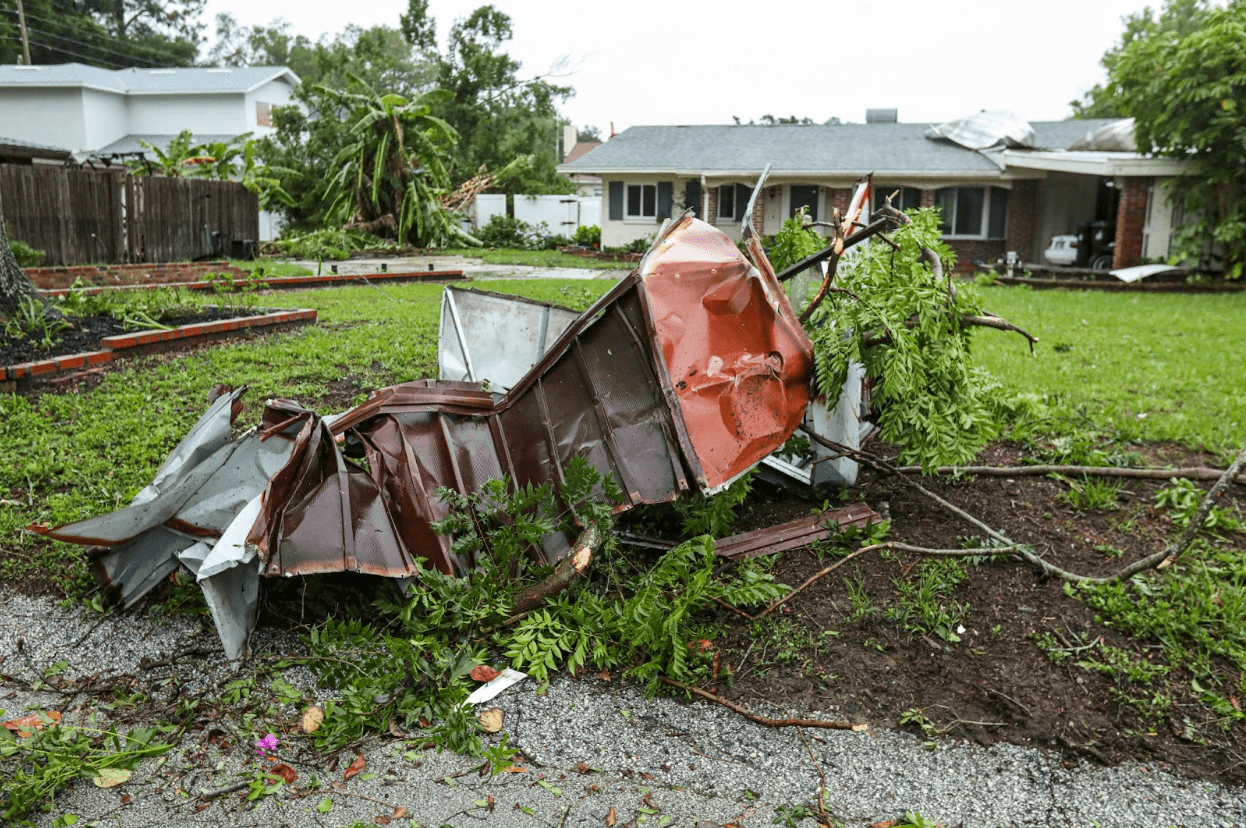
Hurricanes Helene and Milton have caused billions of dollars in destruction, and hurricane season isn’t even over yet. While understanding how to navigate disaster relief and insurance coverage is of obvious importance for those who need to rebuild, every property owner should familiarize themselves with these processes and procedures. After all, preparation is the key to recovering the largest amount possible.
Here’s what property owners need to know about FEMA disaster relief and insurance coverage.
How FEMA can help
Unfortunately, disinformation is currently circulating about the amount of disaster relief hurricane survivors can hope to obtain from FEMA. While some claim that $750 is the total amount they can expect, this is not necessarily true.
As top insurance lawyer Robert Guinn, a Partner in Cole, Scott & Kissane, P.A.’s Miami office, explains, “The $750 is just the beginning. It’s immediate assistance given out for clothing, food, and shelter. The concept behind it is to provide funds fast so people can purchase necessities so they’re not living with wet clothes on their backs, but by no means is $750 the cap.”
FEMA can also provide funds to help repair homes and other buildings damaged by storms. “The individual cap for each resident is $42,500, which is a far cry from that initial $750,” Guinn says.
If Hurricane Milton caused damage in addition to the destruction from Hurricane Helene, the homeowner should submit a second FEMA application detailing the new damage to get additional aid. Visit https://www.disasterassistance.gov/, use FEMA’s official mobile app, or call the agency toll-free at 1-800-621-3362.
According to Guinn, however, FEMA’s central mission was never to provide assistance to individual home and property owners. “FEMA was designed primarily as a community resource,” he says. “It was designed to step in when the community’s or state’s resources are stretched. The vast majority of its funding goes toward community debris removal, as well as rebuilding public roads, public access, public parks, and things of that nature. FEMA as a general concept serves the public at large, not individual residents.”
For this reason, property owners should not expect FEMA to cover the full extent of the damage they experienced. “Ultimately, the first line of support for any resident is going to be their individual insurance, whether it be for their home, surrounding structures, or car,” Guinn says.
Secure comprehensive coverage
When it comes to insurance, Guinn emphasizes that every policy is different. “The coverage you have on your home could be completely different than what your neighbor purchased for their home,” he explains. “Each policy offers different kinds of coverage — some of them are going to offer coverage for wind damage, others are going to offer coverage for flood damage through the Federal Government, and some people may have insurance through private flood carriers. Each one is going to have different limits.”
For this reason, Guinn advises property owners to understand their policies, including what they cover and what they don’t. “You may have something that fully indemnifies you, which is great, but other times, a certain insurance policy might not include the right coverage for a particular storm or event,” he says.
The best way to protect yourself and your family is to invest in comprehensive coverage, which may require purchasing additional riders for floods, hail, or powerful winds. “Many of the policies we see cover wind or fire but don’t cover flood damage,” Guinn explains. “If you have a wind or fire insurance policy, but the main damage you suffer is due to flooding, then unfortunately, you may not have a claim. Your payout depends on what you purchased and what that policy covers.”
If you have suffered from hurricane damage, contact your insurance carrier as soon as possible. This could be through a dedicated hotline or the agent who sold you your policy. According to Guinn, many insurance companies will also set up outposts in the affected areas to ensure people can file their claims quickly and easily.
Documenting your property both before and after the storm
To maximize your chances of a successful claim, Guinn also advises property owners to document the condition of their property both before and after the storm. “Before evacuating, take all the photographs and videos you can,” he says. “You want to make sure your property, as well as its contents, are all well documented from as many angles as possible.”
If you return to your home to find damage, Guinn also advises resisting the urge to start cleaning up immediately. “Of course, everybody wants to get the houses back to the same condition they were in before the storm occurred,” he says, “but make sure your home is protected by taking photographs and videos of the damaged areas first. If that wall or the floor or anything has to be thrown out, you will want proof of the destruction that occurred so that the insurance carrier can give you the best result possible.”
In addition to photos and videos, Guinn advises that it’s also a good idea to retain physical samples of the destruction, such as a portion of water-logged drywall or sodden carpet, as further evidence.
Prepare for disaster to protect your family
The 2024 hurricane season won’t end until the start of December. Until then, chances are more powerful storms will rage through the Gulf of Mexico, the Caribbean Sea, and the Atlantic Ocean. While no one wants to contemplate the possibility of hurricane damage, by preparing for this possibility, you can shield yourself and your family best.