A franchise has a shelf life. A fandom can have a memory. A movie can leave theatres, a game can stop receiving updates and a series can go years without a new season, yet its community can keep the intellectual property commercially relevant.
That is becoming increasingly important as entertainment companies look beyond the economics of individual releases. The real opportunity is no longer simply to create a successful film, game or television series. It is to build an audience that continues interacting with the intellectual property long after the original product has been consumed.
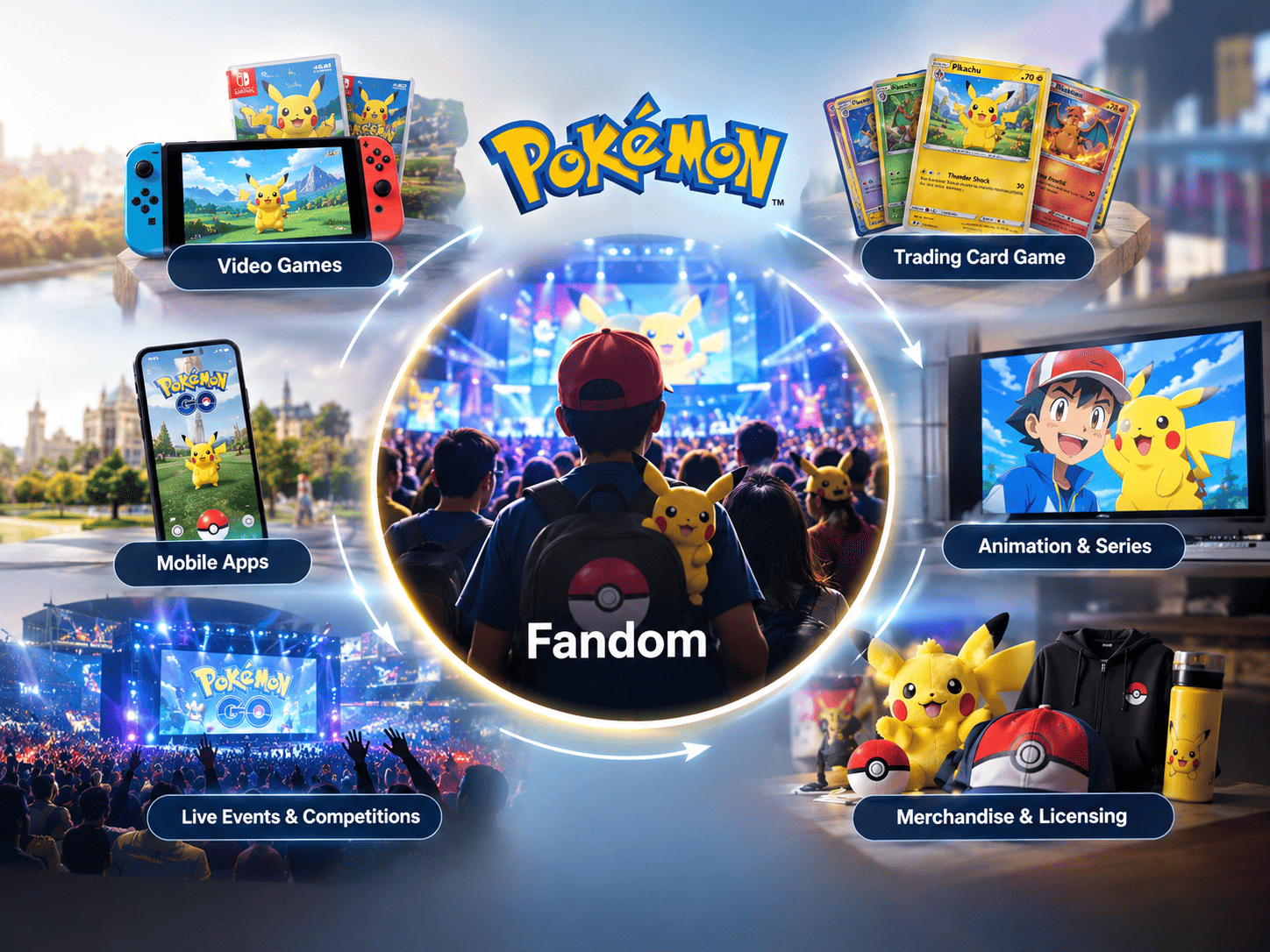
Pokémon is perhaps the clearest example. The brand extends across video games, trading cards, animation, licensing, merchandise, mobile apps and live competitive events. The Pokémon Company says more than 380 million Pokémon video games have been sold worldwide, while its trading card game is available in 76 countries and 13 languages. Its licensing programme spans toys, apparel, accessories, technology, home décor and other categories.
The franchise creates the IP. But the fandom creates the reason to keep returning to it.
The Franchise Can Go Quiet. The Fandom Doesn’t
The traditional entertainment model revolves around releases. A studio invests in a film or series, markets it heavily, captures attention and then moves towards its next project.
Fandom changes that cycle.
Fans can continue discussing characters, creating theories, producing videos, sharing memes, collecting merchandise and revisiting older content even when the rights holder has nothing new to release. The community effectively creates a continuous layer of attention around an otherwise dormant property.
That matters commercially because attention is expensive to rebuild.
If audiences forget about a franchise between releases, the company has to spend heavily on marketing whenever the next product arrives. If the community remains active, some of that awareness already exists.
Netflix has demonstrated this effect with older content. In the second half of 2025, all five seasons of Stranger Things, including the newly released fifth season, ranked among Netflix’s 15 most-watched shows, generating a combined 275 million views. Wednesday showed a similar pattern: its first season still generated 47 million views in the second half of 2025 while Season 2 generated 124 million.
The important point is not simply that these shows were popular. Their audiences continued consuming the universe across different release periods.
The Real Asset Is No Longer Just The IP
Owning intellectual property is valuable. Having people who repeatedly care about that IP is a different asset.
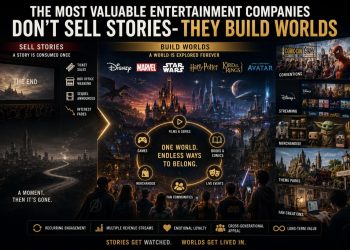
A recognisable character may generate one successful movie. A deeply embedded character can generate movies, games, merchandise, licensing agreements, theme-park attractions and years of community activity.
Disney’s business structure illustrates this model. Its 2025 annual report describes licensing its characters and other intellectual property to manufacturers, game developers, publishers and retailers, while also generating revenue from branded merchandise, merchandise licensing, retail and experiences.
This means the economic value of a franchise cannot be understood solely through box-office receipts or streaming views.
The bigger question is what happens after the initial transaction.
- Does the viewer buy something?
- Do they watch older content?
- Do they play the game?
- Do they attend an event?
- Do they collect merchandise?
- Do they bring another person into the community?
Every additional interaction can extend the economic life of the original IP.
Pokémon Shows What A Durable Fandom Looks Like
Pokémon demonstrates why fandom can become an ecosystem rather than simply an audience.
The company operates across several layers of the same universe: video games, trading cards, animation, licensing, merchandise, mobile apps and organised events. The Pokémon Trading Card Game has remained popular for more than two decades, while Pokémon’s official ecosystem includes competitive events where players and fans meet in person.
The significance is that these products do not operate independently.
Someone introduced to Pokémon through a game can become a trading-card collector. A trading-card player can attend competitive events. A fan can buy merchandise through Pokémon Center. Another consumer might discover the brand through animation.
Each product creates another entry point into the same universe.
That makes the fandom commercially useful even when a particular game or animated series is not being released.
LEGO Shows That Fandom Can Outlive The Original Product
LEGO provides another useful example because its model increasingly combines its own brand with other established fan communities.
In 2025, LEGO generated DKK 83.5 billion in revenue, up 12%, while consumer sales increased 16%. The company said its portfolio benefited from strong brand equity, innovative products and strategic partnerships. Among its popular themes were LEGO Star Wars, LEGO Icons and LEGO Botanicals.
The significance of licensed themes is not simply that LEGO gets access to another company’s characters.
It gets access to an existing community.
A Star Wars fan does not need to become a LEGO fan from scratch. The emotional connection to Star Wars can provide the initial reason to buy the LEGO product. LEGO then becomes another way for that fan to participate in the universe.
The same principle works in reverse: someone who enters through LEGO can become more deeply connected to the underlying franchise.
Fandom therefore becomes transferable across products.
Netflix Is Turning Fandom Into A Marketing Engine
Streaming companies face a particularly difficult problem: there is an enormous amount of content competing for attention.
Netflix has increasingly built experiences around its largest fan communities rather than limiting franchises to the screen.
Its 2025 Tudum event attracted thousands of fans at a sold-out venue while millions watched globally. Netflix said the event’s pre- and post-launch campaign generated more than 1.4 billion global impressions.
Squid Game provides an even clearer example.
For Seasons 2 and 3, Netflix ran fan activations across more than 25 countries and six continents. The company reported 273,000 in-person attendees and 10 million online participants across marquee events, while its Squid Game: The Experience locations had collectively sold out. The franchise also expanded into a multiplayer game and other experiences.
The strategy is significant because Netflix is extending one intellectual property across multiple forms of engagement.
The show is the starting point. The fandom becomes the distribution mechanism for everything that follows.
Fandom Creates Revenue Between Releases
This is where fandom becomes particularly interesting from a business perspective.
A traditional release generates revenue primarily when the product is available. A strong fandom creates opportunities between releases.
Consider the possible layers:
- Merchandise: apparel, toys, collectibles and limited editions.
- Licensing: third-party manufacturers pay to use the IP.
- Gaming: characters and worlds move into console, PC and mobile games.
- Experiences: exhibitions, attractions, conventions and live events.
- Publishing: books, comics and special editions.
- Subscriptions: premium communities and fan-focused services.
- Advertising partnerships: brands pay to associate themselves with culturally relevant franchises.
- Catalogue consumption: older content continues generating viewing or sales.
Disney’s annual report explicitly identifies IP licensing, branded merchandise, retail and merchandise licensing among its consumer-products and experiences activities.
That changes the economics of a successful franchise.
The company is no longer monetising only the content it produces. It is monetising the audience’s continuing relationship with that content.
The Franchise Starts Behaving Like A Platform
The most valuable IP increasingly behaves like a platform.
A film can introduce the universe. A game can deepen engagement. Merchandise can turn fandom into physical ownership. Events can turn an online community into an offline one.
New releases can bring in another generation.
The resulting flywheel looks something like this:
Content → fandom → community → merchandise/experiences → stronger engagement → new content
This is why the strongest franchises can survive changes in individual products.
One movie can disappoint without necessarily destroying the entire ecosystem. One game can fail while merchandise remains strong. A television series can end while older seasons continue attracting viewers.
The underlying community gives the IP more resilience than any single release.
But Fandom Is Not Automatically An Asset
There is an important catch.
A large community is not necessarily a valuable community.
Fans develop expectations. They become attached to characters, stories and traditions. When companies make decisions that communities dislike, the same network that can amplify enthusiasm can amplify criticism.
This creates a difficult management problem.
Companies need to encourage participation without assuming that fans will accept every commercial extension. Excessive merchandising can make a franchise feel over-commercialised. Too many releases can dilute scarcity. Poor creative decisions can damage trust.
Netflix’s own experience illustrates the importance of maintaining engagement between releases. Its marketing chief has described fandom as a way of keeping audiences connected and highlighted how fan-created content around Wednesday helped revive attention for Lady Gaga’s older song “Bloody Mary,” which subsequently charted in multiple countries.
The lesson is that companies can amplify fandom, but they cannot completely manufacture it.
The New Valuation Question
For years, the obvious question was:
How much is this franchise worth?
Increasingly, that question needs another layer:
How valuable is the community surrounding it?
The distinction matters because intellectual property can be licensed, reproduced and extended, but an active community takes years to build.
Pokémon has spent decades creating an ecosystem around games, cards, animation, merchandise and events. Disney connects characters to merchandise, licensing and physical experiences. LEGO uses established fan communities to strengthen demand for licensed themes. Netflix is building events, games and experiences around its most engaged audiences.
In each case, the underlying business opportunity is larger than the original piece of content.
The future of entertainment may therefore belong to companies that understand fandom not as a marketing by-product, but as an economic asset.
A franchise gives people something to watch.
A fandom gives them a reason to come back.