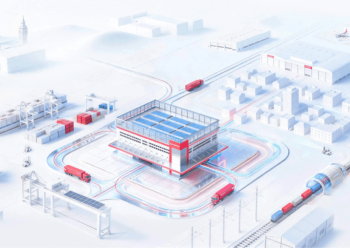
The modern company does not need to own much to operate at scale. It can rent its software, cloud infrastructure, payment rails, logistics, customer acquisition and increasingly even its artificial intelligence. What looks like a leaner business from the outside is often a business surrounded by a growing number of companies taking a recurring slice of its economics.
That is creating a new middleman economy: businesses are outsourcing not just work, but entire layers of their operating model.
The important question is no longer simply whether outsourcing saves money. It is whether businesses are genuinely becoming more efficient or merely replacing ownership costs with subscriptions, commissions, usage charges and platform fees.
From Outsourcing Work To Outsourcing Entire Capabilities
Traditional outsourcing was relatively straightforward. A company hired an outside provider to perform a defined task- payroll, manufacturing, logistics or customer support while the core infrastructure remained under its control.
The digital economy has changed that equation.
Today, a business can outsource the infrastructure behind an entire function. Instead of developing CRM software, it can subscribe to Salesforce. Instead of maintaining servers, it can use AWS or Azure. Instead of building payment infrastructure, it can integrate Stripe. Instead of developing its own marketplace, delivery network or customer-acquisition engine, it can plug into an existing platform.
The economics are attractive because the company avoids large upfront investments and can scale usage as demand changes.
But the supplier gains something equally valuable: recurring access to the customer’s economics.
Salesforce generated $39.388 billion from subscription and support revenue in FY2026, up from $35.679 billion a year earlier. Its remaining performance obligation stood at $72.4 billion at the end of FY2026, showing how subscription contracts can create substantial future revenue visibility.
The shift, therefore, is not simply from employees to contractors. It is from ownership to dependency.
SaaS Turned Business Software Into A Permanent Bill
Software was once predominantly purchased as a product. The SaaS model transformed it into an operating expense that can continue for years.
That distinction matters.
A company using several SaaS products may have lower internal technology costs, but it also creates a portfolio of recurring vendor relationships. CRM, accounting, HR, cybersecurity, communication, analytics, project management and marketing can each become separate subscriptions.
The middleman benefits from this structure because the relationship is no longer a one-time transaction.
Salesforce illustrates the scale of this model. In FY2026, its total revenue reached $41.525 billion, with $39.388 billion roughly 95% coming from subscription and support revenue.
The customer gets continuously updated software without having to build it internally. The provider gets predictable recurring revenue.
The trade-off is important:
- Lower upfront investment for the customer
- Faster deployment
- Regular software updates
- Less internal infrastructure to maintain
- But recurring costs for as long as the capability is required
That means “asset-light” does not necessarily mean “cost-light.” A business can reduce capital expenditure while increasing its dependence on operating expenses that are difficult to eliminate.
The Cloud Middleman Now Owns The Infrastructure Underneath The Business
The same transformation is happening beneath the software layer.
A company once had to purchase servers, build data centres, maintain networking equipment and employ specialists to operate its infrastructure. Cloud computing allows it to rent computing capacity instead.
This is one of the clearest examples of the new middleman economy because the infrastructure provider sits underneath thousands of businesses simultaneously.
Amazon’s AWS generated $128.725 billion of revenue in 2025, up 20% from $107.556 billion in 2024. AWS also generated $45.606 billion of operating income in 2025.
Microsoft reported $168.9 billion of Microsoft Cloud revenue in FY2025, while Azure and other cloud services revenue grew 34%. Microsoft explicitly describes one advantage of its cloud model as economies of scale from aggregating demand across customers and improving utilisation of computing, storage and network resources.
This is why cloud outsourcing can make economic sense.
A small company cannot replicate the utilisation and scale of a hyperscale data centre. Renting infrastructure can therefore be cheaper and more flexible than owning it.
But the business has exchanged capital ownership for consumption dependency.
As workloads grow, the cloud provider participates in that growth automatically.
Marketplaces Are The New Distribution Middlemen
The middlemen becomes even more powerful when it controls access to customers.
A retailer traditionally owned its storefront and developed its own customer relationships. A restaurant built its own customer relationships. A restaurant built its own local reputation and took orders directly. A hotel relied on its own booking channels.
Marketplaces changed this.
Platforms aggregate demand and give businesses access to customers they may struggle to reach independently. In return, the platform can charge commissions, fees, subscriptions or advertising charges.
DoorDash provides a useful illustration. In 2025, its Marketplace generated $102.018 billion of gross order value, while DoorDash reported $13.717 billion of revenue. Its net revenue margin was 13.4%.
Uber’s 2025 gross bookings reached $193.454 billion, compared with $52.017 billion of revenue.
The distinction between these numbers is important. The platform does not necessarily own the underlying restaurant, car ride or product being sold. Its economic role is to coordinate the transaction.
That is precisely what makes the middleman model powerful.
The platform does not need to manufacture everything it sells. It needs to control the network through which buyers and sellers meet.
Payments Show How Small Fees Become A Large Business
Payments are another layer that businesses increasingly outsource.
Building a global payment system requires connections to card networks, fraud detection, compliance infrastructure, authentication, currencies and multiple payment methods. For many businesses, building all of that internally makes little economic sense.
Payment processors therefore sell the infrastructure as a service.
Stripe’s standard US pricing, for example, currently starts at 2.9% plus $0.30 per successful domestic card transaction, with additional charges for international transactions and currency conversion.
For a small company, paying a percentage of each transaction can be worthwhile because it eliminates substantial technological and operational complexity.
But the economics change at scale.
Consider a business processing $100 million of transactions. A 2.9% percentage fee alone would represent $2.9 million before the fixed transaction component and other applicable charges.
The point is not that payment processors are unnecessarily expensive. They provide infrastructure that businesses genuinely need.
The bigger insight is that every transaction can now contain multiple invisible toll collectors.
The merchant earns the sale. The marketplace may take a commission. The payment processor takes a fee. Advertising platforms may have generated the customer. Logistics companies may deliver the product.
The business can therefore become the endpoint of an entire chain of intermediaries.
Why Businesses Willingly Pay The Middlemen?
It would be too simplistic to argue that intermediaries are extracting value from businesses without creating any.
They often solve problems that would be expensive to solve internally.
A cloud provider provides infrastructure at enormous scale. A marketplace provides demand aggregation. SaaS companies provide specialised software. Payment processors provide financial infrastructure. Logistics companies provide physical networks.
For a growing company, speed can matter more than ownership.
The economic calculation often looks like this:
| Build Internally
High upfront investment |
Use an Intermediary
Lower upfront investment |
| Longer implementation | Faster deployment |
| Internal employees required | External expertise |
| Infrastructure ownership | Infrastructure rental |
| Fixed capacity | Scalable capacity |
| Greater control | Less control |
| Potentially lower marginal cost at scale | Recurring fees |
This explains why the middleman economy continues to expand even when businesses understand that they are giving up part of their economics.
The intermediary is effectively selling time, scale and complexity management.
For many companies, that is worth paying for.
The problem begins when the intermediary becomes difficult to replace.
The Hidden Cost Is Dependency
The biggest risk in the middleman economy is not necessarily the fee. It is the loss of bargaining power.
Once a business builds its workflows around a particular software provider, cloud architecture or marketplace, switching becomes difficult.
Data must be migrated. Employees must learn another system. Integrations have to be rebuilt. Customers may already be accustomed to a platform. Operational processes may depend on a specific infrastructure provider.
This creates switching costs.
Platform businesses can also change rules, pricing structures or algorithms. A merchant that once relied heavily on marketplace traffic may discover that maintaining visibility requires additional advertising spend.
The result is a paradox:
Outsourcing initially increases flexibility because the business does not have to build everything itself. Over time, extensive outsourcing can reduce flexibility because the business becomes embedded in somebody else’s infrastructure.
This is particularly important when the intermediary controls something strategically important rather than merely administrative.
Replacing an HR software provider is one problem. Replacing the cloud infrastructure supporting a core application is another.
The more deeply embedded the intermediary becomes, the greater its negotiating power can become.
“Asset-Light” Does Not Automatically Mean “Economics-Light”
This is where the middleman economy becomes particularly interesting from a business perspective.
A company can report a relatively light physical asset base while depending on dozens of external providers.
Its balance sheet may look efficient because it does not own data centres, warehouses, software infrastructure or distribution networks.
But its income statement can contain a growing collection of recurring operating costs.
That creates an important distinction between capital intensity and economic dependence.
Cloud infrastructure, SaaS and marketplaces can allow companies to grow without proportionally increasing physical assets. That can be highly attractive.
However, investors evaluating an asset-light company should also examine:
- Recurring software and infrastructure costs
- Platform commissions
- Customer-acquisition costs
- Payment-processing expenses
- Third-party logistics costs
- Vendor concentration
- Contract renewal terms
- Switching costs
- Gross margin after intermediary fees
- Free cash flow after all these expenses
The real question is therefore not simply, “How much does this company own?”
It is:
“How much of the value created by this company has to be shared with companies sitting between it and its customers or infrastructure?”
That is a much more revealing measure of the modern business model.
AI Could Create The Biggest Middleman Layer Yet
Artificial intelligence may accelerate this trend.
A company that previously needed employees or specialist software to perform a task can increasingly access AI through an external model provider or platform.
The business does not necessarily need to train a frontier model, purchase specialised hardware or build the entire AI stack. It can consume AI through APIs and enterprise platforms.
OpenAI reported in its 2025 enterprise report that more than 1 million business customers were using its tools, while API reasoning-token consumption per organisation increased 320x year over year.
Microsoft is similarly positioning Azure AI Foundry as a platform through which businesses can access and manage models from multiple providers. Its 2025 annual report said 80% of the Fortune 500 were using Foundry for AI workloads.
This creates a new layer between businesses and intelligence itself.
The future company may not own the model, the servers, the software or even some of the labour performing the task.
It may simply pay for intelligence by usage.
That could dramatically reduce the cost and time required to launch new capabilities. It could also create a new dependency on model providers, computing infrastructure and AI platforms.
The Middleman May Become The Most Valuable Company In The Chain
The new middleman economy changes where economic power sits.
Historically, value was often concentrated with companies that manufactured products or directly delivered services.
Digital platforms have demonstrated another model: control the infrastructure through which other companies transact.
Amazon can earn from sellers and AWS customers. Salesforce can earn from companies using its software. Payment processors can earn from transactions. Marketplaces can earn from the activity of merchants and consumers. Cloud providers can earn as businesses deploy more computing capacity.
The common feature is that the intermediary does not necessarily need to own the customer’s underlying business.
It needs to become difficult to operate without.
That is why the most important question for businesses entering this economy is not whether they should outsource. They almost certainly will outsource some functions.
The more important question is which capabilities should remain under their control.
A company that outsources non-core complexity can become faster and more efficient. A company that outsources its customer relationship, critical data, distribution and technology stack simultaneously may become dependent on the very intermediaries it is paying to make the business leaner.
The future of business may therefore involve owning less but carefully choosing what not to give away.
Conclusion
The middleman economy is not simply about companies charging commissions or selling subscriptions. It represents a deeper change in how businesses are built.
Companies increasingly rent capabilities instead of owning them. That lowers upfront investment, accelerates growth and allows smaller businesses to access infrastructure that was once available only to large corporations.
But every outsourced layer creates another economic relationship.
The result is a new paradox: the leanest-looking company may be supported by the largest network of companies taking a share of its activity.
The winners in this economy will not necessarily be the businesses that own the most.
They may be the businesses that understand which middlemen create genuine operating leverage and which ones quietly capture too much of the value they help generate.