One idea has been quietly bothering me lately.
We still describe entertainment as something we consume, but the more I look around, the less that word feels accurate. Consumption suggests a finished transaction. You watch a film, listen to a song, complete a game, and move on. For decades, that was exactly how entertainment worked. Creators made something, audiences experienced it, and the relationship ended when the credits rolled.
That is no longer the world we live in.
Today, the release of a movie, television series, song, or game increasingly feels like the beginning rather than the end of the entertainment experience. Within hours, audiences transform scenes into memes, songs into global trends, games into entirely new worlds, and fictional characters into endless discussions, theories, artwork, and fan edits. The original work remains important, but it is no longer the only place where value is created.
I’ve started thinking of this shift as the Participation Premium.
For years, entertainment companies competed for attention because attention was the scarcest resource. Increasingly, however, attention is only the admission ticket. The real prize is participation. Every fan theory, reaction video, cosplay event, livestream discussion, TikTok trend, gameplay clip, and community project adds another layer of cultural and economic value that the original creators could never have produced alone.
Two films can attract the same audience on opening weekend. Months later, one has completely disappeared from public conversation while the other continues generating memes, debates, edits, and fan communities across the internet. The difference isn’t simply popularity. It is the participation premium. Entertainment that inspires people to contribute acquires a second life that entertainment designed only to be watched rarely achieves.
Perhaps the biggest transformation in entertainment isn’t that audiences have become creators.
It’s that entertainment itself has become something people expect to join.
The Product Doesn’t End at Release Anymore
One of the assumptions that shaped the entertainment industry for decades was that value was created before release. Writers developed the script, actors performed it, editors refined it, and eventually audiences received the finished product. Success depended on how compelling that final product turned out to be.
One of the clearest examples came from an unexpected source. When Kate Bush’s 1985 song Running Up That Hill featured prominently in the fourth season of Stranger Things, its revival wasn’t driven solely by Netflix or the music industry. Millions of fans transformed the song into edits, nostalgic montages, and short-form videos across TikTok and Instagram, helping it return to the top of charts around the world nearly four decades after its original release. The soundtrack didn’t simply accompany the story, it became raw material for audiences to create entirely new stories of their own.
Today, value continues to accumulate long after release because audiences keep adding to it.
A single scene from a television series can generate thousands of memes within hours. A catchy piece of music becomes the soundtrack to millions of TikTok videos, each adding a slightly different interpretation. Fans create alternate endings for films they love, redesign characters through digital art, build detailed theories connecting seemingly unrelated storylines, and produce reaction videos that sometimes attract audiences rivaling the original content itself. Video game players create custom maps, invent entirely new game modes, and establish communities that continue evolving years after developers have stopped adding official updates.
None of these contributions replace the original work. Instead, they expand its cultural footprint in ways that traditional entertainment never could.
Looking at this pattern, it becomes difficult to argue that audiences are simply consumers anymore. They have quietly become collaborators.
The Best Entertainment Creates “Negative Space”
One pattern keeps appearing whenever I look at the entertainment that dominates internet culture.
The biggest hits rarely explain everything. Instead, they leave behind what I think of as narrative negative space-intentional gaps that audiences feel compelled to fill themselves.
This isn’t laziness in storytelling. It’s a different philosophy of storytelling.
Take FromSoftware’s blockbuster Elden Ring. Rather than explaining its world through lengthy cutscenes, much of its history is scattered across cryptic item descriptions, environmental details, and fragmented dialogue. Players became digital archaeologists, piecing together the lore through Reddit discussions, YouTube essays, and collaborative theories. The mystery wasn’t a flaw in the experience. It was the experience.
The same principle appears across modern entertainment. An ambiguous ending sparks months of debate. A fictional universe filled with unanswered questions inspires thousands of fan theories. A memorable dance sequence becomes a global trend because everyone wants to reinterpret it rather than simply watch it.
Perhaps that’s the biggest change. Entertainment is no longer expected to answer every question. Increasingly, its value comes from asking questions that millions of people want to answer together.
Every Fan Is Becoming A Creator
The internet has dramatically lowered the barriers between consuming entertainment and producing it.
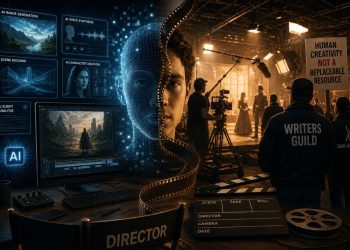
A decade ago, creating professional-looking videos, visual effects, music edits, or digital artwork required expensive software and years of technical experience. Today, those same tools are available to almost anyone with a smartphone and an internet connection. Artificial intelligence is reducing those barriers even further, allowing people to create impressive visuals, animations, and creative content in minutes rather than weeks.
As a result, the distinction between audiences and creators is becoming increasingly blurred.
Someone might spend the morning watching a Netflix series, the afternoon editing together a fan trailer, and the evening discussing hidden details with thousands of strangers online.
None of these activities feel unusual anymore because participation has become an expected part of entertainment rather than an exception.
This is one of the reasons I believe the creator economy and the participation economy are related but fundamentally different ideas. The creator economy focuses on individuals building businesses around producing content. The participation economy focuses on millions of ordinary people adding value to entertainment without necessarily considering themselves creators at all.
That difference matters because participation scales in a way traditional production never could.
Communities Are Becoming More Valuable Than Content
One lesson keeps appearing across entertainment, gaming, music, and even sports.
Communities often outlast individual pieces of content.
A successful film might dominate conversations for a few weeks before attention moves elsewhere. A strong community, however, can keep an entire franchise culturally relevant for decades. It creates traditions, inside jokes, fan events, discussion forums, competitions, artwork, merchandise, and shared rituals that continuously introduce new audiences to the original work.
This is why companies increasingly invest in Discord servers, creator partnerships, esports tournaments, fan conventions, livestream events, and interactive experiences. At first glance, these may appear to be marketing initiatives. I see them differently. They are investments in participation infrastructure.
Entertainment companies are gradually discovering that communities do not simply consume intellectual property. They continuously increase its value.
Perhaps that explains why some franchises remain remarkably resilient despite long gaps between official releases. Their communities continue creating enough conversation that the worlds never truly disappear from public attention.
When Participation Becomes Ownership
The participation economy has a side that receives far less attention.
The more audiences contribute to a fictional world, the more they begin to feel that part of it belongs to them. That sense of ownership creates extraordinary loyalty, but it can also create extraordinary expectations.
The backlash surrounding The Last of Us Part II, the petition demanding that HBO remake the final season of Game of Thrones, and countless review-bombing campaigns reveal a growing tension. Fans are no longer just reacting to creative decisions. They increasingly expect to influence them.
Participation gives communities a voice, but it also raises an uncomfortable question. At what point does collaboration become creative entitlement?
Entertainment companies are discovering that inviting audiences into the creative process is much easier than deciding where that invitation should end. The participation economy rewards openness, but lasting creative worlds still require someone willing to say, “This is the story we want to tell.”
Participation Creates Cultural Compound Interest
One reason participation has become so valuable is that it behaves remarkably like compound interest.
A fan theory inspires a YouTube breakdown. The breakdown becomes a meme. The meme inspires artwork. The artwork attracts new viewers who return to the original story with fresh curiosity. Every participant leaves behind something that encourages the next participant to contribute.
Unlike traditional advertising, which largely stops generating value once spending ends, participation continues creating cultural momentum because communities keep expanding the experience long after its release.
That creates another question I rarely see discussed.
If millions of fans spend countless unpaid hours writing wikis, creating mods, editing videos, translating content, designing costumes, and moderating communities that make billion-dollar franchises even more valuable, where exactly is the line between community building and unpaid creative labor?
There isn’t an easy answer. Passion has always been part of fandom. Yet participation is increasingly generating enormous commercial value for entertainment companies while much of the creative work comes from the communities themselves.
Perhaps the participation economy isn’t simply changing how entertainment is consumed. It is quietly changing who creates value and who gets rewarded for creating it.
AI Could Make Human Creativity More Valuable
Artificial intelligence will almost certainly make participation easier.
Fans will be able to generate movie posters, alternative endings, voice performances, animations, and entirely new storylines in minutes rather than weeks. At first glance, that seems like the natural evolution of the participation economy.
Yet I wonder whether it creates a different problem.
If participation becomes effortless, does it become meaningful?
Much of today’s fan culture derives its emotional value from visible effort. A hand-drawn comic, a carefully stitched cosplay costume, or an animation that took months to complete carries a different weight because audiences recognize the dedication behind it.
As AI fills the internet with endless variations of creative work, genuinely human craftsmanship may become even more valuable. Ironically, the future of participation may not belong to those who create the most content. It may belong to those whose effort remains unmistakably human.
The Future Belongs to Entertainment That Pulls People In
The more I think about this shift, the less convinced I am that entertainment companies are simply producing content.
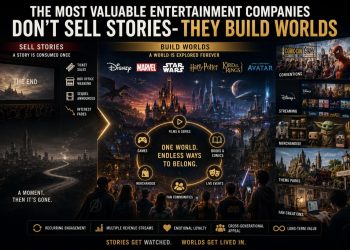
Increasingly, they are designing worlds that people want to inhabit, communities that people want to belong to, and experiences that audiences genuinely want to shape rather than merely observe.
Perhaps the companies that dominate the next decade will not be the ones releasing the highest volume of content. They will be the ones creating the strongest entertainment gravity.
Just as gravity keeps planets in orbit, the best entertainment keeps people returning long after release. It attracts conversations, inspires creativity, encourages communities to form, and continuously pulls new audiences into an ecosystem that expands far beyond the original story.
That, to me, is the defining characteristic of the participation economy. Success is no longer measured only by how many people watched something. Increasingly, it is measured by how many people felt compelled to leave a piece of themselves inside it.
Because in the future, the most valuable entertainment won’t simply capture our attention.
It will earn our participation.
Conclusion
The participation economy is changing what entertainment means. Success is no longer defined solely by how many people watch a film, stream a song, or play a game. Increasingly, it is defined by how many people choose to build on it, discuss it, remix it, and make it part of their own identity.
Looking back, I don’t think the defining entertainment companies of the next decade will be those that produce the most content. They’ll be the ones that create worlds people genuinely want to keep expanding long after the original creators have stepped away.
That is why the next generation of entertainment companies will compete for something more valuable than attention. They will compete for participation. Because in a world where audiences no longer want to sit on the sidelines, the most enduring entertainment won’t simply be watched, it will be lived.