It’s almost midnight. You finally decide to watch the movie that’s been sitting on your watchlist for weeks. Before pressing play, you check Instagram for a minute. One reel turns to twenty. You reply to a message, watch a Youtube short, scroll through a few headlines and suddenly it’s past one.
The movie can wait. Sleep wins.
I’ve caught myself doing exactly this more times than I’d like to admit. I’ll sit down fully intending to watch a film, only to spend the next half hour consuming dozens of tiny pieces of content that I probably won’t remember tomorrow. Somewhere between the endless scrolling and the constant switching, the movie quietly disappears from the evening.
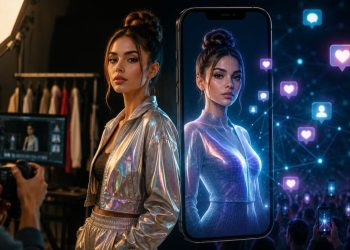
What makes this competition unusual is that none of these platforms are actually trying to replace movies. They’re simply occupying the countless micro-moments that used to belong to nobody; five minutes while waiting for coffee, ten minutes before class, fifteen minutes before bed. Individually those moments seem insignificant. Collectively, they’ve quietly reshaped how much uninterrupted time is left for everything else.
That, to me, says something much bigger about entertainment today. Hollywood isn’t just competing with other studios anymore. It’s competing with every app, every notification, every algorithm, and every habit that’s fighting for the same limited hours of our day.
A New Kind of Competition
For decades, Hollywood’s biggest concern was fairly straightforward: make a better movie than everyone else. Studios obsessed over release dates, star casts, marketing budgets, and box office numbers because their competition looked a lot like them.
I’m not sure that’s true anymore.
Today, Hollywood isn’t just competing with other studios, it’s competing with every that can occupy even a few minutes of our time. TikTok, YouTube, Spotify, podcasts, mobile games, Instagram, and even the endless stream of notifications on our phones are all chasing the same thing: our attention.
What fascinates me is that none of these platforms are trying to replace movies. They’re simply colonizing the gaps in our day. But when every spare gap is filled, we lose the mental whitespace required to build up to a two-hour cinematic commitment. The runway for a film has completely vanished.
That’s why I think Hollywood has quietly entered a different business. It’s no longer just in the business of making films, it’s in the business of earning uninterrupted attention. And in a world where attention has become one of our scarcest resources, that may be a much harder challenge than competing with another studio ever was.
Lower Commitment Wins
One idea I keep coming back to is that the biggest advantage of today’s digital platforms isn’t necessarily that they produce better content. It’s that they ask for far less commitment.
A movie wants two or three uninterrupted hours. A television series expects you to return episode after episode. Even a documentary asks you to slow down and stay engaged.
Most digital platforms work very differently. They don’t ask you to commit to an evening, they ask for a few seconds. One reel. One short video. One quick game. One podcast while you’re driving. The experience begins instantly, and just as importantly, it can end instantly.
I’ve started thinking of this as the difference between a full-course meal and endless snacks. A great movie often leaves you feeling more satisfied, but opening social media is easier because it asks almost nothing of you. One swipe becomes another, not because it’s more fulfilling, but because every decision feels effortless. Hollywood isn’t competing against better entertainment, it’s competing against entertainment that demands almost no commitment at all.
That completely changes how people choose what to consume.
When you’re mentally tired after a long day, you’re rarely comparing the quality of a film with the quality of a TikTok video. You’re comparing the effort each one demands. More often than not, the option requiring the least mental investment wins.
I think that’s the real challenge Hollywood faces today. The competition isn’t simply about creating the most compelling story. It’s about convincing people that a story is worth protecting two uninterrupted hours for. In an era where almost every platform has been designed to fit effortlessly into our routines, asking for that kind of commitment has become one of cinema’s biggest hurdles.
The Attention Shift
I also think the way we consume entertainment has fundamentally changed.
Not long ago, watching a movie was often the main event. You sat down, pressed play, and gave one story your full attention until the credits rolled. Today, our entertainment habits look very different. We move from a reel to a podcast, from a YouTube video to a group chat, from a gaming session to a Netflix episode, all within the same evening.
We’re no longer spending hours immersed in a single experience. We’re constantly sampling different ones.
What’s particularly fascinating is the binge-watching paradox. Many of us hesitate before starting a two-hour film, yet we’ll happily watch four episodes of a series without thinking twice. The total viewing time is often longer, but every episode offers a psychological exit point. Even if we never use it, simply knowing we can stop makes the commitment feel smaller.
In many ways, entertainment has started to resemble a buffet rather than a three-course meal. We take small bites from everywhere instead of investing deeply in one thing. Algorithms encourage this behavior by serving an endless stream of new content, making it easier to switch than to stay.
That creates a challenge for Hollywood that previous generations of filmmakers never had to think about. A movie isn’t just asking people to watch a story anymore, it’s asking them not to switch. Not to check their phone. Not to open another app. Not to chase the next recommendation.
Ironically, in a world overflowing with entertainment, holding someone’s attention has become far more difficult than grabbing it. And perhaps that’s why attention, not content, has become the industry’s most valuable currency.
The Fatigue Factor
There’s another reason I think Hollywood’s competition has become much tougher, and it has nothing to do with storytelling.
We’re simply more mentally exhausted than we used to be.
By the time most people finish work or classes, they’ve already spent the day replying to messages, attending meetings, scrolling through social media, switching between apps, and processing an endless stream of information. Entertainment isn’t competing for fresh attention anymore, it’s competing for whatever mental energy is left.
I also think decision fatigue plays a bigger role than we acknowledge. Open a streaming platform today and you’re greeted with thousands of titles. Ironically, unlimited choice often makes choosing harder, not easier. Sometimes we don’t skip a movie because we don’t want to watch it, we skip it because deciding feels like one more task after a day already filled with decisions.
That’s why I don’t believe shrinking attention spans tell the whole story. People can still spend hours watching a cricket match, binge an entire series over the weekend, or lose themselves in a video game. The ability to focus hasn’t disappeared. What has changed is how selective we’ve become about where we spend that focus.
A film asks us to put everything else aside for two uninterrupted hours. On paper, that doesn’t sound unreasonable. But after a mentally draining day, it can feel like a much bigger commitment than it once did.
Perhaps that’s why the title of this article isn’t an exaggeration. More often than not, Hollywood isn’t losing because audiences don’t want to watch movies. It’s losing because, by the end of the day, sleep feels like the better choice. That may be the most unexpected competitor the entertainment industry has ever had.
Why Blockbusters Still Win?
If attention has become so fragmented, why do some films still fill theatres and dominate conversations?
I think it’s because they offer something that can’t be recreated through endless scrolling, a shared experience. The biggest blockbusters aren’t just movies anymore; they’re cultural moments. People watch them because they want to be part of the conversation, avoid spoilers, and experience the excitement alongside everyone else.
In a way, they’ve become appointments rather than options. Audiences don’t just buy a ticket, they buy the feeling of being part of a shared cultural moment. That’s something an endless feed of personalized content still struggles to replicate.
That also explains why the gap between blockbuster hits and average films seems to be widening. Audiences are becoming far more selective about what deserves two or three hours of their time. If a film doesn’t feel essential, many people are happy to wait until it arrives on a streaming platform or skip it altogether.
In other words, Hollywood isn’t struggling to produce successful movies. It’s struggling to make more movies feel unmissable. In an age where attention is expensive, simply being good is no longer enough. A film has to feel worth choosing over everything else competing for the last few hours of the day.
The Cost Of Convenience
For years, the entertainment industry has been obsessed with removing friction. Movies arrive on streaming platforms faster than ever, recommendations are personalized, and the next episode starts before we’ve even decided to continue.
On paper, that sounds like progress.
Yet I can’t help wondering if we’ve made entertainment so convenient that we’ve also made it easier to abandon. The same technology that helps us discover something to watch also makes it effortless to switch to something else. Unlimited choice has solved the problem of access, but it has created a new one, fragmented attention.
Perhaps convenience isn’t always the opposite of friction. Sometimes it’s the reason we never stay with one thing long enough to fully enjoy it.
The Future Of Entertainment
I don’t think the future belongs to the companies that produce the most content. It belongs to the ones that create experiences people are willing to make time for.
For years, streaming platforms focused on giving audiences more choice. But we’re reaching a point where choice isn’t the problem, it’s overload. With thousands of movies, shows, videos, podcasts, and games available at any moment, deciding what to watch has become exhausting in itself.
That raises the bar for Hollywood. Success is no longer just about telling a great story; it’s about giving people a reason to pause everything else. The films that stand out won’t simply entertain, they’ll feel like events worth protecting time for.
In the end, I don’t think Hollywood has an audience problem. It has a competition problem. Its rivals are no longer just other studios with bigger budgets or better scripts. They’re algorithms that never stop refreshing, platforms that fill every spare minute, and the growing exhaustion that comes with living in a world where our attention is constantly being pulled in different directions.
Because today, the hardest thing to earn isn’t a ticket sale or a streaming subscription.
It’s two uninterrupted hours of someone’s life.
Conclusion
Hollywood’s biggest challenge today isn’t making better movies. It’s making people believe that a story deserves two uninterrupted hours in a world designed to interrupt them every few seconds.
That’s why I don’t think this is really a story about Hollywood. It’s a story about all of us. Our attention has become the most fiercely contested resource in the digital economy, and every platform is competing to claim a small piece of it.
For decades, filmmakers competed against other filmmakers. The next generation will compete against habits, algorithms, convenience, and exhaustion.
And perhaps that’s the defining creative challenge of this century, not making people press play, but making them forget to pick up their phones.