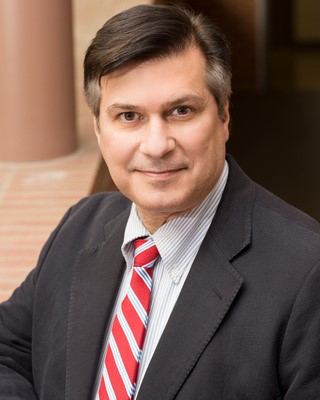
Stephen Laga, M.D. is a distinguished cardiothoracic surgeon whose extensive experience spans both general and cardiovascular surgery. He has made significant contributions to his field through his work at prestigious institutions, including Froedtert South Medical Group, where he currently practices. Dr. Laga earned his medical degree from St. Louis University School of Medicine and completed his general surgery residency at Rush Presbyterian St. Luke’s Medical Center in Chicago. His dedication to the advancement of medical science is evident in his subsequent thoracic surgery residency and cardiovascular surgery fellowship at Baylor College of Medicine. As a board-certified surgeon by both the American Board of Surgery and the American Board of Thoracic Surgery, Stephen Laga, M.D. is committed to providing individualized, evidence-based care. His military service as a Major in the U.S. Air Force Medical Corps further exemplifies his commitment to leadership and patient care. In this interview, we delve into Laga’s journey, his insights into the cardiothoracic field, and his vision for the future.
Maintaining Focus on Professional Challenges
How do you maintain focus and determination when navigating professional challenges?
I find that productivity thrives when you are well-rested, so taking breaks is crucial. Eliminating distractions and mastering prioritization are also key components for me. I categorize tasks by priority levels, ranging from immediate actions that require dropping everything to elective tasks that can be eliminated.
Enthusiasm for Field Development
What developments in your field are you most enthusiastic about right now?
There are several exciting advancements. Minimally invasive procedures like TAVR and Mitral Valve Repairs are particularly promising. I’m also enthusiastic about aortic root enlargement and EVAR, as well as the potential of new tricuspid valve replacements. The aspiration thrombectomy and the new generations of anticoagulants are also thrilling. Additionally, the sutureless valve in minimally invasive aortic valve replacement offers great promise.
Unique Professional Challenges
What unique challenges have you encountered in your profession, and how have you approached them?
Keeping up with new drugs and techniques is a continuous educational challenge. I tackle this by staying proactive and engaging in ongoing learning through reading, attending meetings, and discussing with colleagues. Education is crucial in this ever-evolving field.
Vision for the Future
How do you envision your profession evolving over the next decade, and how are you preparing for these changes?
The key to adapting to future changes is education. While predictions can be unreliable, akin to New Year’s resolutions, it’s essential to focus on dealing with current realities. This adaptability and continuous learning will prepare us for what lies ahead.
Advice for Aspiring Professionals
What advice would you offer to someone aspiring to make a meaningful impact in your industry?
First, you must be very intelligent and understand that this profession is a calling. There is no compensation for the time lost, and it is your mission to positively affect people’s lives. Continuous reading and learning are vital for ongoing professional development.
Reflection on Career Journey
Reflecting on your career journey, is there anything you would approach differently with the knowledge you have now?
I wish I could have studied more extensively, but I also understand that there’s only so much one can do. This reflection helps guide my approach moving forward.
Community and Growth
What makes your community an exceptional place for both personal and professional growth?
Cardiac surgeons are like the special forces of medicine, akin to the delta force. We are often called upon to handle life-threatening problems, and we take care of the sickest patients. This continuous challenge and the resultant growth truly reflect the unique nature of our community.
Meaningful Career Achievements
Which project or achievement stands out as the most meaningful in your career, and why?
Being chosen for the DeBakey problem by DeBakey himself was a profound honor. He was the greatest surgeon of the 20th century, and being selected by him among about 400 physicians was a significant achievement. I’ve performed over 600 open heart surgeries in my career, and achievements like these come from a slow, step-by-step process, along with embracing newer techniques.
Balancing Professional and Personal Life
Outside of your profession, what passions or activities help you recharge and stay balanced?
I love to sail and hunt. These activities provide me with a much-needed break from the high demands of my profession. Sailing, in particular, embodies a sense of freedom and tranquility that helps me to reset and come back to my work with renewed focus and energy.
Inspirational Guidance
Can you share a quote or principle that has profoundly influenced your approach to work and life?
One principle that has always resonated with me is encapsulated in Rudyard Kipling’s poem “If.” It speaks to maintaining composure and integrity amidst chaos and challenges, urging one to treat triumph and disaster just the same. This perspective helps ground me, allowing me to meet professional and personal challenges with resilience and grace.
Reflecting on Healthcare Evolution
Reflecting on the evolution of healthcare, how do you think the field has changed since you started your career?
The field has shifted dramatically with advances in technology and techniques. From traditional open-heart surgeries to minimally invasive procedures, the landscape of cardiothoracic surgery has evolved to place a greater emphasis on patient recovery and outcomes. These technological advancements have improved the precision and effectiveness of surgeries, enhancing patient care.
Future of Cardiothoracic Surgery
Looking ahead, what do you see as the future of cardiothoracic surgery, and what role do you hope to play in its evolution?
I envision a future where technology continues to drive innovations in less invasive procedures. There will be a stronger focus on personalized medicine, leveraging genetic information to tailor treatments to individual patients. I hope to contribute by staying at the forefront of these innovations and helping to mentor the next generation of surgeons, ensuring that excellence in patient care continues to be the priority.
Closing Thoughts
In closing, Stephen Laga, M.D. shows dedication to his field and exemplifies a deep commitment to both his patients and the advancement of cardiothoracic surgery. His insights offer a valuable perspective on the past, present, and future of healthcare. This conversation with Dr. Laga not only highlights his remarkable achievements and expertise but also his enduring vision for the future of medicine.