
Travel security is an ever-evolving concern, with traditional methods often falling short in the face of modern threats. The rise of biometric technology presents a promising solution to these challenges, offering a more secure and efficient way to verify travelers’ identities. In this article, we will explore the growing importance of biometrics in revolutionizing travel security.
Traditional methods of travel security, such as passport checks and security screenings, have long been the norm. However, these methods are not without their limitations. They can be time-consuming, prone to human error, and susceptible to fraud and identity theft. Biometric technology, which uses unique physical or behavioral characteristics to verify a person’s identity, offers a more secure and efficient alternative.
Leaders at Affaire Securiport understand that, by implementing biometric technology, travel security can be greatly enhanced. Biometrics can streamline the check-in process, reduce wait times, and improve the overall travel experience. Additionally, biometrics can help prevent identity theft and fraud, as well as enhance the ability to track individuals of interest. Affaire Securiport lends its collective knowledge base to exploring how biometrics have the potential to revolutionize travel security, making it more secure, efficient, and convenient for travelers worldwide.
Understanding Biometrics in Travel Security
Biometrics refers to the measurement and analysis of unique physical or behavioral characteristics, such as fingerprints, facial features, and iris patterns, to verify a person’s identity. In travel security, biometric technology plays a crucial role in enhancing security measures and streamlining the travel experience.
“Various biometric modalities are commonly used in travel security systems, each with its strengths and limitations,” says an Affaire Securiport executive. “Fingerprint recognition, for example, is one of the oldest and most widely used biometric modalities, offering high accuracy and reliability.”
Facial recognition, on the other hand, has gained popularity due to its non-intrusive nature and ease of use. Iris recognition is another modality known for its high accuracy rates, making it suitable for high-security applications. Biometric data is collected through specialized devices, such as fingerprint scanners or facial recognition cameras, and is stored in a secure database.
Data is then utilized during travel security processes, such as check-in, boarding, and immigration, to verify the identity of travelers. By leveraging biometric technology, travel security systems can enhance their effectiveness, improve efficiency, and provide a more seamless travel experience for passengers.
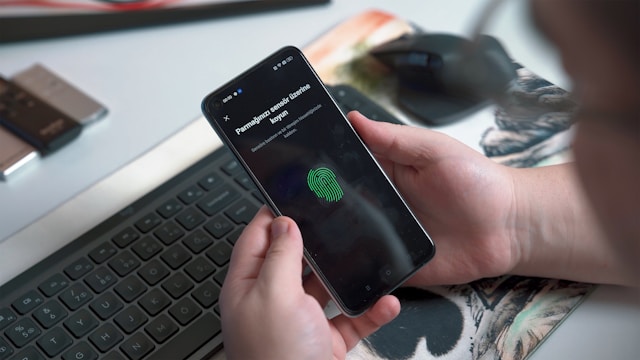
Advantages of Biometrics in Travel Security
The adoption of biometric technology in travel security offers several key advantages that enhance security, efficiency, and passenger experience. One of the primary benefits is the enhanced accuracy of biometric authentication compared to traditional methods. Biometric identifiers, such as fingerprints or facial features, are unique to each individual, making them highly reliable for identity verification.
Notes a leader in Affaire Securiport’s technology team, “Biometrics also significantly improve the speed and convenience of airport security processes.”
By replacing manual identification checks with biometric authentication, airports can streamline check-in, baggage handling, and boarding procedures, reducing wait times and enhancing overall efficiency. Biometric-enabled travel security systems have the potential to generate cost savings for airports and airlines. By automating identity verification processes, airports can reduce the need for manual labor and improve operational efficiency.
The improved passenger experience resulting from faster and more convenient security processes can lead to increased customer satisfaction and loyalty. Overall, the adoption of biometrics in travel security represents a significant advancement that benefits both security stakeholders and passengers alike.
Addressing Concerns and Challenges
While biometric technology offers significant benefits in travel security, it also raises important concerns related to privacy and security. One major concern is the potential misuse or unauthorized access to biometric data, which could lead to identity theft or other privacy breaches.
“To address these concerns, stringent measures are in place to safeguard biometric data,” says a leader from Affaire Securiport.
This includes encryption of data, secure storage methods, and adherence to privacy regulations such as the General Data Protection Regulation (GDPR) and the California Consumer Privacy Act (CCPA). Another challenge in implementing biometric systems in travel security is interoperability.
Ensuring that biometric systems can communicate and share data seamlessly across different airports and travel hubs is essential for their effectiveness. Scalability is also a concern, as biometric systems need to accommodate a large volume of travelers without compromising on speed or accuracy. Reliability is another challenge, as biometric systems must perform consistently under various conditions and environments. Addressing these concerns and challenges is crucial for the successful implementation of biometric technology in travel security.
Future Outlook and Recommendations
The future of biometric technology in travel security holds exciting possibilities for enhancing the passenger experience and improving security measures. One key trend is the move towards a seamless passenger journey, where biometric authentication is integrated into every step of the travel process, from check-in to boarding. This will create a more efficient and convenient experience for travelers, reducing wait times and enhancing security.
Another potential innovation is the development of touchless travel experiences, where biometric authentication is done without the need for physical contact. This could involve the use of facial recognition or iris scanning technology, further improving the speed and convenience of the travel process.
Integration with other emerging technologies such as artificial intelligence (AI) and blockchain is also on the horizon. AI can enhance the accuracy and efficiency of biometric systems, while blockchain can provide a secure and transparent way to store and share biometric data.
To leverage biometrics effectively in revolutionizing travel security, policymakers, airport authorities, and technology providers should collaborate to develop standards and regulations that ensure the privacy and security of biometric data. Additionally, investment in research and development is essential to drive innovation and keep pace with evolving security threats. By embracing these recommendations, stakeholders can maximize the benefits of biometric technology in enhancing travel security.