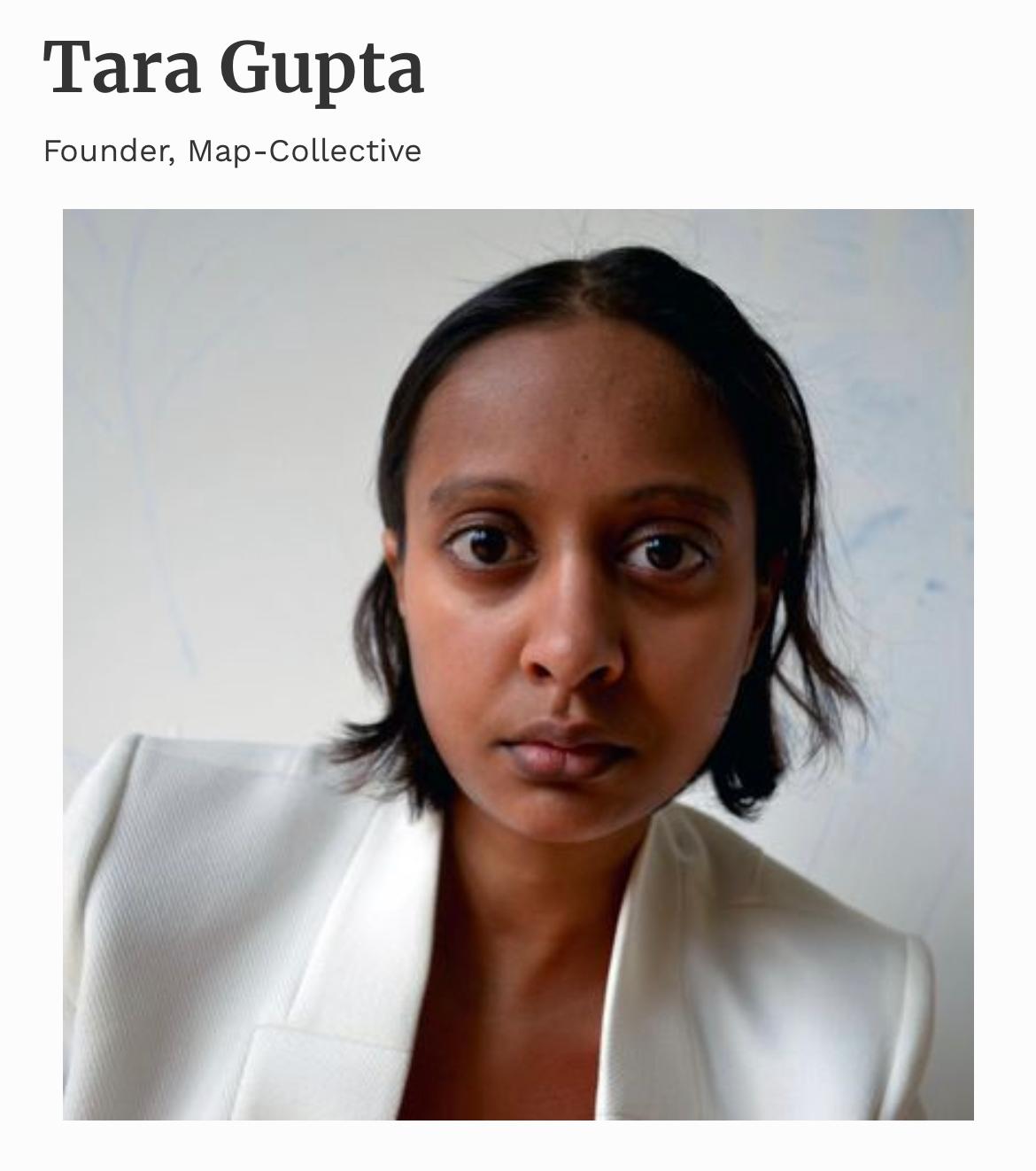
Map-Collective, a DC-based company that tracks global carbon usage and issues quotas and certifications to countries, businesses, and smaller governmental municipalities, is working to enact change by using data-driven research to map out necessary carbon deficits for each country.
By Jay Feldman
So, you’ve heard about countries and companies needing to get to “net zero” with carbon emissions to help slow the devastating effects of climate change on our planet. But what does “net zero” really mean? And why is it so absolutely imperative for businesses and their home countries to do this as soon as possible?
Scientists, researchers and activists studying the destruction of climate change on our planet, such as Map-Collective and its CEO, Tara Gupta, have been sounding the alarm about this emerging problem for years, and many have said that planet Earth is in dire straits if change isn’t enacted very soon.
That’s where “net zero” emissions comes into play for countries and companies willing to make radical changes in an effort to save our way of life on Earth. Basically, “net zero” emissions mean no increase in current levels of emissions so as to keep the planet from suffering even greater climate changes.
To further break down the damaging effects of carbon emissions in more layman’s terms: imagine the Earth’s atmosphere and its ability to hold carbon as a kitchen sink. For hundreds of years, we have been letting tap water run into that sink, and it is filling much faster than it can drain. “Net zero” emissions would mean turning that tap off so that the water can slowly and effectively exit the drain.
Back on Earth, the rate at which atmospheric carbon converts into carbon in the biosphere, cryosphere, or geosphere is actually very slow. So, Earth is in serious need of increasing the drains in ways such as growing more plentiful forests, sequestering carbon into rock, and investing in carbon capture storage systems as ways to aid Earth’s atmosphere. Then, and only then, will countries and corporations be able to create carbon deficits and preserve our way of life on the planet.
Map-Collective, a DC-based company that tracks global carbon usage and issues quotas and certifications to countries, businesses and smaller governmental municipalities hoping to help in the fight against climate change, is working to enact change with the belief that countries and companies can become more environmentally friendly.
“We are establishing the first unified dashboard for coordinating the global effort to get to net zero emissions, and undo our historic carbon emissions,” said Gupta, Map-Collective’s founder. “We have seen great activity and excitement in the two years we have been in action already, and plan for great growth ahead.”
With Gupta leading the way as an innovative project leader, intersectional thinker, and someone who moves the needle on sustainability, Map-Collective has mapped out the carbon deficits for each country. Its data has determined that the world’s 20 richest and largest producing countries account for the world’s entire global allowable carbon deficit.
The U.S., for instance, has 555 gigatonnes of carbon emissions overshoot. Russia is the next highest offender in terms of emissions with overshoots of 113 gigatonnes. A gigatonne is one billion tonnes and is often used when discussing human carbon dioxide emissions and is roughly the mass of all land mammals (other than humans) in the world, and it’s also roughly twice the mass of all of the people in the world.
“For years, those countries have overshot what they probably should have been using,” Gupta said. “Had we known about our ability to affect change in the planetary climate before the Industrial Revolution, we might not be in the position that we’re in now.”
How do the companies, countries and citizens excavate themselves from “the position that we’re in now?” Map-Collective has created a system for administering quotas based on the current share of each nation’s wealth. Map-Collective works with research organizations, governments, businesses, and individuals, to map the carbon usages of counties and corporations, and then, it measures them against the issued quotas, annually.
A country’s wealth, and similarly its lack of it, often dictate its ability and willingness to address its responsibility in helping solve the world’s climate crisis. The administration of individual responsibility for each country could not only help solve the global climate crisis, but it also addresses financial inequities among the countries and their differing levels of responsibility.
Ideally, the measurement of each country’s usage against quotas that are set and reassessed each year will allow scientists to better manage Earth’s resources on an ongoing basis. Ultimately, the hope is that by filling this persistent need that an abundant planet will be recreated, and it will be one that meets the needs of all organisms on earth long into the future and mass extinctions will be avoided. It’s even an approach that can be applied to efforts to potentially create new settlements on other planets and in space, as well.
“The needs are much more serious than most people or companies think if we are going to have a safe and providing planet to occupy in the years and decades to come,” Gupta said recently. “Greta Thunberg and hundreds of other scientists have already sounded the alarm about the urgency needed to slow the damaging effects of rising temperatures and atmosphere damage. To put it bluntly, we’re pretty much done for as inhabitants of Earth by 2050 if we don’t change things soon.”
“No longer is this about making sure the planet is safe for our children and grandchildren and future generations,’’ Gupta continued. “The data shows that this is a now problem, and it is no longer something that we can pass along to citizens in the future. Acting on climate change is actually very selfish – you are responding to your own needs, not those of some future generation. It’s here, now. If we’re going to have enough resources for this generation, let alone future generations, to survive, we must act swiftly and boldly now.”