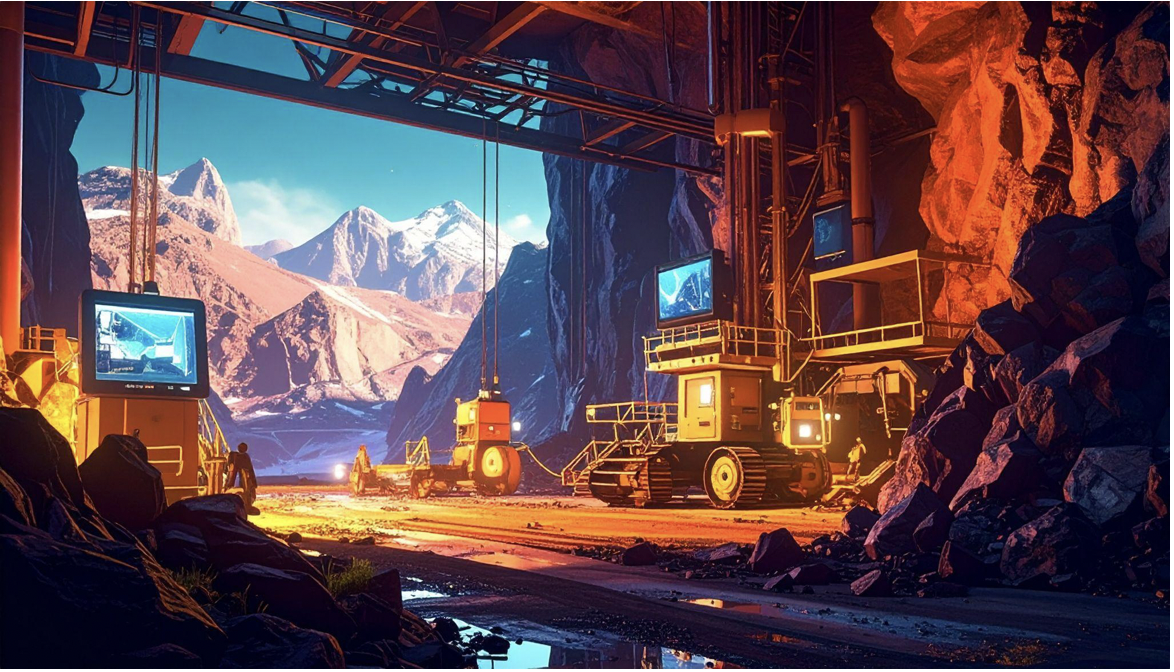
There are some of the largest machines the world has ever seen in the open-cast mining industry, designed to dig, lift, and transport earth. Scale is both an advantage and a hazard. However, these mechanical giants are not invincible. Electric rope shovels, for instance, are built to withstand tremendous stresses but also remain susceptible to an almost neglected menace: the cumulative effect of repeated mechanical shock. Unlike dramatic equipment failures, these are slow injuries, the kind that quietly corrode reliability and efficiency from within.
One leading cause of unplanned maintenance in ERS machines is impact events. These events transmit heavy, localized force through the shovel’s front end or the HydraCrowd system. These incidents happen when operators accidentally contact the ground while swinging or returning to tuck. These actions, although common, can lead to costly failures if not addressed. According to ABB’s 2023 “Value of Reliability” survey, unplanned equipment downtime now costs industrial operations an average of $125,000 per hour, with over two-thirds of businesses experiencing at least one outage per month.
The surprising thing isn’t that these machines are being damaged; it is that, until recently, we didn’t have a reliable way to listen to what the machines were experiencing.
Avadh Nagaralawala, a control systems engineer working with a global heavy equipment manufacturer, has been among those quietly working to change that. His recent project, which focused on impact detection and feedback for ERS machines, has opened new possibilities for mines. These possibilities allow mines to understand and mitigate the physical toll of daily operations.
The idea is deceptively simple: embed accelerometers within the HydraCrowd assembly to detect high-impact events in real-time. But as always, the challenge lay in execution. How do you classify an impact? How do you distinguish between harmful shock and normal operational vibration? How do you deliver that information to operators in a way that encourages safer behavior rather than confusion or alarm?
The solution that Avadh helped shape addresses both types of events that concern engineers. One set of data pertains to operational accidents, such as non-digging impact events, including hitting the ground during a return swing. The other concerns are digging-related shocks, which occur when the dipper strikes dense material or poorly fragmented rock. Both types of impacts, while routine, contribute to long-term fatigue in the shovel’s structure and can shorten the life of key components.
“The machine needed a way to say, ‘That hurt,’ Avadh says, summing up the problem in plain terms, but giving the machine that voice required a great deal of technical legwork. He had collaborated with multidisciplinary teams in the electrical, mechanical, and software domains to define system requirements, refine PLC logic, and integrate sensor data into usable feedback for operators. His team successfully reduced errors in PLC programming considerably. This achievement was due to both technical improvements and closer alignment with input from multiple stakeholder groups.
Validation wasn’t just a matter of lab tests. The team conducted thorough real-world evaluations, including operator trials and in-situ simulations. Just as importantly, they listened to the people in the field. What made sense on paper had to make sense in the cab of a 1,500-ton machine.
The results have been promising. In test deployments, the system has helped operators identify patterns of behavior that contribute to repeated impacts, often without their awareness. More critically, that feedback became an opportunity for new adjustments. Real-time feedback for mine operators equals less wear and tear, fewer unexpected shutdowns, and more transparency in day-to-day activities. From an industry context, the development and introduction of such systems mark the rise of the intelligent machine, being aware, not only automated.
From a broader industry perspective, the introduction of this kind of system is part of a larger shift toward intelligent machines, not just automated, but aware. As mines digitize and automate, sensors like those in the HydraCrowd monitoring system are becoming the eyes and ears of an ecosystem that must strike a balance between efficiency and longevity. It also highlights the increasing importance of engineers who can bridge the gap between data and decisions, as well as communicate effectively between machines and humans.
Avadh’s work has spanned numerous fields, making his name synonymous with the industry itself. Over the years, he has consistently integrated control systems into industrial equipment, acting as the glue that binds the disciplines together. He has also served as a mentor in training new graduates to climb the learning curve more swiftly. His structured training programs reportedly increased team productivity by 15% over 12 months.
In terms of project delivery, he applies formal tools like Earned Value Analysis and Critical Path Methodology. These methods may not make headlines, but are essential for delivering complex systems on time and budget. It is the kind of disciplined backend that enables sustainable innovation.
His work has also found recognition outside the factory floor. Avadh Nagaralawala has been invited to speak at local chapters of the Society for Mining, Metallurgy & Exploration (SME). He has delivered technical webinars through the Canadian Institute of Mining, Metallurgy, and Petroleum (CIM) and the Australasian Institute of Mining and Metallurgy (AusIMM). He serves as a peer reviewer for mining and automation journals and has also assisted professional groups, including the Colorado Mining Association and Women in Mining. While a reasonably common phenomenon amongst engineers, these engagements signal the ever-widening respect for his expertise and a willingness to participate in a broader industry conversation.
His story is striking because it perfectly fits into the larger shift underway in engineering, away from quick-fix solutions toward innovative systems. The days when machines were merely tools are over; now, they are becoming active partners in their maintenance process.
Ultimately, it is no longer just about digging deeper or faster when it comes to innovation in mining technology. Sometimes, it is about listening more closely to the silent wear of machinery and designing ways to let the machine speak before it breaks. That, too, is a kind of advancement, quiet, technical, and deeply human.