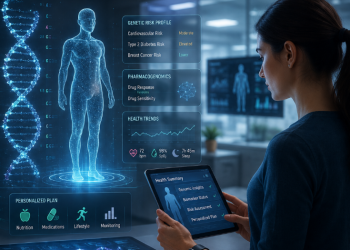
Artificial intelligence is steadily rewriting the playbook for healthcare operations. Beyond clinical diagnostics, new generations of AI are being deployed to reduce administrative burdens, anticipate patient needs, and transform how providers engage with high-risk populations. Generative AI, in particular, has opened novel possibilities—summarizing complex histories, analyzing unstructured notes, and triggering alerts that previously required human oversight. Yet applying generative AI in a regulated environment such as healthcare is no small task. Ensuring privacy, compliance, and meaningful integration into care coordination workflows has been one of the greatest hurdles facing the industry. Overcoming this barrier demanded not only technical fluency but a vision for embedding AI directly into patient management processes. This is exactly what Nikitha Edulakanti achieved in creating the first PHI-compliant generative AI system for continuity of care, shifting dialysis management from reactive interventions to proactive, predictive action.
Keeping Dialysis Care Going Is Tough
Dialysis patients face huge stress. They need to stick to treatment plans several times each week to stay alive. But many skip sessions, change providers, or stop treatment because of too many personal, financial, or practical problems. Every missed session makes it more likely they’ll end up in the hospital for a longer time, have more severe health issues, or even pose a serious threat to their lives.
For years, healthcare providers tried to tackle this problem by looking back at old adherence and outcome reports to find patterns. What they needed was a way to look ahead, not behind. They needed a system to spot early risks before patients quit treatment, giving care teams and doctors a chance to jump in and help.
Creating the First PHI-Compliant Generative AI Platform
Nikitha’s biggest breakthrough happened when she created a PHI-compliant Generative AI platform for Continuity of Care, the first one at a global healthcare leader and one of the earliest such breakthroughs in regulated healthcare worldwide.
At its core, the system tackled a long-time issue: huge amounts of unorganized patient data, including clinical notes and treatment histories, were stuck in formats that people found hard to analyze on a large scale. Using AWS Textract, Nikitha built data pipelines to pull out key information from these messy records. She then added generative AI models, like Claude, to study and sum up patient histories right away.
The outcome had a transformative effect. Care coordinators stopped depending on outdated reports and started getting instant notifications when patients showed early indicators of disengagement or risk of leaving. These alerts weren’t vague forecasts but practical insights highlighting patterns in doctors’ notes, skipped treatments, or test results that needed quick action.
By integrating this system into everyday care routines, Nikitha moved the organization from reacting to problems to anticipating patient needs. This shift marked a key change not just for the company but also for the wider dialysis field, where keeping patients in treatment links to their survival chances.
Making a Real Difference
Nikitha’s system did just that. In its first year, it saved several hundred thousand dollars in yearly income by keeping patients from leaving. Even better, it gave care teams a way to boost patient safety by cutting down on hospital stays that could’ve been avoided.
More than a hundred staff across the organization’s kidney care network started using the system. It wasn’t just a tech trial; it became a key project shown off at big meetings as proof of how AI could be used in regulated medical care.
In this process, Nikitha also tackled one of the industry’s biggest ongoing problems: showing that AI can follow PHI rules. In healthcare, the need to safeguard personal health data has often held back the use of cutting-edge AI. By crafting systems that met tough compliance standards, she developed a model that struck a balance between new ideas and regulations.
Molding AI’s Role in Future Healthcare
The impact of Nikitha’s work extends past a single project. The success of the GenAI-powered Continuity of Care platform laid the groundwork to spur new developments at the organization and elsewhere.
It became the model for future AI rollouts across the company’s worldwide operations. In areas like clinical decision support, regulatory reporting, or improving operations, the insights from her project shaped a new wave of AI-powered solutions.
By showing that generative AI could be used in sensitive settings, Nikitha paved the way for its use in wider clinical areas, from cancer care to managing long-term illnesses. Her work changed what people thought was possible in healthcare AI, spurring other organizations to try new things and break new ground.
Leadership Beyond Technology
Although the technical accomplishment is remarkable, Nikitha stands out because of how she blended strategy, compliance, and user-focused design in her leadership. She recognized that technology’s power depended on its users.
With this in mind, she collaborated with care coordinators, doctors, and executives to make sure the system was easy to use, relevant, and in line with clinical needs. She spearheaded training and adoption programs, ensuring that the AI’s insights led to concrete actions for patients.
At the executive level, she created dashboards that showed key patient engagement metrics, letting top leaders watch how interventions affected things in real time. By connecting raw data, AI-based insights, and strategic choices, she became a leader not just in engineering but in changing healthcare.
Recognition and Wider Effects
In the organization, her project became a model of new ideas. It showed how AI could help improve patient results, save money, and follow rules better. At industry meetings, it was an example of how AI could enter regulated healthcare processes, something people once thought was too risky or hard to do.
The reach of her work goes far beyond dialysis. Her model now serves as an example for other healthcare groups in the U.S. and around the world. It shows that AI for prediction and generation can be used safely to boost patient care. This single project has an impact on how AI might be adopted across many areas of medicine.
A Lasting Legacy in Patient Care
At its core, healthcare innovation isn’t about fancy algorithms. Its real value lies in how it helps people. Nikitha’s efforts go beyond just saving money or boosting numbers. Her work gives patients a higher chance of getting steady, safe care. It also makes life easier for doctors and care teams by giving them useful information when they need it. This shows that healthcare’s future can be forward-looking, tailored to each person, and focused on patients, all while staying within the rules and keeping people’s trust.
Nikitha Edulakanti’s application of generative AI in dialysis care establishes her as one of the first innovators with exceptional foresight. By challenging norms in one of the most intricate healthcare settings, she didn’t just change her organization’s strategy for keeping patients; she set a new standard for the whole field. Her efforts will have an impact on how the medical world adopts AI for years, creating a lasting effect that combines new ideas, rule-following, and care for patients.