Eco-efficient building has shifted from a niche strategy to an industry standard. As urbanization accelerates and energy demands rise, project leaders face increasing pressure to deliver buildings that perform sustainably across their entire life cycle. This isn’t just about reducing environmental harm; it’s about managing resources intelligently, meeting regulatory benchmarks, and enhancing long-term value.
“Clients expect more than green labels. They want proof that every decision, from design to material sourcing, leads to measurable benefits,” said lead strategist William E. Trowell. “That’s where project planning makes the biggest difference.”
Across public and private sectors, eco-efficient practices are being embedded into early planning to avoid reactive, costly changes later. This article explores the key strategies and tools that allow project managers to embed sustainability from the ground up and ensure it stays there.
What Sets Eco-Efficient Buildings Apart
Eco-efficient buildings go beyond the traditional notion of “green.” They aim to deliver the highest possible performance with the lowest possible environmental impact. This includes using less water, energy, and raw materials while extending durability, reducing waste, and improving occupant well-being.
In practice, that means aligning three pillars from the start:
- Environmental impact reduction
- Economic resource optimization
- High-functioning design across the building lifecycle
The U.S. General Services Administration (GSA) applies this alignment through its sustainable design principles, which include improving air quality, minimizing fossil fuel use, and achieving at least 30% better energy performance than ASHRAE 90.1 standards. All new GSA buildings must also target net-zero operational emissions by 2030, a benchmark mirrored in many commercial developments.
Why Early Design Decisions Matter
The greatest sustainability gains happen at the beginning. Project teams that prioritize eco-efficiency during pre-design and conceptual phases can significantly reduce both environmental impact and future costs.
A 2021 study introduced a multimethodology framework combining streamlined Life Cycle Assessment (LCA), Data Envelopment Analysis (DEA), and regression modeling to guide sustainable decision-making during early-stage building design.
This streamlined approach allowed architects to compare design options based on environmental impact and cost-efficiency, without requiring exhaustive data upfront. The takeaway: even limited data, when modeled smartly, can guide high-impact decisions.
“Integrating LCA tools into our design reviews helps clients understand the long-term value behind seemingly small choices,” said William E. Trowell. “It’s not just about compliance; it’s about opportunity.”
In one case study, a historical residential retrofit in Portugal tested three occupant and lifespan scenarios. Each variation showed how energy assumptions, discount rates, and material selection altered both financial and environmental outcomes, proving the necessity of scenario planning in eco-efficient design.
Real-World Strategies in Action
A variety of technologies and planning methods support eco-efficient outcomes. When layered strategically, they form a comprehensive sustainability playbook that can flex to meet different climates, building types, and budgets.
Passive and Active Design Elements
Designing with nature reduces energy demand from the outset. Strategies include:
- Orientation and shading for thermal regulation
- Daylighting to cut down on artificial lighting
- Green roofs and walls for insulation and water management
These features aren’t limited to premium builds. In cities like Freiburg and Malmö, dense, walkable communities use passive design and shared infrastructure to lower heating, cooling, and transportation emissions at scale.
Materials and Resource Optimization
Material selection plays a direct role in eco-efficiency. From repurposing demolition waste to using low-impact composites, each choice affects embodied carbon and end-of-life recyclability.
One Canadian redevelopment project turned an old brewery into a mixed-use space by recycling paper, metals, and wood, reusing structural elements, and installing energy-efficient systems. These eco-efficiency actions reduced material demand while preserving architectural value.
Renewable Energy Integration
Many new projects aim for net-zero or climate-positive performance through:
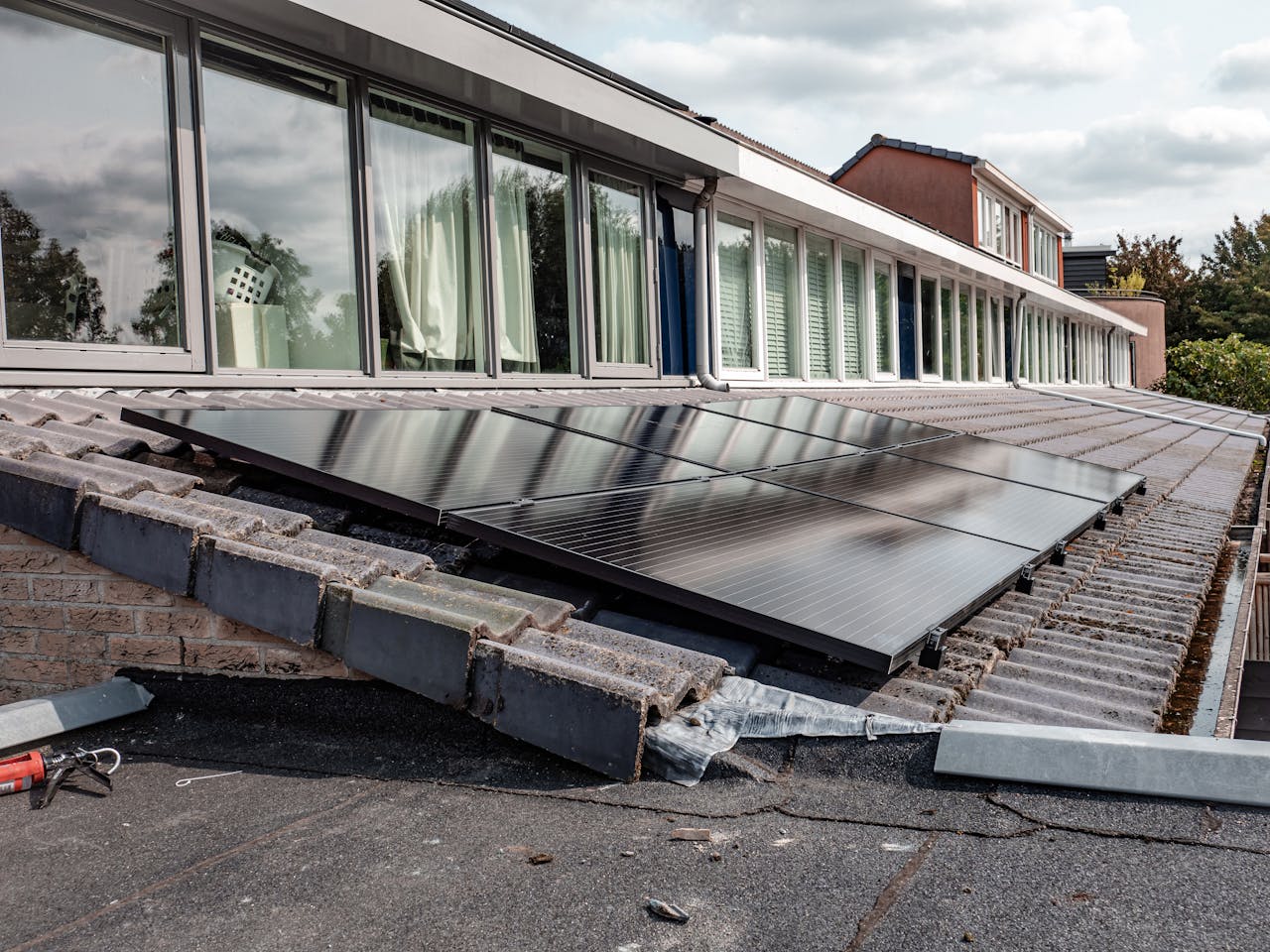
- Rooftop solar PV systems
- Solar water heating
- Efficient HVAC and LED systems powered by clean electricity
Residential examples show that pairing these systems with landscape design, like tree placement to shade HVAC units, can yield even greater savings.
Measuring and Managing Eco-Efficiency
A building’s sustainability isn’t measured by its features alone. It’s quantified by how well those features perform over time. That’s why agencies like the GSA use tools like the Sustainable Design Checklist and Kahua Sustainability App to track compliance and outcomes.
At a macro level, models such as the superefficient SBM-DEA provide insights into how different regions or projects perform over time. In China, for instance, high-efficiency provinces demonstrate strong spillover effects, where innovation in one area lifts the performance of surrounding regions. However, low-efficiency zones tend to stagnate, highlighting the need for cross-regional collaboration and knowledge-sharing.
Globally, the LEED rating system remains a common framework for benchmarking success. But its real value comes from how it reinforces lifecycle thinking across teams, not just collecting points.
Social Impact and Human Well-being
Eco-efficiency is also human. Buildings that reduce energy and water use also tend to support occupant well-being. Better indoor air quality, quieter systems, and natural lighting contribute to comfort, focus, and health. Studies have shown that employees working in green-certified buildings report higher satisfaction and productivity.
Social inclusion also plays a growing role. Projects that include community input, accessible design, and culturally relevant spaces extend eco-efficiency into the realm of urban equity. Cities that prioritize public green spaces and active transport infrastructure multiply the positive impact beyond the building footprint.
Final Thoughts
Eco-efficient building is a present imperative. From early-stage modeling to material reuse and long-term performance tracking, the most successful projects apply sustainability as a discipline, not an afterthought. As the built environment faces mounting pressure to do more with less, firms are proving that excellence and eco-efficiency can, and should, go hand in hand.
Whether designing a government facility or a residential neighborhood, managing for maximum sustainability starts with informed, integrated decisions. The payoff is not just a lower carbon footprint—but stronger communities, healthier spaces, and a more resilient future.