It seems almost futuristic to suggest the possibility of a smartphone that could capture not just the moment, but the depth of it… the space, the feeling, the life of it.
What if that future is already here?
Tech founder Bob Douglas, also described as a problem-solver, a veteran, and an inventor with more than 80 U.S. patents to his name, has changed how we experience reality. After spending years innovating in defense and imaging technology, Douglas has now offered the solution to a new challenge: bringing immersive 3D into the hands of everyday users.
Douglas did more than offer, though. He built a better way to capture the world.
Introducing OPIC Technologies
Douglas is the founder and CEO of OPIC Technologies, Inc., a 3D innovation company that has opened our eyes to visual storytelling. The company builds tools that allow users to shoot, share, and livestream in 3D using the same smartphones, tablets, or laptops they already own.
OPIC SPATIAL
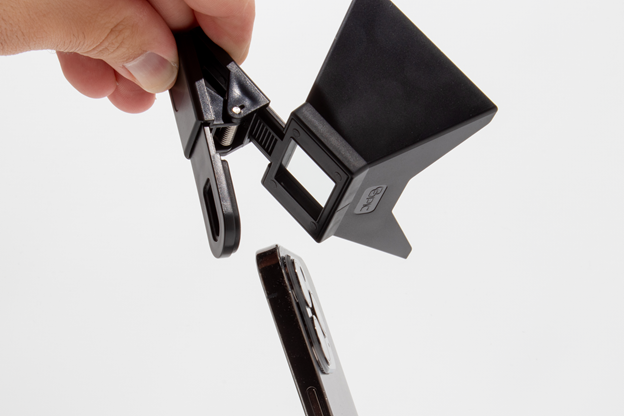
OPIC Spatial is a small device that turns regular cameras into 3D cameras. Paired with the OPIC social platform, users can instantly share immersive content, interact in real-time, and create experiences that feel alive.
Now, OPIC Spatial might sound like a camera or an app. However, look at it this way: a new kind of connection.
By being a wholly new hardware, combined with related software, OPIC transforms not just the device, but the whole experience.
Why 3D? Why Now?
Douglas saw something the rest of the tech world was just beginning to realize: 3D is the next phase of digital communication. With virtual reality (VR) and spatial computing on the rise, the future isn’t flat. It’s layered, dynamic, and personal.
But there was a problem. Most 3D technology was too expensive or too complicated. It was locked behind pro-grade gear and complex software.
Douglas fixed that.
He created OPIC Spatial to make immersive content simple and affordable. Now, anyone, from teens filming their pets to creators building online audiences, can shoot in 3D with just a click.
From Battlefield to Breakthrough
Douglas’s journey to tech innovation didn’t begin in Silicon Valley. It began at West Point, continued through two tours in Vietnam, and spanned decades of high-level roles in military tech and policy. He earned three Bronze Stars, multiple Meritorious Service Medals, and the Legion of Merit. He served on the Army Science Board, advised the Joint Chiefs of Staff, and co-founded Rad Impact, a nonprofit delivering medical imaging tools to underserved areas in Africa.
That experience shaped how he builds today. His engineering is sharp, just like his sense of purpose. He’s seen what real problems look like. That focus fuels every product at OPIC.
Overcoming the Challenges of Innovation
Launching OPIC wasn’t easy. Douglas and his team faced major roadblocks like educating users, refining the tech, and understanding a tough supply chain. Many people didn’t understand what 3D could do. Others doubted it would catch on.
But Douglas didn’t slow down. He listened to users, tested relentlessly, and partnered with manufacturers to improve quality and speed. One of his favorite moments involves watching a teenager film his dog in 3D for the first time. The kid’s eyes lit up. That’s when Douglas knew he wasn’t just building hardware. He was helping people relive life’s best moments in a new way.
The Specialty of OPIC
Gimmicks and tech today never quite stick, which makes OPIC the real deal. Here’s why:
- Accessible hardware: The OPIC Spatial makes 3D creation easy for anyone.
- Engaging platform: The OPIC app lets users share, react, and livestream in 3D.
- Social-first design: This isn’t just for tech pros; it’s built for creators, friends, and communities.
- Veteran leadership: Douglas brings real-world discipline, purpose, and curiosity to the table.
Conclusion
Douglas is setting the pace by envisioning OPIC becoming the world’s top platform for immersive content. A digital space where people can express themselves in full dimension.
He dreams of a world where 3D is as common as taking a selfie. Where stories, memories, and moments don’t just live on screens but feel real.
He saw what others missed. With OPIC Technologies, he’s turning the page on flat screens and showing the world what it means to truly see.
3D isn’t tomorrow’s tech. It’s today’s opportunity.