The healthcare industry is undergoing a transformative shift, driven by advancements in artificial intelligence (AI) and machine learning (ML). These technologies have become integral to improving patient outcomes, streamlining operations, and aiding critical decision-making.
As medical data grows more complex and abundant, AI and ML provide the precision and speed healthcare professionals need to make better-informed decisions. Dr. Christopher Driskill, a noted physician and advocate for innovation in medicine, explores how AI and machine learning will continue to improve decision-making in healthcare.
Revolutionizing Diagnosis and Enhancing Treatment
AI and machine learning are reshaping how illnesses are diagnosed and detected, often earlier than traditional methods allow. Medical imaging is one of the most notable areas where these technologies are making substantial strides. Algorithms designed for reading X-rays, MRIs, and CT scans can detect abnormalities such as tumors, fractures, or signs of chronic illness with a level of accuracy that rivals, and sometimes surpasses, human specialists.
AI-powered systems can flag early-stage cancer in mammograms before patients notice symptoms. Early detection saves lives while reducing the overall cost of treatment by addressing issues before they escalate. These innovations allow physicians to focus their expertise on cases that require human intervention while relying on AI as a safeguard against oversight.
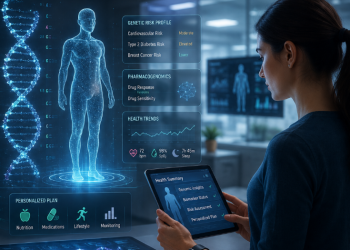
“Precision medicine tailors treatment to the individual, taking into account genetic, environmental, and lifestyle factors,” says Dr. Christopher Driskill. “AI and ML are at the heart of this personalized approach by analyzing complex data sets that were previously impossible to manage manually.”
By mapping genetic variations or patient-specific biomarkers, these systems recommend tailored therapies that have a higher chance of success. Cancer treatments are increasingly guided by ML algorithms that match patients with therapies based on their genetic profiles.
This approach increases effectiveness and minimizes harmful side effects. AI’s role in precision medicine demonstrates how data-driven insights are improving clinical outcomes, particularly for complex, multifactorial diseases.
Streamlining Administrative Processes
The healthcare system is often burdened by a maze of administrative tasks including everything from billing and insurance claims to managing patient records and appointment scheduling. These behind-the-scenes processes, while essential, can be time-consuming, error-prone, and a major source of frustration for both healthcare providers and patients.
Fortunately, artificial intelligence (AI) and machine learning (ML) are revolutionizing the way these administrative functions are handled, making them more efficient, accurate, and less reliant on manual input.
One of the most impactful applications is natural language processing (NLP), which enables the automatic transcription and organization of medical notes. Instead of spending hours typing up patient encounters, clinicians can dictate notes that are then accurately transcribed and categorized by AI, making patient histories easily accessible and searchable.
Automated billing systems, powered by ML algorithms, help reduce costly errors in coding and ensure greater transparency in medical billing. These systems can detect anomalies, flag inconsistencies, and speed up insurance claims processing, leading to fewer rejections and faster reimbursements. Ultimately, these technological advancements free up valuable time for healthcare professionals, allowing them to focus more on patient care and less on paperwork.
Supporting Mental Health Care, Drug Recovery, and Chronic Disease
Mental health care has historically struggled with a lack of resources and access, problems that AI and ML are beginning to address. Applications powered by these technologies offer tools for early diagnosis and ongoing support, especially for conditions such as anxiety, depression, and PTSD.
Notes Dr. Driskill, “These virtual tools use NLP to understand and respond empathetically, offering techniques like mindfulness exercises or cognitive behavioral therapy prompts.”
While not replacements for professional care, they act as valuable first-line resources in partnership with proper medical care. In some cases, AI analyses of patients’ speech patterns and biometric data have even flagged risks of suicide or relapse, enabling timely interventions by healthcare providers.
The process of developing new drugs is notoriously slow and expensive, often taking years before reaching approval. AI is significantly accelerating this timeline by analyzing massive datasets to identify promising drug candidates and predict their efficacy. Machine learning models simulate molecular interactions and pinpoint chemical compounds that could yield the desired therapeutic effect.
COVID-19 highlighted the urgent need for faster drug development, and AI played a key role in identifying vaccine candidates during the pandemic. With AI reducing guesswork in this complex process, pharmaceutical companies can focus their resources on compounds most likely to succeed in clinical trials. This efficiency brings life-saving treatments to market more quickly while decreasing costs.
Chronic diseases such as diabetes, hypertension, and heart disease require continuous monitoring and intervention. Wearable devices and remote-monitoring tools powered by AI and ML are proving invaluable in managing these conditions. They collect real-time data on metrics like blood pressure, glucose levels, and heart rates, alerting physicians to potential issues before they become emergencies.
These technologies empower patients to take control of their health by providing user-friendly summaries and actionable insights. For example, an AI-enabled fitness tracker might suggest dietary changes or exercise regimens based on an individual’s current metrics. This proactive approach enhances the quality of life for those living with chronic conditions while reducing the strain on healthcare systems.
Addressing Ethical and Privacy Concerns
While the benefits of AI and ML in healthcare are undeniable, ethical and privacy concerns must be addressed to ensure public trust. One major issue lies in safeguarding patient data. AI systems rely on large datasets to function effectively, which raises questions about how this information is stored, used, and shared.
Ensuring transparency in how these technologies arrive at decisions is another area of focus. Many ML algorithms operate as “black boxes,” making it difficult for healthcare providers to understand or explain the reasoning behind a recommendation. This lack of accountability can erode trust and create barriers to adoption.
To address these challenges, healthcare organizations are developing frameworks to ensure compliance with privacy laws like HIPAA. Similarly, researchers are prioritizing explainable AI to make decision-making processes more transparent. These steps are crucial in aligning innovation with ethical responsibility.
The Role of Collaboration in AI Adoption
The successful integration of AI and ML into healthcare often requires collaboration across multiple disciplines.
“Medical professionals, data scientists, engineers, and regulatory bodies must work together to ensure these systems meet the highest standards of safety and effectiveness,” says Dr. Driskill.
Educational initiatives are also key to equipping healthcare workers with the skills needed to interact with AI tools. By fostering an environment where human expertise and technology coexist, these partnerships maximize the potential of AI in healthcare while minimizing risks.
AI and machine learning are reshaping healthcare and redefining what is possible. From early disease detection to personalized treatment and operational efficiency, these technologies are enhancing every aspect of the patient journey. However, their success hinges on addressing ethical concerns and fostering collaboration between stakeholders.
The ongoing advancements in AI demonstrate a future where decisions in healthcare can be made with greater accuracy, speed, and compassion. As these tools grow more sophisticated, they promise to bridge gaps in access, improve outcomes, and empower both providers and patients. The journey has only begun, but the potential is limitless, offering a brighter, healthier future for all.